
Some of your best school memories might come from a class you almost skipped. High school electives let you try subjects outside your usual lineup.
You can take art, coding, cooking, or even psychology. These classes teach useful skills, not just extra credit hours. They build habits and abilities you carry into future jobs.
You get to notice what you actually enjoy doing. You might find you love photography or feel confident speaking in public.
Certain electives can even raise your GPA and support your college applications. You just need a little planning before locking in your choices. Electives give you space to figure out your own path.
The Role of Electives in Building Practical Skills
Electives give students more than extra credit. They teach real skills that carry into daily life and future jobs. Group projects and presentations build communication and teamwork.
Students learn to listen, share ideas, and work well with others. Elective classes also push students to think in new ways.
Art, music, and design classes ask students to solve problems and try new approaches. Many electives connect directly to future careers.
Classes in coding, business, or culinary arts teach hands-on skills students can use right away.
Building strong habits early also feeds directly into study skills for high schoolers, since the discipline learned in an elective carries over into core coursework.
Electives also let students pursue interests regular classes do not cover. This helps them figure out what they enjoy and want to pursue later.
Creative, Communication, and Global Learning Electives

Electives in this group cover art, communication, language, and social studies, fostering creativity and cultural awareness.
Take a look at the categories included:
1. Arts & Performing Arts Electives
These electives let students try out different creative fields, from painting to music to acting. See the options below:
-
Drawing: Builds foundational sketching and illustration skills.
-
Painting: Teaches color theory, brush techniques, and artistic expression.
-
Ceramics: Focuses on clay modeling, glazing, and pottery techniques.
-
Sculpture: Introduces three-dimensional art creation using various materials
-
Art History: Examines major art movements, styles, and influential artists.
-
Digital Art & Graphic Design: Combines creativity with design software and visual communication.
-
Photography: Teaches composition, lighting, and basic photo editing.
-
Film & Video Production: Covers storytelling, filming, and video editing techniques.
-
Theater/Drama: Builds acting skills, stage presence, and performance confidence.
-
Dance: Develops movement techniques, rhythm, and performance ability.
-
Choir: Focuses on vocal training and group singing.
-
Band: Teaches instrumental performance and music collaboration.
-
Orchestra: Builds skills on classical instruments and ensemble coordination.
-
Music Production/Recording: Introduces audio editing and recording technology.
2. English & Communication Electives
These electives help students improve their writing, speaking, and media skills for everyday use. Check out the options that can build those skills:
-
Creative Writing: Encourages storytelling through fiction, poetry, or essays.
-
Journalism & Yearbook: Teaches reporting, editing, and publication design.
-
Public Speaking & Debate: Builds argumentation, confidence, and speaking skills.
-
Speech Communication: Focuses on effective verbal communication techniques.
-
Media Literacy: Helps students analyze news, advertising, and digital content.
-
Screenwriting: Teaches script formatting and storytelling for film or TV.
-
Literary Magazine: Involves writing, editing, and publishing creative works.
3. Foreign Language Electives
Language electives help students improve communication while building cultural awareness, making them valuable for travel, college applications, and future global career opportunities.
Below are some popular language electives offered in many high schools:
-
Spanish: Develops conversational and written Spanish skills.
-
French: Introduces French grammar, vocabulary, and cultural studies.
-
German: Focuses on language structure and European cultural insights.
-
Mandarin Chinese: Builds speaking, reading, and writing in Mandarin.
-
Japanese: Covers language fundamentals and Japanese culture.
-
Arabic: Teaches one of the world’s most widely spoken languages.
-
Latin: Helps with vocabulary building and understanding classical roots.
-
American Sign Language (ASL): Teaches communication through visual signing.
4. Social Studies & Humanities Electives
Humanities electives encourage students to study society, history, and human behavior, helping them develop critical thinking and a broader understanding of the world.
Here are key electives that fall under this category:
-
Psychology: Studies human thoughts, emotions, and behavior.
-
Sociology: Examines social systems and group behavior.
-
Philosophy: Encourages critical thinking through big life questions.
-
World Religions: Studies major belief systems and cultural traditions.
-
Law & Government: Introduces legal systems and civic structures.
-
International Relations: Focuses on global politics and diplomacy.
-
Anthropology: Studies human cultures and societal evolution.
-
African American History: Surveys Black history and contributions.
-
Women’s Studies: Examines gender roles, history, and social issues.
Creative and communication electives do something no standardized test can- they show colleges and employers how you think, express yourself, and engage with the world.
STEM, Innovation, and Career-Focused Electives
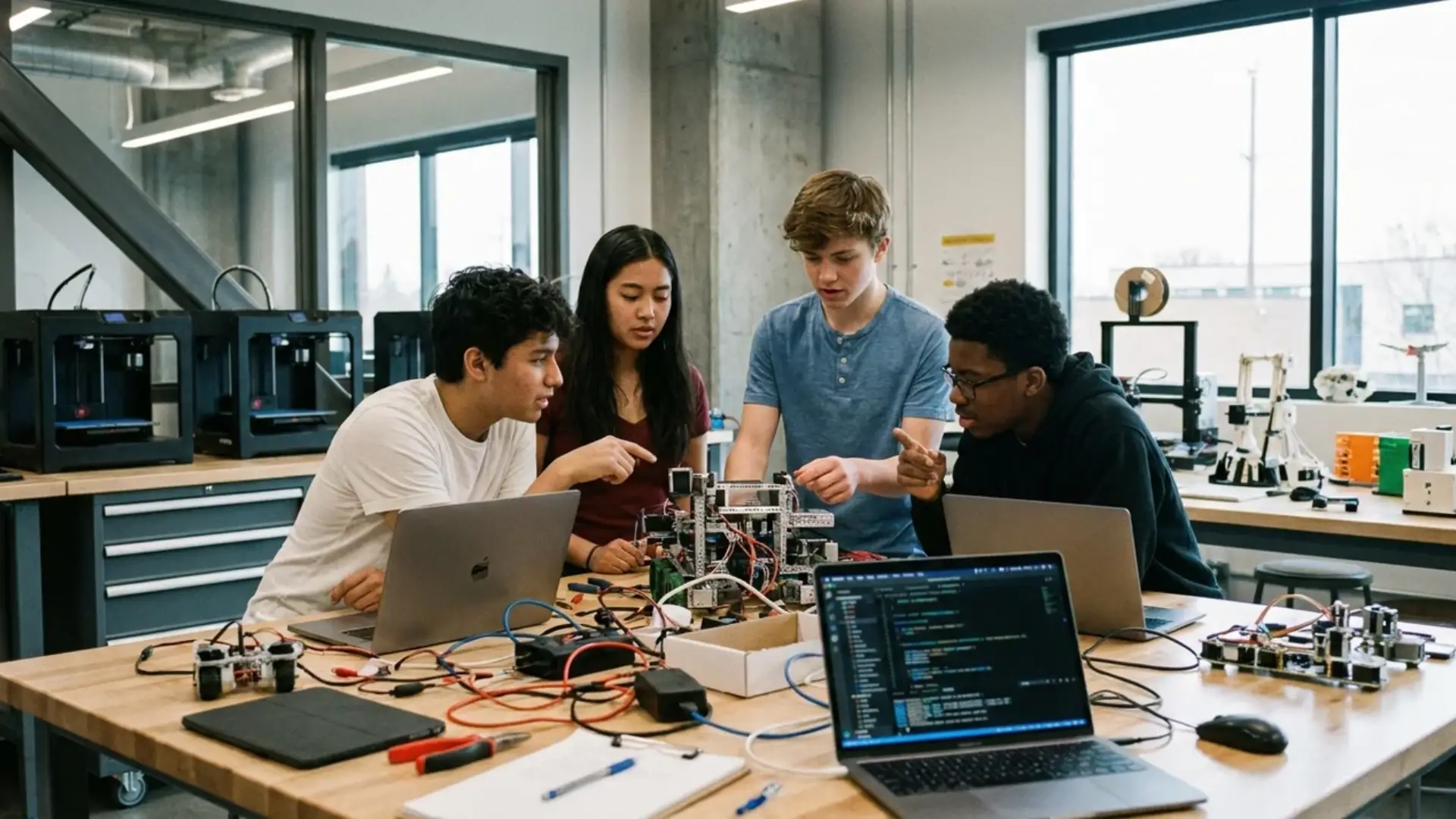
Electives in this group focus on technology, science, trades, and business that prepare students for future careers. Browse the categories covered below:
5. Computer Science & Technology Electives
Technology electives introduce students to digital tools and modern innovations, preparing them for fields that continue to expand across nearly every industry.
These are some of the most in-demand technology electives available today:
-
Computer Programming: Teaches coding logic and the basics of software development.
-
Web Design & Development: Covers website building and user experience design.
-
Cybersecurity: Focuses on digital safety, privacy, and network protection.
-
App Development: Introduces mobile application design and coding.
-
Data Science & Analytics: Teaches data collection, interpretation, and visualization.
-
Video Game Design: Combines coding with game mechanics and storytelling.
-
Robotics: Involves engineering, coding, and machine automation.
-
AI & Machine Learning: Researches emerging technologies and smart systems.
6. Science & Math Electives
Science and math electives allow students to go beyond core requirements and study specialized topics that support analytical thinking and problem-solving skills.
Here are some advanced and specialized options to consider:
-
Statistics: Teaches data analysis and probability concepts.
-
Personal Finance Math: Applies math to budgeting, loans, and saving.
-
Computer Mathematics: Focuses on math concepts used in programming.
-
Calculus: Advances problem-solving through higher-level mathematical concepts.
-
Environmental Science: Studies ecosystems and environmental challenges.
-
Marine Biology: Studies ocean life and aquatic ecosystems.
-
Forensic Science: Applies science to criminal investigations.
-
Astronomy: Studies space, planets, and celestial events.
-
Geology: Examines Earth’s structure, rocks, and natural processes.
-
Human Physiology: Focuses on body systems and how they function.
-
Botany: Studies plant biology and ecosystems.
7. Career & Technical Education (CTE) Electives
CTE electives combine hands-on training with classroom learning to prepare students for specific trades. Look through some common options below:
-
Culinary Arts: Teaches cooking techniques, kitchen safety, and food preparation.
-
Auto Mechanics/Automotive Technology: Covers vehicle maintenance and repair.
-
Cosmetology: Introduces hairstyling, skincare, and beauty services.
-
Construction/Carpentry: Builds practical woodworking and construction skills.
-
Welding: Teaches metal joining and fabrication techniques.
-
Agriculture & Farming: Covers food production, crops, and livestock management.
-
Child Development & Education: Focuses on teaching and the basics of child growth.
-
Criminal Justice: Introduces concepts in law enforcement and the legal system.
-
Firefighting & Emergency Response: Teaches safety, rescue, and emergency skills.
8. Business & Entrepreneurship Electives
Business electives help students understand how money, markets, and organizations work while building leadership and decision-making skills for future opportunities.
These electives can build a strong foundation in business knowledge:
-
Introduction to Business: Covers the basics of business structure and management.
-
Marketing: Teaches branding, advertising, and consumer behavior.
-
Entrepreneurship: Focuses on starting and managing a business.
-
Personal Finance: Covers budgeting, credit, saving, and investing.
-
Accounting: Teaches financial recordkeeping and reporting.
-
Business Law: Introduces legal principles related to business.
-
Economics: Explains how markets, trade, and money systems work.
-
Office & Administrative Skills: Builds workplace organization and software skills.
-
Business Math: Applies math to finance and business scenarios.
STEM and career-focused electives give you something concrete to point to: a skill built, a project completed, a career pathway started.
Health, Life Skills, and Future-Ready Electives

This group includes electives designed to improve physical health, emotional wellness, and everyday life skills while preparing students for modern challenges.
These courses often focus on personal growth and practical knowledge that can be used immediately.
9. Health & Physical Education Electives
Health-focused electives teach students how the body works while promoting fitness, wellness, and habits that support both physical and mental well-being.
Here are common electives centered around health and fitness:
-
Anatomy & Physiology: Studies body systems and human health.
-
Nutrition & Wellness: Teaches healthy eating habits and overall well-being.
-
Sports Medicine: Learn about injury prevention and athletic health.
-
Personal Fitness: Focuses on exercise routines and physical conditioning.
-
Team Sports: Builds teamwork and athletic skills through competition.
-
Yoga & Mindfulness: Encourages flexibility, focus, and stress management.
-
Mental Health & Wellness: Learn about emotional health and coping strategies.
10. Vocational & Life Skills Electives
Life skills electives prepare students for everyday responsibilities by teaching practical knowledge they can apply in school, at home, and in adulthood.
These courses focus on useful skills for daily life and independence:
-
Home Economics: Covers cooking, household management, and daily living skills.
-
Financial Literacy: Teaches money management, budgeting, and saving.
-
Driver’s Education: Prepares students for safe driving and road rules.
-
Leadership Development: Builds teamwork, communication, and decision-making skills.
-
Community Service: Encourages civic engagement and volunteer work.
-
Study Skills: Helps students improve organization and academic habits.
11. Emerging & Modern Electives
Modern electives reflect evolving career trends and emerging industries, giving students early exposure to subjects that shape the future of work and education.
Below are some of the newest and fastest-growing elective options:
-
AI & Machine Learning: Introduces concepts and applications of artificial intelligence.
-
Sustainability & Environmental Justice: Studies climate action and environmental
-
responsibility.
-
Personal Finance & Investing: Focuses on wealth-building and financial planning.
-
Mental Health First Aid: Teaches how to recognize and respond to mental health challenges.
-
Entrepreneurship & Startup Thinking: Encourages innovation and problem-solving for new ventures.
-
Podcasting & Digital Media: Covers content creation, editing, and audio storytelling.
-
Coding for Non-Programmers: Makes coding accessible through beginner-friendly projects.
Health, life skills, and future-ready electives round out a well-balanced high school experience. They prepare you not just for college applications, but for everything that follows -paying bills, managing stress, building a career, and showing up as a capable adult.
How Do Electives Affect GPA and Graduation?
Electives play a bigger role in GPA and graduation than most students realize. Knowing the details can help you plan your schedule better.
Most electives do count toward your overall GPA, just like core classes. The exact weight can depend on your school’s grading system.
Some electives are weighted, which can push a student closer to the grade point average benchmarks colleges look for during admissions review.
Honors or advanced electives often fall into this weighted category. Schools also set specific credit requirements for graduation, including elective credits.
Students usually need a certain number of elective credits alongside their core classes. Picking honors or advanced electives can show colleges you took on extra challenges.
How to Decide Which Electives to Take?
Choosing the right electives can feel tricky with so many options on the list. A few simple steps can make the decision much easier.
Here are some things to think about before picking your electives:
-
Think about what career path interests you and pick classes that support it.
-
Check if your future college major needs certain classes as a base.
-
Choose a mix of classes that challenge you and classes you enjoy.
-
Try subjects you have never taken before to find new interests.
-
Make sure your choices still count toward graduation requirements.
Talking to your school counselor can help you make a smart final choice. They know the requirements and can guide you toward the best options.
What to Do If Your School Doesn’t Offer the Elective You Want
Not every school offers every elective, but that does not mean you have to miss out on learning in that area. There are still plenty of ways to build the same skills outside a regular classroom.
Here are some options worth looking into:
|
Option |
What It Offers |
Best For |
|---|---|---|
|
Community college dual enrollment |
College-level courses in coding, business, psychology, or advanced sciences |
Students wanting early college credit |
|
Online accredited courses |
Approved classes in subjects like cybersecurity or niche languages |
Students with a specific niche interest |
|
Independent study proposals |
A custom study plan built with a teacher or counselor |
Self-motivated, flexible learners |
|
Summer programs |
Short-term, hands-on learning through colleges or organizations |
Students wanting fast exposure |
|
Extracurricular clubs |
Skill building through robotics, debate, coding, or business clubs |
Students who enjoy group settings |
Talking to your counselor can help you figure out which option best fits your goals. A little effort now can still open doors, even without the exact class you wanted.
Tips for Building a Well-Rounded High School Schedule
Building a well-rounded schedule takes more than just picking classes that sound fun. A little planning now can save a lot of stress later.
Follow these tips to build a schedule that works for you:
-
Balance Core and Electives: Keep a steady mix of required classes and electives so neither side feels too heavy.
-
Mix Academic and Creative Subjects: Pair subjects like math or science with classes like art or music for balance.
-
Leave Room for Activities: Save time in your schedule for clubs, sports, or other extracurricular activities you enjoy.
-
Plan for College Admissions: Choose classes that match what colleges expect to see on your transcript.
-
Review Your Four-Year Plan: Check your overall plan each year to stay on track for graduation.
A balanced schedule can make high school feel more manageable and enjoyable. Taking time to plan ahead now can make a real difference later.
Frequently Asked Questions (FAQs)
Do Colleges Care About High School Electives?
Yes, colleges often review electives to see your interests, academic depth, and how you challenged yourself beyond required classes.
Can I Take Electives Outside My School?
Yes, many students use online courses, dual enrollment, or summer programs to study subjects their school does not offer.
Are Electives Important for Future Careers?
Electives can build early knowledge and practical skills, helping you research careers before college or professional training begins.
Final Thoughts
Looking back, electives often matter more than expected. They help build your skills and point you toward career interests. You learn teamwork through group projects and stage performances.
You build confidence through debate, art, or coding classes. Electives also help when your school doesn’t offer a class you want. A balanced schedule mixes electives with your core classes.
This keeps your days interesting and helps you grow along the way. Talk to your counselor before you lock in your choices.
Pick a few classes that fit you, and drop your favorite elective in the comments below!