


Most students reread their notes and hope something sticks. A study guide changes that entirely.
At its core, understanding what is a study guide means recognizing it as a personalized learning tool that organizes information in a way that actually makes sense to the person using it.
The students who build their own consistently retain more, stress less, and walk into exams with a clarity that passive reviewing never produces.
Everything covered here is geared toward building one that works.
What is a Study Guide?
A study guide is a structured learning resource that organizes the most important information from a subject into one focused, reviewable format.
It can be self-created or provided by a teacher, and its core purpose is to simplify complex topics, highlight key concepts, and strengthen retention before an exam or assessment.
The best study guides don’t just summarize content; they make it easier to recall under pressure.
They are used by:
- K-12 and college students preparing for exams.
- Professional certification candidates.
- Self-taught learners working through dense material independently.
What are the Main Components of a Study Guide?
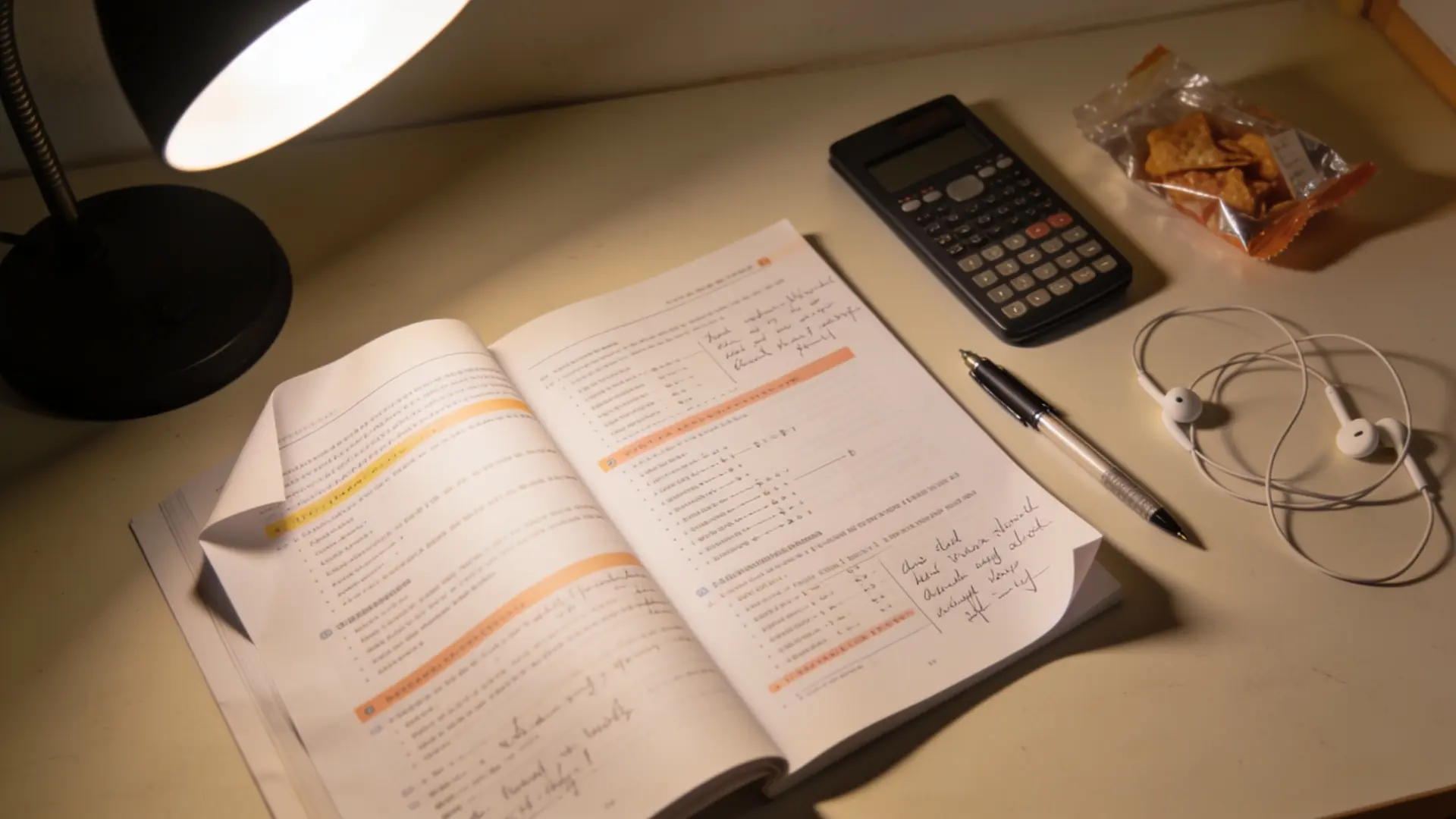
A strong study guide is more than a summary of notes. Each component serves a specific purpose in how information gets processed, stored, and recalled.
1. Key Concepts and Definitions
The foundation of any study guide. This section captures the essential terminology, core subject concepts, and vocabulary that form the building blocks of the topic.
Writing definitions in your own words rather than copying them verbatim is what makes this section actually stick. If a concept appears repeatedly in lectures or readings, it belongs here.
2. Chapter Summaries
Condensed explanations of major topics pulled from lessons, readings, or lectures. The goal is not to rewrite the chapter but to extract what matters most: the key argument, the central finding, the main takeaway.
A well-written chapter summary should tell you everything you need to know about that section in under a minute.
3. Formulas, Dates, and Facts
Not all factual information is the same, and the format it lives in should match how it gets used. Here is a breakdown of the most common types and how to organize them effectively.
|
Type |
Examples |
Best Format |
|---|---|---|
|
Math and Science Formulas |
Quadratic equations, Newton’s laws |
Flashcard or dedicated formula sheet |
|
Historical Dates and Timelines |
Wars, legislation, key events |
Chronological list or visual timeline |
|
Scientific Principles |
Periodic trends, biological processes |
Annotated diagram or bullet summary |
4. Practice Questions
Testing yourself is one of the most effective retention strategies available, and a study guide without practice questions is only doing half the job. Include a mix of:
- Multiple-choice questions for quick recall and concept recognition.
- Short-answer prompts to practice retrieving and explaining information.
- Essay questions for subjects that require a structured argument and analysis.
5. Visual Learning Aids
Some information lands faster as a visual than as a paragraph. Charts, tables, diagrams, and mind maps are especially useful for:
- Processes and sequences that have a clear order or flow.
- Comparisons between concepts, periods, or categories.
- Relationships between ideas that are hard to articulate in linear text.
6. Review Checklists
A simple but underused component. A review checklist tracks which topics have been covered, which still need work, and whether the guide as a whole is exam-ready.
- Topic Completion Tracker: Check off each section as it gets reviewed.
- Confidence Rating: Mark each topic as strong, needs review, or unclear.
- Exam Readiness Assessment: A final scan before test day to catch any remaining gaps.
Types of Study Guides
Not every study guide looks the same, and the format that works best depends on the subject, the learner, and the time available before the exam.
|
Type |
Best For |
Common Formats |
|---|---|---|
|
Traditional printed study guides |
Structured classroom review and exam prep |
Textbooks, workbook supplements, and classroom handouts |
|
Digital study guides |
Flexible, on-the-go studying across devices |
PDFs, online documents, and interactive learning platforms |
|
Flashcard-based study guides |
Quick memorization and vocabulary review |
Physical flashcards, Anki, Quizlet |
|
Visual study guides |
Complex topics with relationships and processes |
Concept maps, flowcharts, and graphic organizers |
|
Subject-specific study guides |
Targeted preparation for a particular subject or exam |
Math guides, science guides, language learning tools, certification prep |
Benefits of Using a Study Guide
Study guides do more than organize notes. Used consistently, they change how information gets processed, stored, and retrieved when it matters most.
- Stronger Retention: Karpicke and Roediger’s landmark 2008 study published in Science found that repeated retrieval practice produced significantly stronger long-term retention than repeated studying alone.
- Sharper Focus: Eliminating irrelevant material creates clear objectives, keeping every session purposeful.
- Lower Test Anxiety: Knowing exactly what has been covered and what still needs work removes the dread that unorganized studying produces.
- Faster Pre-Exam Review: The most important material lives in one place, cutting review time without cutting quality.
- Adaptable to Any Learning Style: Visual, written, or hands-on, a study guide works with the way the brain naturally processes information.
The research consistently points in the same direction: students who study with a structured tool outperform those who don’t, not because they study longer, but because they study smarter.
How to Create a Study Guide?

Building a study guide from scratch can sound time-consuming, but the process is straightforward once it is broken down into clear steps. When done right, it becomes one of the most valuable tools in any exam-preparation routine.
Step 1: Identify Learning Objectives and Gather Materials
Before writing a single note, get clear on what the exam actually covers. Pull the syllabus, review any course requirements, and flag the topics that carry the most weight.
Then gather everything relevant: lecture notes, textbook chapters, past assignments, and practice tests.
Starting with a complete picture of the material prevents the most common study guide mistake, building something that covers the wrong things.
Step 2: Organize Information by Topic
Raw notes dumped onto a page are not a study guide. Group related concepts together, create logical sections that mirror how the subject is actually structured, and give each section a clear heading.
The organization itself is part of the learning process. Deciding what belongs together forces you to understand relationships between ideas rather than treating every fact as an isolated piece of information.
Step 3: Summarize Key Information With Visual Support
Write concise summaries using your own words, not copied text. Add tables for comparisons, process diagrams, and color-coded sections to visually separate subject areas.
Condensing information into your own language is where real comprehension happens. If a concept cannot be summarized clearly, it signals that it needs further review before it goes into the guide.
Step 4: Build In-Practice Questions
A study guide without self-assessment opportunities is only doing half the job. Add multiple-choice questions for quick recall, short-answer prompts for retrieval, and answer explanations that clarify not just what is correct but why.
Practice questions transform a passive reference document into an active learning tool, which is what separates study guides that improve scores from ones that simply organize notes.
Step 5: Review and Update Regularly
A study guide is not a one-time document. Revisit it after each study session, revise sections that still feel unclear, and update it as new material is covered.
Returning to the guide repeatedly is what builds the kind of retention that holds up under exam pressure rather than fading within a day of reviewing.
Best Study Guide Formats for Different Subjects
The format of a study guide matters as much as the content inside it. Matching the structure to the subject is what makes the difference between a guide that clarifies and one that overwhelms.
- Math and Statistics: Formula sheets, worked examples, and step-by-step problem-solving frameworks keep the focus on application rather than memorization.
- Science Courses: Concept diagrams, process flowcharts, and vocabulary lists work best for subjects where understanding sequence and terminology is everything.
- History and Social Studies: Timelines, cause-and-effect charts, and concise event summaries make it easier to see patterns and connections across periods.
- Literature and Language Arts: Character maps, theme analyses, and vocabulary reviews help organize interpretive material that does not fit neatly into facts or formulas.
- Professional Exams and Certifications: Knowledge summaries, scenario-based questions, and regulatory references mirror the format of the actual exam, making practice feel closer to the real thing.
No single format works for every subject. The strongest study guides are the ones built around how that specific material actually needs to be understood, not just how it needs to be remembered.
Study Guide Templates You Can Use
Having the right template removes the friction of starting from scratch. These four formats cover the most common study needs and can be adapted to virtually any subject.
|
Template |
Best For |
Key Sections |
|---|---|---|
|
One-Page Summary |
Quick pre-exam review and content consolidation |
Key concepts, definitions, and important facts |
|
Cornell Notes |
Lecture-based subjects and structured note-taking |
Main notes, keywords, summary section |
|
Question-and-Answer |
Self-testing and active recall practice |
Questions on one side, answers on the other |
|
Mind Map |
Visual subjects and concept-heavy material |
Central topic, connected subtopics, visual branching |
Common Mistakes to Avoid When Creating a Study Guide
A study guide is only as effective as the thinking that goes into it. These are the missteps that quietly undermine even the most well-intentioned preparation.
- Copying Too Much: A study guide that reproduces entire chapters is just a second textbook. Keep only what is essential and discard the rest.
- Skipping Organization: Without clear headings and a logical structure, even good content becomes hard to use under time pressure.
- Leaving out Practice Questions: A guide built only for reading, not for self-testing, misses the most powerful retention tool available.
- Building It the Night Before: A last-minute study guide reflects panic, not preparation. The most effective ones are built and updated throughout the course.
- Relying on Passive Review Alone: Reading through notes is not studying. Combining review with active recall is what actually moves information into long-term memory.
Avoiding these mistakes does not require more time, just more intentional decisions about what goes into the guide and how it gets used.
Study Guide vs. Notes: What is the Difference?
Both serve a purpose, but they are not interchangeable. Understanding what each one does helps clarify when to use which and why having both matters.
|
Feature |
Study Guide |
Class Notes |
|---|---|---|
|
Purpose |
Exam preparation and retention |
Capturing information in real time |
|
Structure |
Organized by topic and concept |
Chronological, following lecture order |
|
Detail Level |
Condensed to what matters most |
Comprehensive, including full context |
|
Focus |
Key concepts and testable material |
Complete lecture or reading content |
|
Use Case |
Review, self-testing, and active recall |
Initial learning and reference |
Tools and Resources for Creating Study Guides
The right tool makes building and using a study guide significantly faster and more effective. These options cover every format and learning style.
- Digital Note-Taking Apps: Notion and Evernote are widely used for organizing notes into structured, searchable study systems accessible across devices.
- Flashcard Tools: Anki uses spaced repetition to schedule reviews at the optimal time for retention, while Quizlet offers a more visual, beginner-friendly alternative.
- AI-Assisted Study Resources: ChatPDF instantly summarizes dense documents, and Quizgecko generates practice questions directly from uploaded study material.
- Mind Mapping Tools: MindMeister and Canva both offer visual templates for concept maps, flowcharts, and graphic organizers.
- Printable Templates: Vertex42 and Teachers Pay Teachers offer free and paid study guide templates, review sheets, and study planners for a range of subjects.
No single tool works for every learner. The most effective approach is pairing a note-taking system for building the guide with a retrieval tool for testing it, covering both sides of the study process.
Final Thoughts
A good study guide does not have to be complicated to be effective.
At its core, understanding what a study guide is means recognizing it as a tool that works for the person using it, built around the material that actually matters and revisited consistently over time.
The students who get the most out of them are the ones who treat them as living documents rather than one-time checklists.
Start simple, build the habit, and the results follow.
What subject are you building your first study guide for? Share it in the comments below.
Frequently Asked Questions (FAQs)
How Often Should I Review a Study Guide?
The frequency depends on the subject and upcoming assessments, but reviewing a study guide regularly is generally more effective than cramming.
Can Digital Study Guides Be as Effective as Printed Ones?
Yes. Digital study guides offer flexibility and interactive features, while printed versions provide a distraction-free experience.
What Makes a Study Guide Effective?
An effective study guide is organized, concise, and focused on the most important information. It should include key concepts, important details, and opportunities for active learning.