

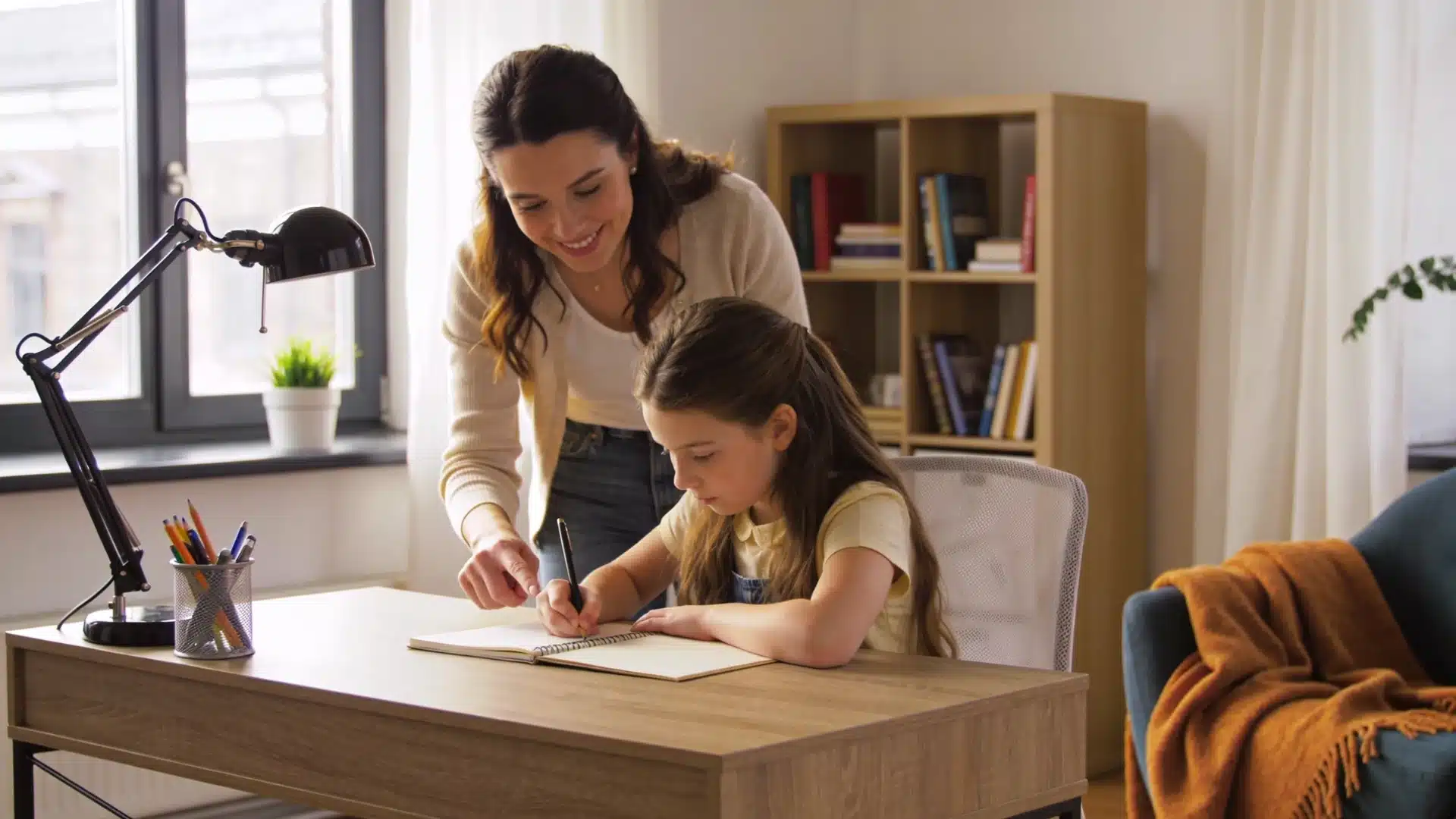
Getting a child to focus can feel like the hardest thing in the world. One minute they are sitting down to study. Next, they stare at the ceiling or fidget with a pencil.
It is frustrating and exhausting. But here is the thing: focus is a skill, not a personality trait. It can be taught, practiced, and improved. It is tied to how the brain develops, and that takes time.
Knowing how to improve kids’ focus starts with understanding what is actually going on in their brains. The strategies ahead are practical and easy to follow. Let’s get into it.
What’s Getting in the Way?
It is not stubbornness, and it is not laziness. There are real reasons why focus is hard for kids. Once you understand them, the strategies ahead will make a lot more sense.
Too much screen time trains the brain to expect constant stimulation. Slower tasks like reading or math start to feel unbearable by comparison.
Poor sleep makes attention and memory worse, sometimes looking a lot like ADHD. Worry about school, friends, or home life pulls a child’s mind away from tasks.
Skipping meals or eating too much sugar before study time causes energy crashes. And kids are far more sensitive to distractions than adults.
For most children, struggling to focus while studying is completely normal and very manageable.
Your Child’s Age and What That Means for Focus
Focus is tied directly to the prefrontal cortex, the part of the brain that controls attention, planning, and impulse control.
This region develops gradually, which is why expecting a young child to focus like an adult is biologically impossible. Here is a look at realistic attention spans by age:
| Age Range | Realistic Focus Span | What to Expect |
|---|---|---|
| 2 to 3 years | 4 to 6 minutes | Very short bursts, highly driven by play and curiosity |
| 4 to 5 years | 8 to 10 minutes | Can follow simple instructions but needs frequent redirection |
| 6 to 7 years | 12 to 14 minutes | Beginning to manage basic tasks independently with support |
| 8 to 10 years | 16 to 20 minutes | Able to sustain focus on structured tasks with short breaks |
| 11 to 13 years | 22 to 30 minutes | Capable of longer sessions but still needs planned breaks |
| 14 years and older | 30 to 45 minutes | Approaching adult-level focus with the right environment |
These ranges are general benchmarks, not rigid rules. Every child develops at their own pace, and factors like sleep, stress, diet, and individual temperament can all shift these numbers on any given day.
How to Improve Kids’ Focus at Home

The strategies below cover everything from environment and structure to mindset and habits. Pick the ones that feel most relevant to your child and your household, and build from there.
1. Build a Consistent Daily Routine
Kids thrive on predictability. Build a routine that includes a short break after school, a snack, and then a dedicated homework block. Stick to the same sequence every day.
Over time, this consistency alone can dramatically reduce resistance, minimize meltdowns, and improve your child’s ability to settle into focused work.
How to do it:
- Write out a simple after-school sequence and post it visibly.
- Include a 20-minute break and a snack before any academic work.
- Keep the same order every day, even on lighter homework days.
- Involve your child in creating the routine, so they feel ownership over it.
2. Break Tasks Into Smaller Steps
A big assignment can feel completely paralyzing to a child who struggles with focus. Smaller steps reduce the mental load of getting started, which is often the hardest part of any task.
They also keep your child moving forward with small wins, preventing the overwhelm that leads to avoidance, shutdown, or frustration.
How to do it:
- Before sitting down, list every individual step the task requires.
- Give your child one step at a time, not the full list upfront.
- Cross off each completed step together to maintain momentum.
- Celebrate the completion of each step, not just the finished task.
3. Limit Screen Time Before Study Sessions
Screens are engineered to be stimulating, and transitioning directly from a fast-paced video game or cartoon into quiet homework is genuinely difficult for a child’s brain.
Build a screen-free buffer of at least 20 to 30 minutes before any focused work begins. This gives the brain the time it needs to shift gears and settle into a calmer, more receptive state.
How to do it:
- Set a firm rule: no screens for at least 30 minutes before homework.
- Replace screen time with a snack, outdoor play, or quiet reading.
- Communicate the rule calmly and in advance, not in the moment.
- Stay consistent even on days when it feels easier to make an exception.
4. Practice Mindfulness and Breathing Exercises
Simple mindfulness practices can have a surprisingly powerful effect on a child’s ability to focus.
Even two to three minutes of slow, deliberate breathing or a short body scan before homework can help settle a restless and overstimulated mind.
Done consistently, this small habit creates a reliable mental on-switch for focused work.
How to do it:
- Start with just two minutes of slow, deep breathing before homework.
- Guide your child to breathe in for four counts and out for four counts.
- Try a simple body scan: ask your child to notice how each part feels.
- Do it alongside your child rather than just instructing them to do it alone.
5. Reduce Decision Fatigue
Too many choices drain a child’s mental energy before they even begin a task.
Lay out all necessary materials in advance, decide the order of subjects together the night before, and keep the workspace consistently stocked so nothing needs to be hunted for mid-session.
Small logistical preparations made ahead of time have an outsized impact on how smoothly and productively a study session runs.
How to do it:
- Pack the school bag and lay out materials the night before.
- Decide the order of subjects together during dinner, not at homework time.
- Keep a consistent supply of pencils, erasers, and materials in the workspace.
- Remove unnecessary items from the desk before the session begins.
6. Use Visual Schedules and Checklists
Children, especially younger ones, respond very well to seeing their tasks laid out visually. A simple checklist or photo schedule gives your child a clear map.
Checking off completed items also provides a small but genuinely satisfying sense of accomplishment that keeps momentum going.
It gives the child a sense of ownership and control over their workflow, reducing the resistance and negotiation that often derail focus before a session even begins.
How to do it:
- Create a simple handwritten or printed checklist for each homework session.
- Use images alongside words for younger children who are not yet reading fluently.
- Let your child physically check off or cross out each completed item.
- Review the checklist together at the end to reinforce a sense of accomplishment.
7. Give One Instruction at a Time
When parents give multiple directions at once, kids who struggle with focus simply cannot hold all of it in working memory.
Slow down and give one clear, specific instruction. Wait for it to be completed before giving the next one. This reduces confusion, prevents cognitive shutdown, and keeps your child progressing through tasks step by step.
How to do it:
- Pause before speaking and decide on the single most important next step.
- Make eye contact and wait for your child’s full attention before instructing.
- Wait until the first instruction is completed before giving the next one.
- Use simple, short sentences with no more than one action per instruction.
8. Allow Movement Breaks Between Tasks
Physical movement increases blood flow to the brain and genuinely helps reset attention and energy levels. Sitting still for extended periods actively works against a child’s natural need to move.
Build short, intentional movement breaks into every study session. A quick walk around the block, a few jumping jacks, or even five minutes of free play can make a significant difference.
How to do it:
- Schedule a 5-minute movement break after every completed work block.
- Suggest specific activities: jumping jacks, a walk outside, or free dancing.
- Set a timer for the break so the transition back to work is clear and expected.
- Frame the break as a planned part of the session, not a reward for finishing.
9. Activities and Games that Build Focus in Kids’
Getting a child to “try harder” to focus rarely works. What does work is sneaking focus-building practice into activities they actually enjoy.
Games like Simon Says, puzzles, mazes, and yoga strengthen attention, impulse control, and concentration without feeling like work.
How to do it:
- Play Simon Says right after school as part of the transition into home mode.
- Do a short puzzle or maze before homework to prime the brain for focused work.
- Use these activities as breaks between homework blocks to reset attention.
- Add them to the bedtime routine to help your child wind down.
How to Help Your Child Focus Better at School

The strategies below are designed to work alongside your child’s school environment.
Some involve direct action from you as a parent; others equip your child with tools they can use independently inside the classroom.
10. Communicate Early With Your Child’s Teacher
Do not wait for a parent-teacher conference to discuss focus challenges. Reach out at the start of the term, share what works at home, and ask what the teacher is observing in class.
Early communication opens the door to simple accommodations like preferred seating, chunked instructions, or scheduled movement breaks that can meaningfully improve your child’s ability to stay on task throughout the school day.
How to do it:
- Send a brief, friendly email to the teacher within the first two weeks of term.
- Share two or three strategies that work well for your child at home.
- Ask specifically about seating arrangements and classroom distractions.
- Schedule a follow-up check-in after four to six weeks to review progress.
11. Teach Your Child to Self-Monitor Their Own Attention
One of the most valuable focus skills you can give your child is the ability to notice when their mind has wandered and bring it back independently.
This reduces their reliance on constant adult redirection and builds genuine self-awareness around concentration that will serve them throughout their education.
How to do it:
- Teach your child to ask themselves, “am I focused right now?” at regular intervals.
- Use a simple traffic-light system: green means focused; red means distracted.
- Practice the skill at home first before expecting it to transfer to school.
- Praise your child specifically when they catch themselves drifting and refocus.
12. Pack a Distraction-Free School Bag
What your child brings to school can quietly work against their focus before the day even begins. An overstuffed or disorganized bag creates unnecessary stress and temptation.
Keeping school supplies simple, organized, and consistent removes small but real sources of distraction and helps your child arrive at their desk ready to concentrate.
How to do it:
- Pack the bag together the night before so mornings are calm and predictable.
- Remove any non-essential items, toys, or gadgets that do not belong in school.
- Use labeled sections or pouches to keep supplies organized and easy to find.
- Do a quick bag check each week to keep clutter from building up over time.
13. Establish a Strong Morning Routine
How your child starts their morning directly affects how well they can focus once they arrive at school.
A rushed, stressful morning puts the brain into a reactive state that is the opposite of what is needed for calm, sustained concentration.
A consistent, unhurried morning routine sets your child up with the mental clarity they need to focus from the first lesson of the day.
How to do it:
- Wake your child early enough to avoid any rushing before school.
- Include a protein-rich breakfast to stabilize blood sugar and support brain function.
- Keep the morning sequence the same every day to reduce decisions and stress.
- Avoid screens during the morning routine to keep the brain calm and focused.
14. Debrief After School to Spot Patterns
A short, low-pressure conversation after school is one of the most underused tools available to parents.
Asking your child how their day went, which lessons felt easy to concentrate in and which felt hard, gives you valuable insight into where focus breaks down and why.
Over time, patterns emerge that help you and the teacher make targeted adjustments.
How to do it:
- Ask open questions like “which part of the day felt hardest to concentrate in?”
- Listen without judgment and avoid immediately jumping into problem-solving mode.
- Note any recurring patterns across subjects, times of day, or social situations.
- Share relevant observations with the teacher to inform any classroom adjustments.
When Problems May Need Professional Support
Most children go through phases of poor concentration, and the strategies will make a meaningful difference for the vast majority of them.
However, there are times when focus challenges run deeper than habit or environment.
If your child consistently struggles to concentrate across all settings, not just during homework but also during activities they genuinely enjoy, it may be time to seek professional guidance.
Other signs worth discussing with your pediatrician include frequent emotional outbursts during tasks, extreme difficulty transitioning between activities, and persistent low self-esteem around learning.
Conditions like ADHD, anxiety disorders, and sensory processing differences are common, well-understood, and highly treatable when identified early.
Getting clarity is not a failure as a parent. It is one of the most proactive things you can do for your child.
How Technology Can Help Kids Improve Focus
Technology often gets blamed for shortening children’s attention spans, and in many cases that criticism is fair.
The key is intentionality. Technology should be a tool with clear boundaries, not an open-ended activity.
Focus timer apps like Forest or Be Focused bring the Pomodoro technique to life in a way that feels engaging for kids, making timed work blocks feel like a game rather than a chore.
Mindfulness apps designed for children, such as Headspace for Kids or Calm, offer guided breathing and attention exercises in short, accessible sessions that fit easily into a daily routine.
For children who are distracted by background noise, white noise or lo-fi music apps can create a consistent auditory environment that supports sustained concentration.
Common Mistakes Parents Should Not Make
Sometimes the most well-intentioned parenting habits quietly work against your child’s ability to concentrate. Here are the most common ones to watch out for:
- Giving Too Many Instructions at Once: Too many directions at once creates confusion before your child even begins the task.
- Expecting Too Much Too Soon: Pushing a young child to focus for an hour straight is developmentally unrealistic and builds frustration.
- Reacting With Frustration: Responding with irritation or raised voices makes children associate study time with stress and anxiety.
- Allowing Screens Right Before Study Time: Screens wind the brain up, making the shift to focused work significantly harder for kids.
The good news is that all of these are fixable. Small adjustments in how you respond and set expectations can make a big difference.
Frequently Asked Questions
At What Age Should a Child Be Able to Focus?
Most children can focus for roughly 2 to 5 minutes per year of age. A 6-year-old managing 15 minutes of focused work is completely on track.
Can Screen Time Cause Focus Problems in Children?
Yes. Heavy screen use, especially before study time, conditions the brain to expect constant stimulation. Limiting screens and building a buffer period before homework can noticeably improve your child’s ability to settle and concentrate.
How Do I Get My Child to Focus without Medication?
Start with the basics: consistent routine, a distraction-free workspace, regular exercise, and balanced nutrition. If challenges persist across all settings despite consistent effort, consult your pediatrician to rule out underlying conditions.
Final Thoughts
Building focus in kids takes time, but it is absolutely worth the effort. Small changes really do add up over time. A calmer morning, a better workspace, a short breathing exercise before homework.
None of these is complicated. None of them require special training. What they require is consistency and patience.
You now have a solid starting point for figuring out how to improve kids focus in a way that actually works for your child. Every child is different, and that is completely okay.
Try one thing at a time and see what sticks. Found something that works for your kid? Drop it in the comments below.