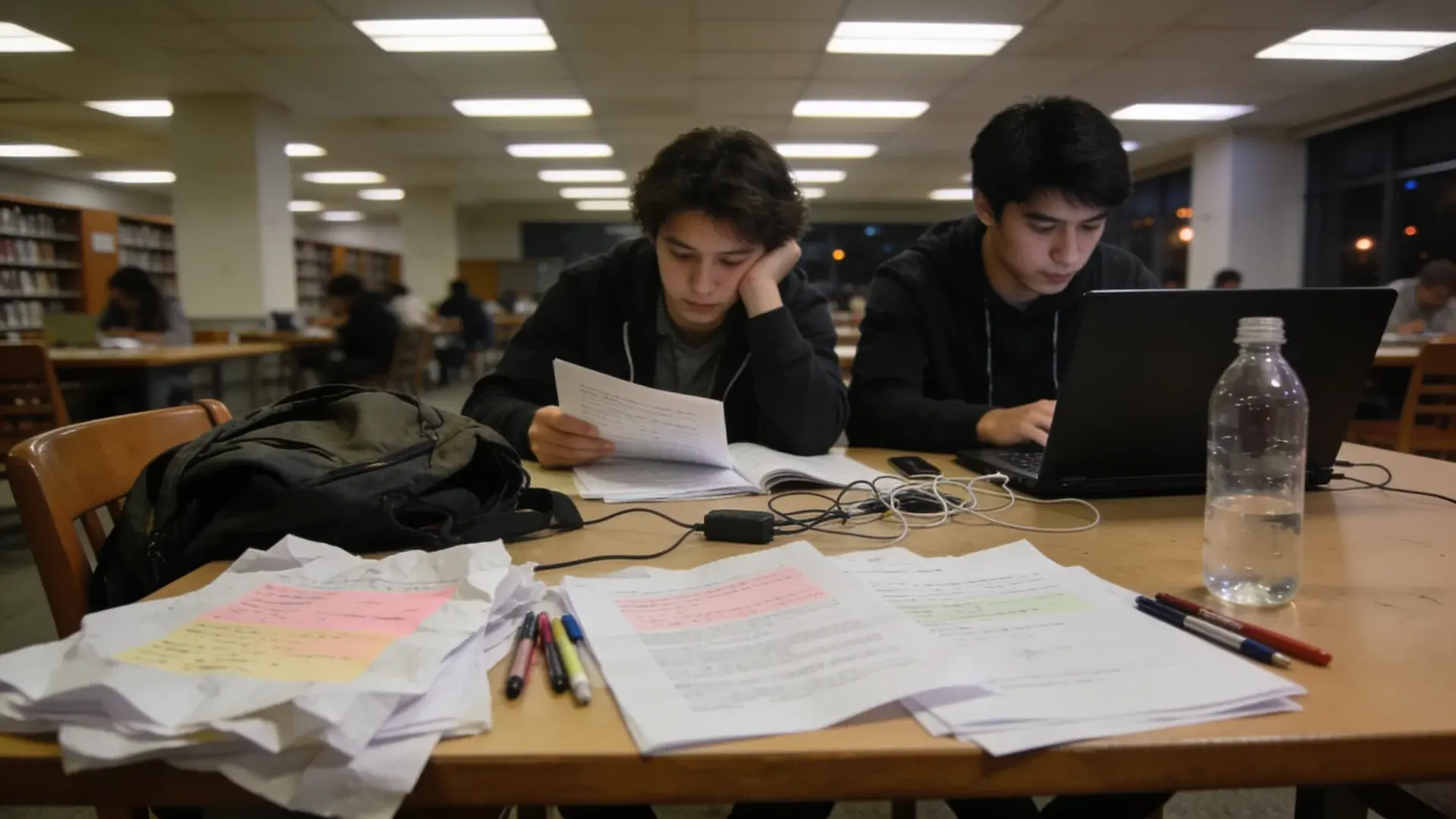


Every CPA candidate needs one thing before they even open a textbook: a good study plan.
A CPA exam study schedule gives you that plan in simple, clear steps.
Instead of cramming late at night, you build a routine that fits real life. You study during hours when your focus works best. You spread topics out so nothing feels rushed.
A clear plan also keeps prep organized and steady. It shows you exactly what to cover each week. Without a plan, study time gets wasted easily. With one, each study hour has a clear purpose.
Build a CPA exam study schedule first, and the rest of your prep stays on track.
Understanding the CPA Exam
The Certified Public Accountant (CPA) exam, administered by the American Institute of Certified Public Accountants (AICPA), is a rigorous requirement for licensure as a CPA in the U.S.
It features computer-based multiple-choice questions and task-based simulations that test practical application.
As of 2024, it follows a Core + Discipline model, requiring passing three core sections plus one discipline of choice.
Since the Discipline choice does not affect the final license, candidates still deciding between credentials may want to compare CPA and CMA career paths early on.
Most candidates spend 400-500 study hours, with FAR demanding the most.
A structured study plan ensures consistent preparation, helps manage time effectively, tracks progress, and boosts confidence for exam day.
Inside Each CPA Exam Section: Syllabus Breakdown
Before scheduling any of it, here’s what each exam section actually covers:
|
Section |
Full Name |
Format |
Question Types |
Pass Rate Trend |
|
AUD |
Auditing and Attestation |
Core |
MCQs and task-based simulations, roughly even split |
Mid-range, fairly stable across recent windows |
|
FAR |
Financial Accounting and Reporting |
Core |
MCQs and task-based simulations, roughly even split |
Historically the lowest of the six sections |
|
REG |
Regulation |
Core |
MCQs and task-based simulations, roughly even split |
Mid-range, slight upward movement in recent cycles |
|
BAR |
Business Analysis and Reporting |
Discipline |
MCQs and task-based simulations, roughly even split |
Comparable to Core section averages |
|
ISC |
Information Systems and Controls |
Discipline |
MCQ-heavy, with a smaller simulation share |
Trending slightly higher than other Discipline options |
|
TCP |
Tax Compliance and Planning |
Discipline |
MCQs and task-based simulations, roughly even split |
Mid-range among Discipline sections |
A candidate passes three Core sections plus one Discipline of their choice. For the official exam blueprint and full section details, see the AICPA CPA Exam page.
How to Build an Effective CPA Exam Study Schedule?
A strong study schedule keeps CPA prep from turning into guesswork. A few pointers can make the process run smoother:
- Step 1: Match study blocks to natural energy levels so focus stays sharp during difficult topics like consolidations or leases.
- Step 2: Track weak topics in a running list and revisit them weekly instead of waiting until review week arrives.
- Step 3: Rotate MCQs with TBS practice each week so both question types feel familiar well before test day.
- Step 4: Keep one rest day for mental recovery since burnout slows progress more than a single missed study session.
- Step 5: Adjust the plan after every practice exam based on which topics scored low and needed more attention.
These small adjustments keep the schedule realistic over several months. A flexible plan holds up better than a rigid one when life gets busy.
Tips to Build a CPA Study Schedule That Sticks

A schedule only works if it survives contact with real life. These eleven habits come from how candidates who actually pass tend to structure their weeks.
1. Study During Your Peak Hours
Energy matters more than hours logged. Candidates who study when they are sharpest, whether that is early morning or late evening, retain far more per session.
Someone who studies foggy after a long shift wastes time rereading the same page.
Successful candidates protect their sharpest hour of the day for the hardest material, not whatever’s left over after everything else is done. Matching effort to energy makes every session count more.
2. Block Weekly Goals, Not Daily Ones
Daily targets crumble the moment one bad day happens.
A missed Tuesday shouldn’t derail the whole week. Candidates who stick with their plan tend to set weekly totals instead, then distribute hours across the days that actually allow it.
This builds in flexibility without losing structure. A rough Wednesday gets absorbed by a stronger Saturday. The week still closes out on target, and momentum never fully stalls.
3. Rotate Sections to Avoid Burnout
Studying one section for weeks straight gets mentally heavy fast. Candidates preparing for multiple sections often rotate topics within a single week, pairing a dense area like FAR transactions with something lighter like ethics.
This keeps the brain engaged instead of fatigued. It also mirrors how the exam mixes topics within a testlet.
Variety inside a study week, not just across months, keeps focus from flatlining halfway through.
4. Treat MCQs as Daily Non-Negotiables
Passing candidates rarely skip a day of multiple-choice practice, even a short one.
Twenty focused questions daily beats a single three-hour cram session once a week. Daily repetition builds pattern recognition that the exam rewards. It also surfaces weak spots immediately instead of days later.
Treating MCQs like a daily habit, similar to brushing teeth, keeps material fresh and prevents the frantic last-week scramble so many candidates regret.
5. Schedule Simulations Only After Concepts Stick
Jumping into task-based simulations before the underlying concept is solid usually backfires.
Candidates who wait until they can explain a topic without notes tend to perform better on simulations later. Simulations test application, not memorization, so shaky fundamentals show up immediately.
Building in a short delay between first learning a topic and practicing it in a simulation gives the brain time to absorb it.
6. Build In a Buffer Week Monthly
Even a well-built schedule falls behind eventually. Work emergencies, illness, or just an off week happen to everyone.
Candidates who plan a buffer week every month use it to catch up, review flagged topics, or simply recover without guilt.
Without that built-in slack, one bad week can spiral into abandoning the entire plan. A buffer isn’t wasted time. It’s what keeps the schedule realistic instead of theoretical.
7. Time-Box Review Instead of Rereading
Rereading notes feels productive but rarely improves retention.
Candidates who progress faster set a fixed time limit for review, then force themselves into active recall or practice questions once that limit is hit. This prevents review from quietly eating hours meant for new material.
A twenty-minute cap on rereading, followed by testing that knowledge immediately, builds far stronger recall than passive rereading ever does.
8. Track Weak Areas in Real Time
Waiting until a full practice exam to spot weaknesses wastes valuable weeks. Candidates who track missed questions by topic, even in a simple spreadsheet, catch patterns early.
A cluster of missed questions in one area signals exactly where the next study block should go.
This turns practice into a feedback loop instead of a guessing game, and keeps study time pointed at what actually needs the work.
9. Protect One Full Rest Day
Studying seven days a week sounds committed but backfires fast. Candidates who protect one true day off each week retain more overall, not less.
Rest allows consolidation, the process where the brain actually locks in what’s been learned. Skipping rest to squeeze in more hours often means those hours barely stick.
One full day away from the material keeps the following week sharper.
10. Simulate Real Exam Conditions Monthly
Practice questions in a relaxed setting don’t prepare anyone for four hours under real exam pressure.
Candidates who run a full timed mock exam monthly build tolerance for the pace and fatigue of test day itself.
Pairing a monthly mock exam with a few tips for raising your exam scores tends to show up faster than mock exams alone.
It also surfaces timing issues no amount of untimed practice reveals. Treating one Saturday a month like the actual exam removes a layer of surprise when the real date arrives.
11. Adjust the Schedule, Don’t Abandon It
Plans need adjusting, not scrapping. Candidates who pass tend to treat their schedule as a living document, shifting weekly goals when life gets in the way instead of quitting the plan entirely.
A missed week doesn’t mean starting over. It means recalculating what’s left and redistributing it.
Flexibility built into the plan is exactly what keeps candidates studying months later instead of giving up early.
Sample Weekly CPA Study Schedule
A weekly schedule works best when it accounts for both study time and rest. It should feel realistic enough to follow for months without burnout:
|
Day |
Hours |
Focus |
Materials Used |
Weekly Goal |
|---|---|---|---|---|
|
Monday |
2 hrs |
Content lecture + 25 MCQs |
Video lectures, MCQ bank |
Finish one new unit |
|
Tuesday |
2 hrs |
Content lecture + 25 MCQs |
Video lectures, MCQ bank |
Continue unit progress |
|
Wednesday |
2 hrs |
Practice questions + error review |
MCQ bank, error log |
Clear error log backlog |
|
Thursday |
2 hrs |
Content lecture + 25 MCQs |
Video lectures, MCQ bank |
Wrap up current unit |
|
Friday |
2 hrs |
TBS practice + weak area review |
TBS simulations, notes |
Strengthen weak topics |
|
Saturday |
6 hrs |
Full unit review + 100 MCQs |
MCQ bank, unit summary sheets |
Complete full unit cycle |
|
Sunday |
4 hrs |
Mock exam section or full content review |
Mock exam software, flashcards |
Test readiness check |
This layout can shift slightly based on personal energy levels and work obligations. Small tweaks each week help keep the plan sustainable through exam day.
The PDF below breaks the full 4-month CPA study plan into a detailed section-by-section format for daily reference.
Download Free 4-Month CPA Study Plan
Tools and Resources to Stay on Track
A schedule holds up better with the right tools backing it up. Here are five worth adding to yours.
- Becker CPA Review: A structured review course keeps your daily targets aligned with real exam content.
- Toggl Track: Log your actual study hours and see where your time really goes each week.
- AICPA’s CPA Exam Blueprints: The official source for exam content and weighting, straight from AICPA.
- Anki: A spaced-repetition flashcard tool built for exactly the kind of recall CPA prep demands.
- NASBA’s CPA Portal: Schedule your exam, track your NTS, and manage your application in one place.
Tools only help if your schedule stays realistic in the first place. That’s where a few common planning mistakes tend to creep in.
What Candidates Recommend on Reddit
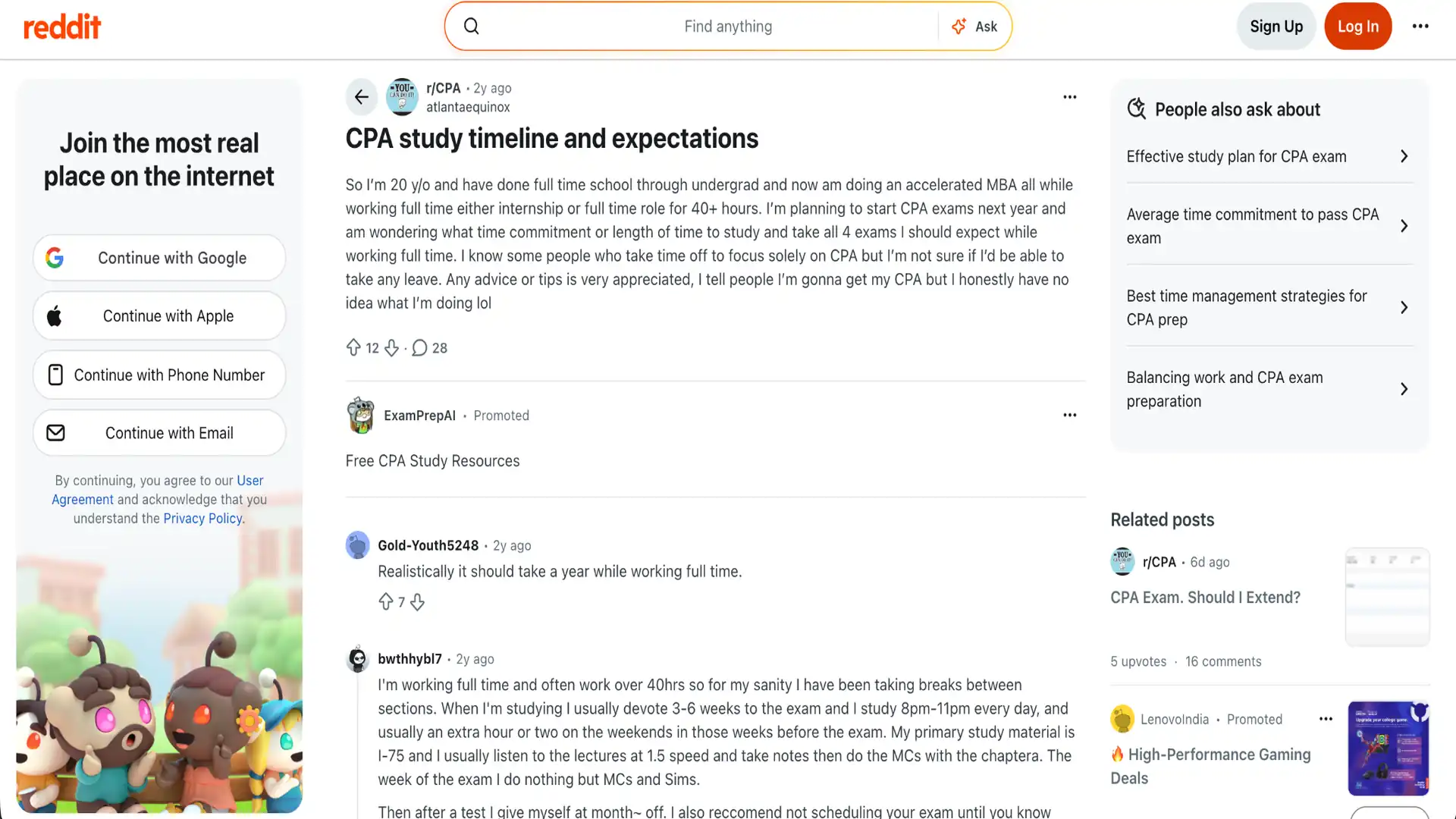
In a Reddit thread I read, working candidates say the timeline stretches when work gets busy. Many mention taking a full month off between sections just to reset.
Study course choice comes up often too, with candidates split between structured, pre-scheduled plans and looser self-paced routines.
One user, Mick, put it simply: “I study three to six weeks per section, evenings only, then I take a full break before starting the next one.” That rhythm shows up again and again across other candidates.
A few other patterns repeat. Candidates often wish they had spaced sections further apart instead of rushing back-to-back. Several also stress not scheduling an exam date until truly ready.
The shared takeaway across most threads comes down to one thing: pace beats speed, every time.
Mistakes to Avoid in Your Preparation
Even a well-built schedule can fall apart from a few repeated habits. These are the patterns worth watching for.
- Over-Scheduling Without Buffer Time: Packing every week to the edge leaves no room for a bad day. One missed session then snowballs into a missed week.
- Skipping Simulations Until the End: Task-based simulations test application, not memorization. Leaving them for the final days means facing an unfamiliar format under pressure.
- Ignoring Weak-Area Data: Missed questions pile up without ever getting addressed. The same gaps keep resurfacing on every practice test after.
- Studying Passively Instead of Actively: Rereading notes feels productive but rarely builds recall. Active practice through MCQs and recall drills sticks far longer.
- Rescheduling the Exam Repeatedly: Pushing the date back instead of adjusting the plan just delays the same problem.
Most of these come down to the same root cause: a schedule too rigid to bend when life doesn’t cooperate. That’s exactly what a flexible, adjustable plan is built to prevent.
Frequently Asked Questions (FAQs)
What Happens If You Fail a CPA Exam Section?
The section can be retaken during a later testing window, but candidates typically need a new Notice to Schedule and must pay the application fee again.
How Long Is Your Notice to Schedule (NTS) Valid?
An NTS is typically valid for six months from the issue date, though the exact window can vary slightly by jurisdiction.
How Long Before Your Exam Date Should You Start Studying?
Most candidates begin three to six weeks before a Core section and slightly less for a Discipline section, depending on background and pace.
Final Words
A CPA exam study schedule works best when you follow it every week. Small daily habits work better than a big cram session.
Track weak spots, rest often, and adjust the plan when life gets messy.
Passing the CPA exam comes down to steady effort, not luck. It comes down to effort and a schedule built around your real life. Stay patient with yourself on slow days and keep moving forward.
Every study session adds up over time. Print your schedule, stick it on the wall, and follow it daily. A CPA exam study schedule keeps your prep simple and organized.
Share your biggest study struggle in the comments below.