

Your grades can open doors or close them before you even apply.
Every student reaches a point where they ask, what is a good GPA in high school? It’s a fair question, and the answer is not one-size-fits-all.
Your GPA shows how well you’ve done in school over time. But good looks different depending on where you want to go. Your grades matter, but so do the classes behind them.
Harder classes can actually help your chances, even with a slightly lower grade. You don’t need a perfect score to get into college.
You just need grades that match your goals and your school list. Your GPA tells a story; make sure it’s a good one.
Understanding GPA: The Basics Before the Benchmarks
Grade Point Average (GPA) is a single number that summarizes your academic performance across all your classes, calculated on a 4.0 scale where each letter grade converts to a point value.
Your cumulative GPA reflects every grade earned from freshman year onward and is the number colleges see on your official transcript.
A semester GPA covers a single grading period and feeds into your cumulative average over time.
Your unweighted GPA treats every course equally, while your weighted GPA adds bonus points for AP, IB, and Honors courses. Colleges often recalculate both when reviewing your application.
What Is a Good GPA in High School?
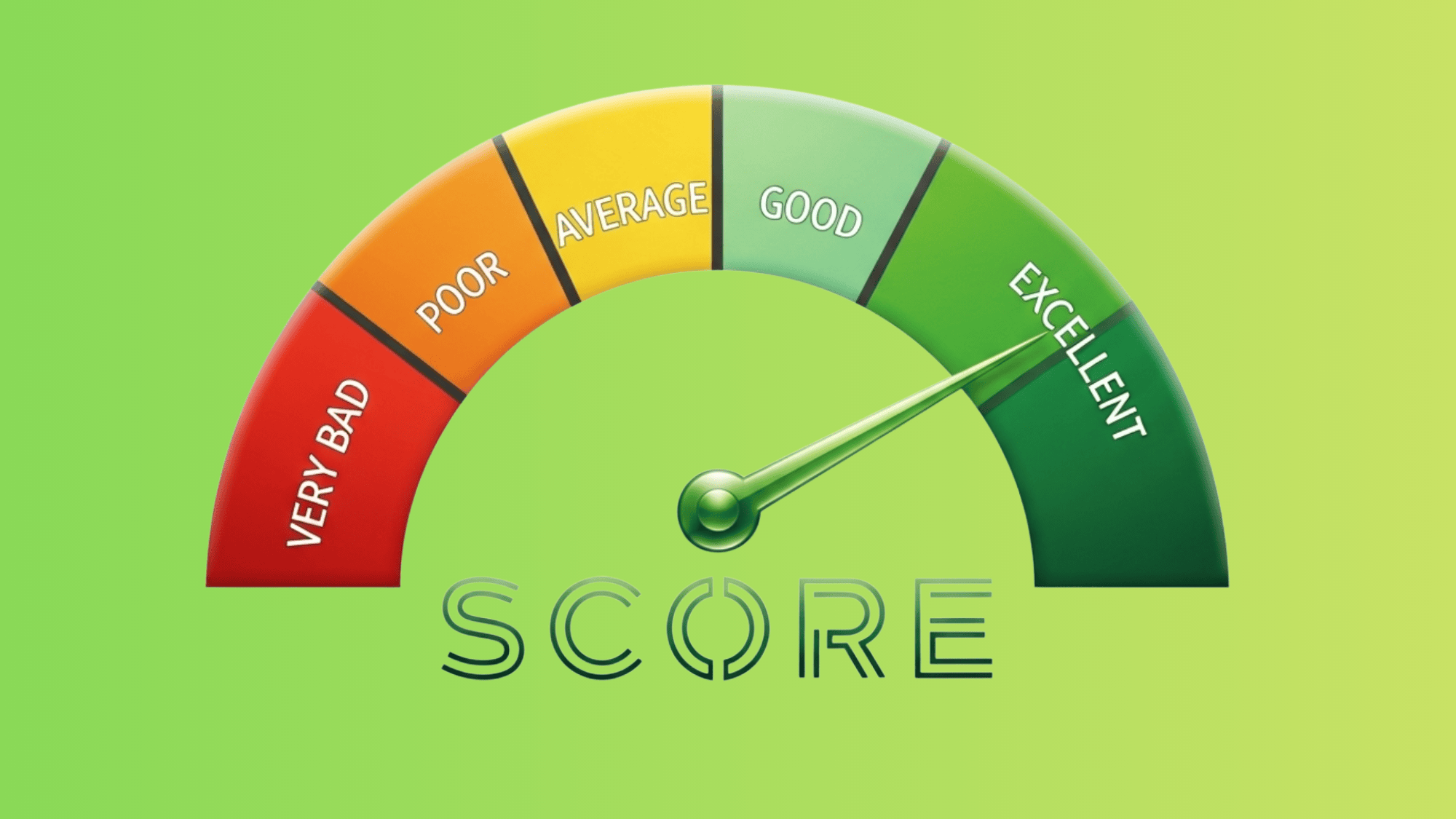
A 3.0 GPA is generally considered good. A 3.5 is strong. A 3.7 or above is excellent. But those numbers only mean something in context.
A GPA that makes you a competitive applicant at one school might put you below average at another.
| GPA Range | Label | What It Signals to Admissions |
|---|---|---|
| 3.8 to 4.0+ | Excellent | Competitive at selective and elite schools |
| 3.5 to 3.7 | Strong | Competitive at most 4-year universities |
| 3.0 to 3.4 | Good | Competitive at many state and regional schools |
| 2.0 to 2.9 | Below average | Limits options at 4-year schools; community college is a strong path |
Before you decide if your GPA is good enough, you need to know what a weighted and unweighted GPA looks like:
Weighted vs. Unweighted GPA: What Is the Difference?
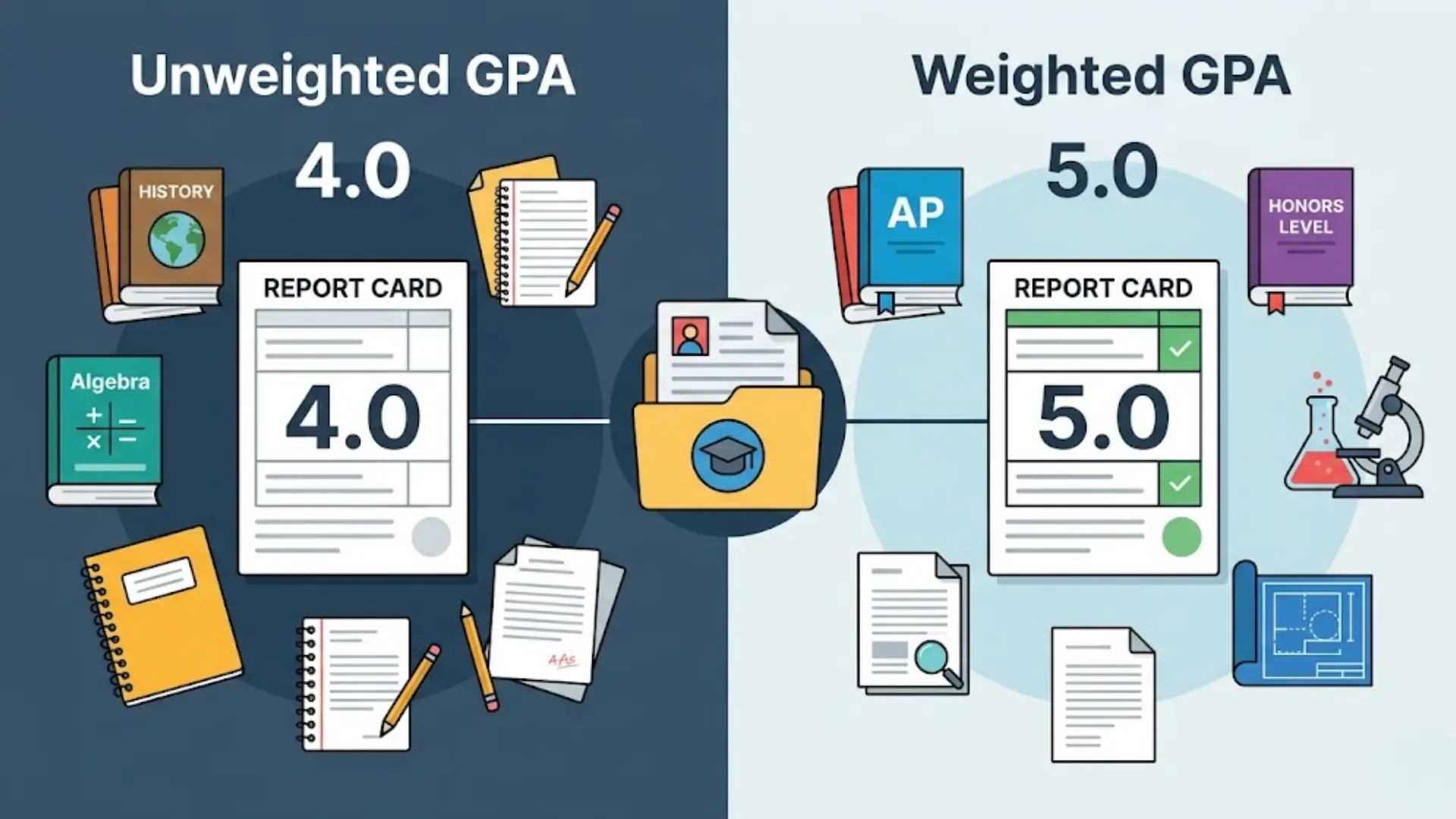
Most students have two GPAs on their record. The story behind each weighted and unweighted GPA is something colleges pay close attention to during admissions. Here is what each one means:
Unweighted GPA
Your unweighted GPA is calculated on a straight 4.0 scale, regardless of how hard your classes are. An A in standard English and an A in AP English both earn the same 4.0 points.
Every course is treated equally, which means your unweighted GPA reflects your grades but says nothing about the difficulty of the courses behind them.
This is the GPA most commonly cited when people discuss high school GPA benchmarks.
Weighted GPA
A weighted GPA factors in course difficulty.
Advanced Placement, International Baccalaureate, and Honors courses earn bonus points on top of the standard scale, typically 0.5 to 1.0 extra points per grade.
This pushes the maximum possible GPA up to 5.0.
The weighted GPA exists to reward students who challenge themselves rather than take easier classes to protect their average.
What Colleges Actually Do With Both
Most colleges recalculate your GPA on their own scale when reviewing applications. They may remove electives, standardize course weights, or convert everything to a 4.0 scale to fairly compare applicants.
Your weighted GPA does not automatically carry over. What colleges cannot recalculate is which courses you actually took.
A student with a lower GPA and a schedule full of AP courses can read as a stronger candidate than one who avoided every challenging class.
The takeaway: Do not choose between a strong GPA and a challenging course load. Colleges want to see both. A slightly lower GPA earned in harder classes will almost always outperform a perfect GPA earned in easy ones.
What Is the Average High School GPA in the US?
According to the National Center for Education Statistics, the average unweighted high school GPA in the United States is approximately 3.0. That means a 3.0 puts you right at the national midpoint, not ahead of it.
Average GPAs have risen steadily over the past two decades, and grade inflation is something college admissions officers are well aware of.
A 3.5 today does not carry the same weight it did fifteen years ago, which is part of why course rigor has become an increasingly important signal in the admissions process.
It is also worth knowing that not all GPAs are reported the same way.
A 3.5 from a school that weights AP courses and a 3.5 from a school that does not are very different numbers. Colleges account for this by reviewing your transcript in the context of your specific school’s grading profile.
Worth noting: Class rank is still reported by many high schools and can work in your favor if you are near the top of your class, even if your raw GPA is not exceptional.
GPA Requirements by College Tier

Not all colleges weigh GPA the same way, and the GPA you need depends almost entirely on where you are applying. Here is a tier-by-tier breakdown:
Tier 1: Ivy League and Elite Schools
Acceptance Rate Under 15%
Schools in this tier include Harvard, Yale, Princeton, Columbia, Penn, Dartmouth, Brown, Cornell, MIT, and Stanford. The average admitted student GPA sits between 3.9 and 4.0 unweighted.
Virtually every admitted student is at the top of their class.
At this level, a strong GPA is the baseline expectation, not a competitive advantage. If your GPA falls below 3.7, your application faces a steep uphill climb regardless of how strong everything else is.
Tier 2: Highly Selective Schools
Acceptance Rate: 15 to 30%
This tier includes schools such as UCLA, the University of Michigan, Georgetown, Vanderbilt, Tufts, and NYU. Average admitted GPAs typically fall between 3.7 and 3.9 unweighted.
There is more flexibility here than at elite schools, but not much. A GPA below 3.5 will put you below average in the applicant pool at most schools in this tier.
Strong test scores, a rigorous course load, and a compelling application can help bridge the gap, but the GPA floor is real.
Tier 3: Selective Schools
Acceptance Rate: 30 to 50%
Schools in this range include many well-regarded public universities and private colleges. A GPA between 3.4 and 3.7 is generally competitive here.
Test scores and extracurriculars carry more relative weight in this tier, meaning a slightly lower GPA can be offset by other strong application components more easily than at higher tiers.
Tier 4: Less Selective and Open Admission Schools
Acceptance Rate: Above 50%
Most schools in this category will consider applicants with GPAs of 2.0 or above. Open-admission community colleges accept all applicants regardless of GPA.
One important exception: specific programs within these schools, particularly nursing, education, and engineering, often have their own GPA minimums that exceed the general admission requirement.
Comparison at a Glance
The table below breaks down what each tier of college realistically expects, so you can build a list that makes sense for where you are.
| College | Tier | Acceptance Rate | Avg. Admitted GPA | Minimum Typically Considered | Notes |
|---|---|---|---|---|---|
| Ivy League / Elite | 1 | Under 15% | 3.9 to 4.0 | 3.7+ | GPA is the floor; everything else differentiates |
| Highly Selective | 2 | 15% to 30% | 3.7 to 3.9 | 3.5+ | Course rigor weighed heavily |
| Selective | 3 | 30% to 50% | 3.4 to 3.7 | 3.0+ | Test scores and ECs carry more weight |
| Less Selective | 4 | 50% to 70% | 3.0 to 3.4 | 2.5+ | Program minimums may apply |
| Open Admission | 5 | 70%+ / All | N/A | 2.0 or none | Community colleges included |
What this gives you is a realistic benchmark so you can review your GPA, identify your tier, and build a balanced college list with safeties, targets, and reaches that accurately reflect where you stand.
GPA Isn’t Everything: Other Factors Colleges Consider
GPA gets you in The Door. It Does Not Get You in. College Admissions at Competitive Schools is a Holistic Process, Which Means Your GPA is One Signal Among Many.
Here is What Colleges Weigh Alongside Your Gpa:
- SAT/ACT Scores: still required or considered at Many Schools. A Strong Score Can Help Offset a GPA that Falls Slightly Below a School’s Average.
- Course Rigor: the Number and Level of Ap, Ib, and Honors Courses You Took. A Challenging Schedule Adds Context to Your GPA.
- Extracurricular Activities: Depth Matters More than Breadth. Meaningful Involvement in Two or Three Activities Outweighs a Long List of Surface-Level Participation.
- Personal Essays: where Students Can Contextualize a Difficult Semester, Explain a Personal Hardship, or Show Who They Are Beyond Their Transcript.
- Letters of Recommendation: Strong Teacher Recommendations Speak Directly to Your Academic Ability, Work Ethic, and Character.
- Class Rank: still reported by Many High Schools. Being in The Top 10% of your class carries weight, even if your raw GPA is Not Perfect.
- Demonstrated Interest: campus Visits, Interviews, and Direct Outreach Signal Genuine Interest at Schools that Track It.
Think of your GPA as the ticket that gets you into the applicant pool. Once you are in, everything else determines if you get in.
How to Improve Your GPA in High School
Your GPA is not fixed, and small, consistent changes can move the needle more than you think. The habits you build now will shape your academic record for the next several years. Here is where to start:
- Prioritize the classes where you are closest to a grade bump
- Turn in missing or late work before the semester closes
- Meet with your teacher regularly to understand where you are losing points
- Focus on test preparation since exams carry the most weight
- Use free periods and study halls instead of saving everything for home
Improving your GPA takes time, but the effort compounds with every grading period. The sooner you build these habits, the more semesters you have to benefit from them.
Study Strategies That Actually Move the Needle
Improving your GPA is not just about studying more. It is about studying smarter. These seven strategies are the ones that actually show up in your grades.
| Strategy | Why It Works | When to Apply |
|---|---|---|
| Go to Office Hours Early | Builds teacher goodwill before you ever need it | First two weeks of each semester |
| Track Your Grades in Real Time | No bad test should ever catch you off guard | Ongoing, every week |
| Build a Fixed Weekly Study Schedule | Consistent effort compounds; cramming does not | Start of the semester |
| Identify Your Highest-Leverage Courses | A near-A is worth more effort than a hard-ceiling B | Before each grading period |
| Use Tutoring Resources Early | Prevention works better than last-minute rescue | Before you fall behind |
| Learn How Each Teacher Tests | Past formats and guides beat textbooks every time | Before the first major exam |
| Prioritize Sleep Before Exams | Rest outperforms exhaustion almost every time | Night before any major test |
None of these strategies requires you to overhaul your entire routine overnight. Pick two or three that address your biggest weak points right now and build from there.
Smart Course Selection for a Stronger GPA
Harder courses can raise your weighted GPA, but only if your grades hold up. Choose a challenge wisely. Here is how to build a course load that works in your favor:
- Take AP or honors courses in subjects where an A or strong B is realistic
- Challenge yourself progressively each year rather than jumping in all at once
- Use advanced courses to signal strength in your intended major area
- Avoid loading up on hard courses when your grades are already slipping
- Never take AP in a weak subject just to add weight to your transcript
Your course selection tells admissions officers as much as your GPA does. A well-chosen schedule that earns strong grades is always more impressive than an overloaded one full of mediocre results.
Frequently Asked Questions (FAQs)
Is a 3.0 GPA good in High School?
Yes. A 3.0 is the National Average and is Considered a Solid Gpa. It Makes You Competitive at a Wide Range of 4-Year Universities, Particularly Less Selective State Schools.
Can You Get into College with a 2.5 GPA?
Yes. Many 4-Year Colleges, Particularly Regional and Less Selective Schools, Accept Students with a 2.5 GPA. With a 2.5, Focus Your List on Schools Where You Fall Within or Above the Admitted Student Range.
What is considered a bad GPA in High School?
A GPA below 2.0 is Generally Considered Low and Will Significantly Limit 4-Year College Options. A GPA between 2.0 and 2.5 Restricts Admission to Less Selective Schools but Does Not Eliminate College as a Path.
Is a 4.0 GPA required for Scholarships?
No. Many Merit Scholarships Set Minimum GPA Thresholds of 3.0 or 3.5. Highly Competitive National Scholarships, Such as the National Merit Scholarship, Require Near-Perfect Academic Records.
How Do Colleges Verify Your GPA?
Colleges Verify Gpa Through Your Official High School Transcript, which is Sent Directly from Your School to the college. The transcript includes your GPA, Course History, and Class Rank if Your School Reports It.
Final Thoughts
Knowing what a good GPA in high school is can help you feel more confident about your future. Your GPA is not just a number. It shows the effort you put in every semester.
It’s never too late to improve. Small steps each week can add up over time. Focus on your grades, your classes, and your daily habits. Colleges look at the full image, not just one number.
You have more control over your academic path than you might realize. Small steps today lead to big results tomorrow; share your thoughts in the comments below.