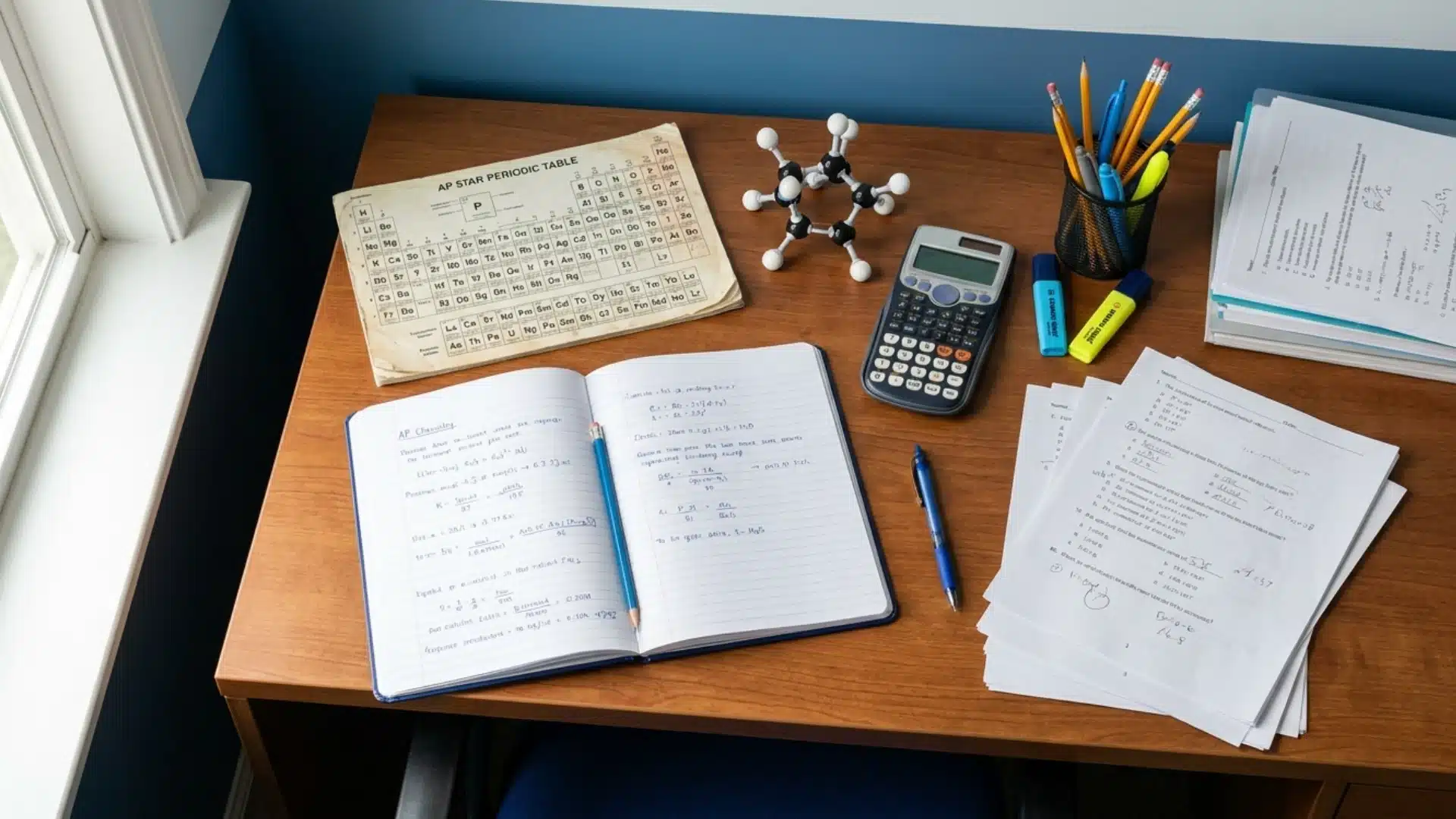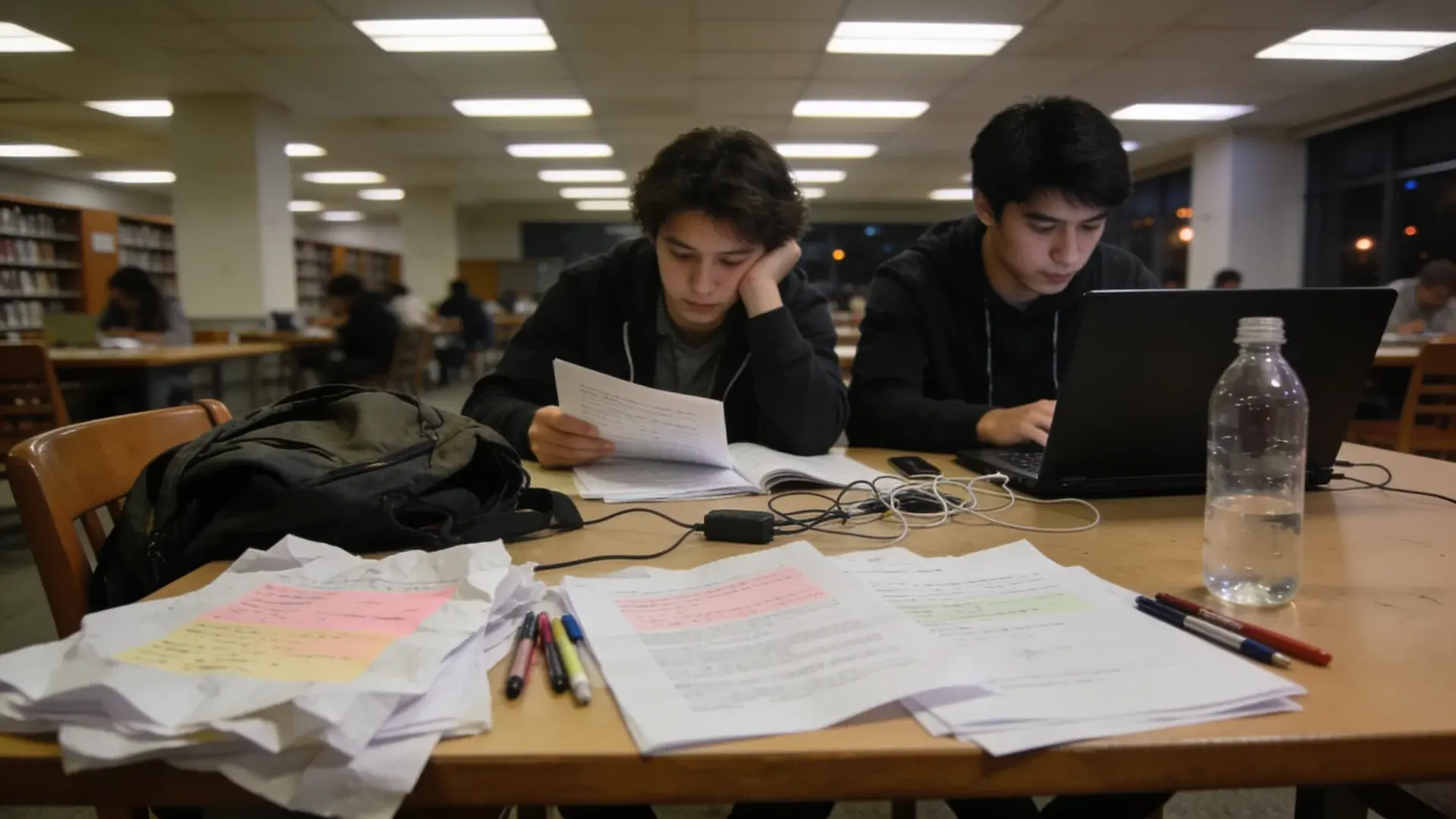


You spent three hours re-reading every note. You highlighted half the textbook. You even stayed up past midnight cramming before the test. And yet, the grade came back lower than you expected.
That is not an effort problem. That is a strategy problem.
Most high school students are never taught how to actually study. They repeat the same ineffective habits year after year and wonder why nothing changes.
This breakdown covers proven study skills for high school students, grounded in real cognitive science research rather than guesswork.
By the end, you will have a complete study system, not just random tips.
Why High School Students Keep Studying the Wrong Way
Most students study hard but still underperform. It’s not about effort. Nobody ever taught them how to study properly. Passive habits like re-reading and highlighting feel productive.
But they build almost no lasting memory. Research shows students consistently confuse recognition with actual recall.
A landmark study published in Psychological Science in the Public Interest identified six evidence-backed strategies that build real, durable understanding.
These are retrieval practice, spaced repetition, interleaving, elaboration, dual coding, and concrete examples. They have been proven across thousands of students.
Students who apply these strategies consistently outperform their peers. And they often do it while studying fewer total hours.
Organization and Time Management Skills
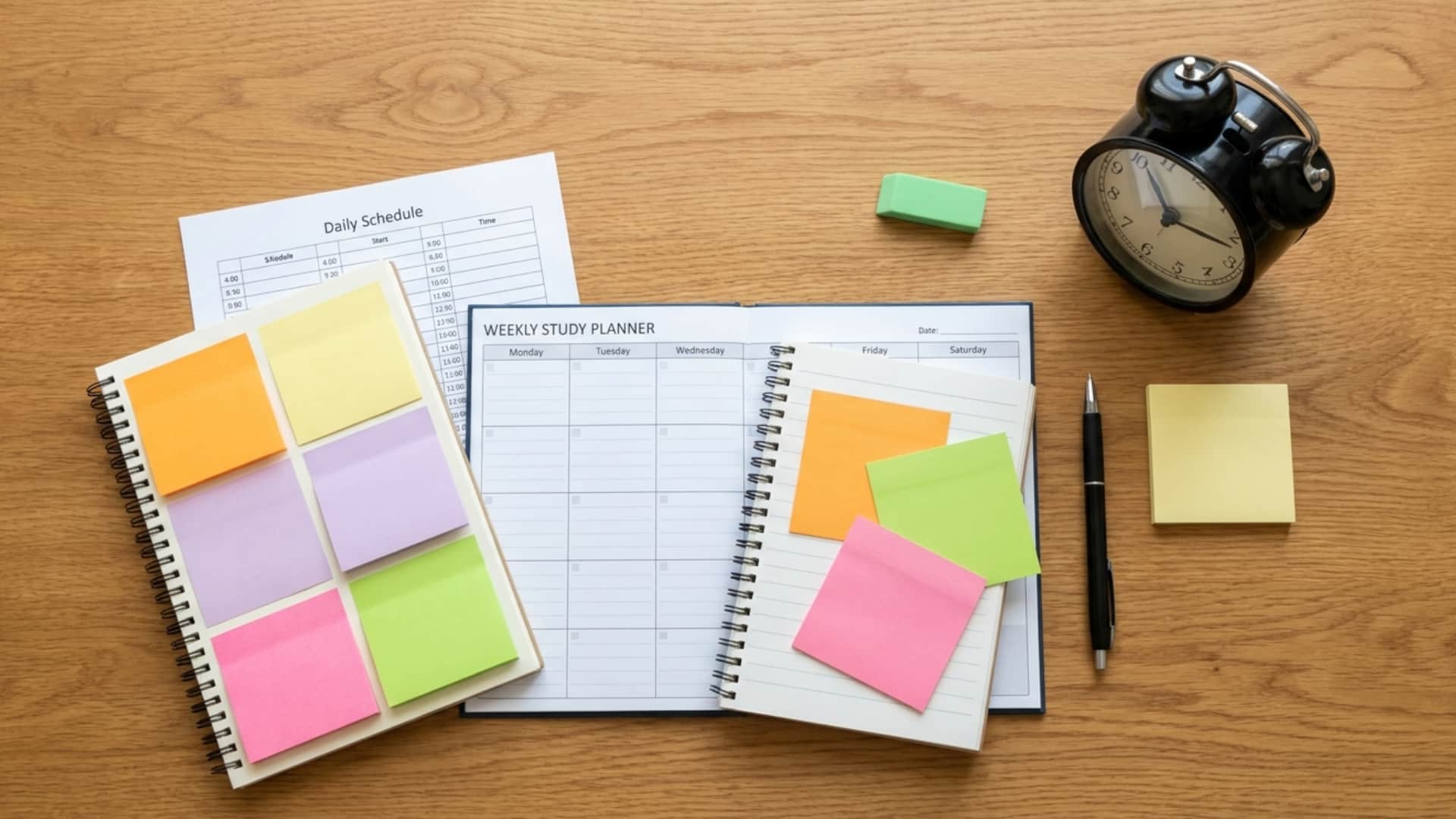
Strong academic results start before you open a single textbook. How you plan and organize your time determines everything that follows.
1. Build a Weekly Planning System That Works
Most students use planners only for homework. A better system tracks every class, test, and deadline in one place. Seeing the full week helps students stay organized and avoid missed work.
Studies show that weekly planning lowers stress and improves school performance better than daily planning alone.
Practical Tip: Every Sunday, spend 20 minutes writing down all upcoming assignments, tests, and deadlines, then assign each subject to a specific day based on priority.
2. Prioritize Tasks by Impact, Not Urgency
Most students grab whatever is due tomorrow and start there. That is urgency-based thinking, and it keeps students permanently behind.
High-impact thinking asks a better question: “What will make the biggest difference to my grades this week?”
List every pending task, score each one by grade impact and due date, and work from the top down. That is how smart students stay ahead.
3. Set up a Distraction-Free Study Space at Home
Your environment could be silently sabotaging your studies. Here’s what most students ignore.
- Environment Drives Focus: Your surroundings shape your concentration more than you think; clutter and noise make it nearly impossible to study well.
- Build the Right Space: Keep it clean, quiet, and well-lit; silence your phone; and have only what you need reach within.
- Easy Win, Zero Cost: This is one of the most overlooked study skills for high school students, and it takes no effort to fix.
Take five minutes, clear your space, and watch your focus change. Simple, free, and effective. More study tips coming next!
4. Break Large Assignments Into Smaller Deadlines
Large assignments feel overwhelming because there is no clear starting point. Breaking them into smaller steps fixes that immediately.
For research papers, projects, and exam revision, set mini-deadlines for each stage. Outline due, first draft due, review due. Each small checkpoint builds steady progress and eliminates last-minute panic.
Practical Tip: Start from the final due date and work backward to set each checkpoint.
Science-Backed Study Techniques That Improve Retention

Most students study hard but forget everything before the exam. These research-backed techniques fix that by working with how your brain actually stores and recalls information. Read more on USA.edu
5. Spaced Repetition (Study Over Days, Not Hours)
Understanding spaced repetition starts with knowing why your memory fails and how a simple schedule can fix it.
| Category | Key Point | What Research Shows | Action Step |
|---|---|---|---|
| The Forgetting Curve | You forget up to 70% of new information within 24 hours | Memory fades fast without reinforcement | Review the material the same day you learn it |
| The Fix | Space your sessions over time, not longer in one sitting | Gaps between study sessions strengthen memory traces | Switch from marathon sessions to shorter, spread-out reviews |
| Review Schedule | Day 1, Day 3, Day 7, Day 14 | Each revisit locks the memory deeper into long-term storage | Mark your review dates in a notebook or calendar |
| Tools | Notebook or a free app like Anki | Removes the guesswork from scheduling reviews | Download Anki or set manual reminders for each review date |
Spaced repetition is one of the most research-backed study methods available, and it costs nothing to start. Follow the four-step schedule above, and you will remember more with less effort every time.
6. Active Recall and Retrieval Practice
Re-reading feels easy because it is, and that is the problem. One of the most effective study skills for high school students is pulling information from memory rather than passively reviewing notes.
Flashcards, self-quizzing, and blank-page testing all force your brain to work, which is exactly what builds lasting memory.
After reading a chapter, close the book and write down everything you remember before checking back.
7. The Pomodoro Technique for Sustained Focus
The Pomodoro Technique is a time management method that breaks your study time into 25-minute focused blocks, followed by a 5-minute break.
Set a timer, study without distraction, rest, and repeat. After four rounds, take a longer 15-minute break to fully recharge.
Try it free at Pomofocus
8. Interleaving Subjects for Stronger Memory
Most students study one subject until it feels done, then move to the next. This is called blocked practice, and research shows it builds weaker memory than interleaving.
Switching between subjects during a single session forces your brain to work harder, strengthening retention each time it shifts focus.
Practical tip: Study math for 25 minutes, switch to history, then return to math. The mental effort of switching is exactly what makes it work.
Note-Taking Skills That Support Learning

Most students take notes but do not review them well. A good note system helps memory, speeds up study time, and makes test prep much easier.
9. The Cornell Note-Taking Method
The Cornell method divides each page into three sections: a narrow cue column on the left, a wider notes column on the right, and a summary section at the bottom.
During class, write notes on the right. Afterward, add key questions or keywords in the cue column.
This system works best for history, science, and essay-based subjects. After every page, write a 3-sentence summary at the bottom to lock in what you just learned.
10. Reorganize Notes After Every Class
Raw class notes are rarely ready to study from. They are messy, rushed, and full of gaps. Spend 10 minutes after every class tidying and expanding them.
Then merge the lecture, reading, and textbook notes into a single clean set. This builds a complete picture before revision even starts.
Exam Preparation Strategies to Stay Focused and Calm
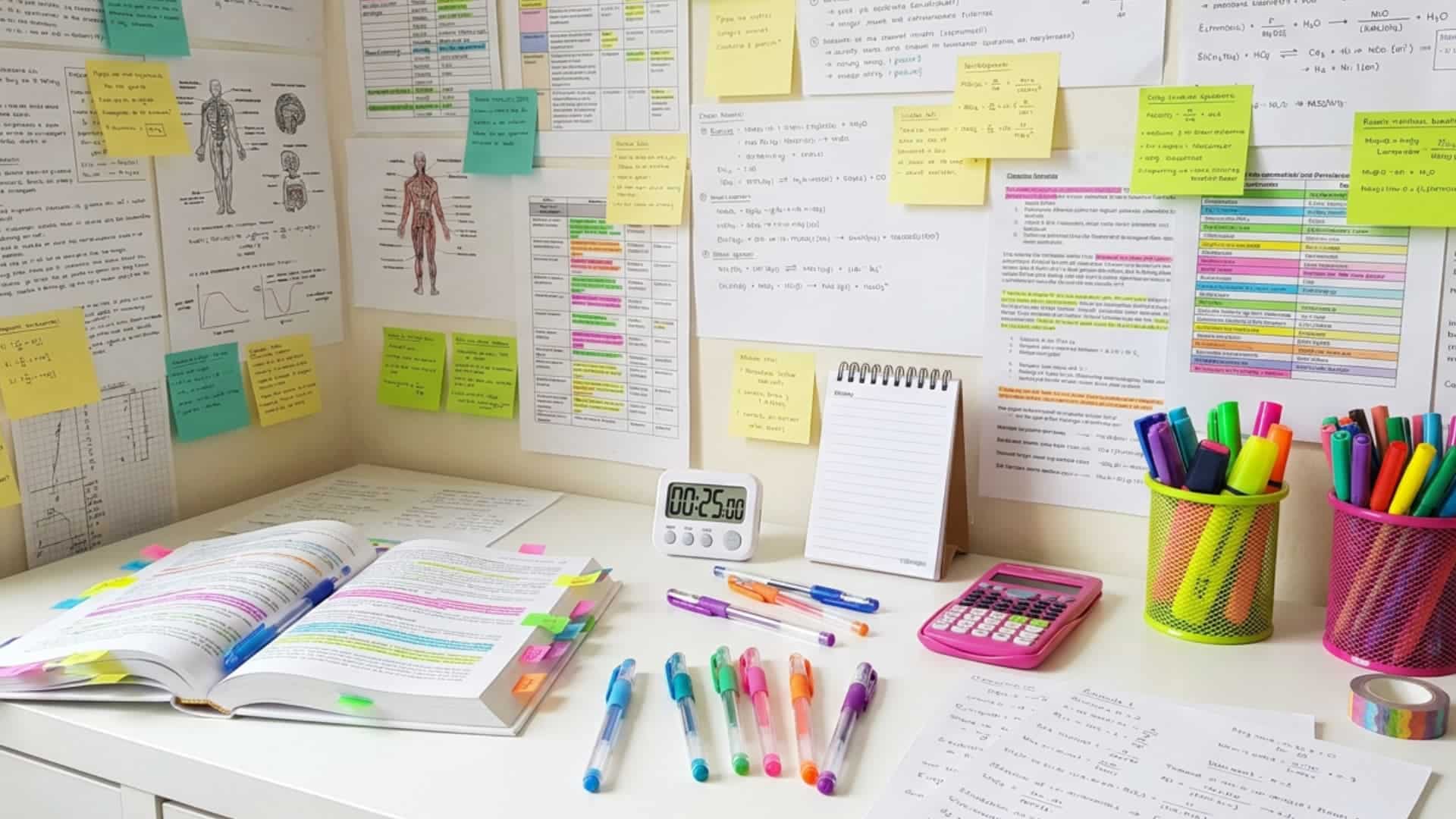
Exam season does not have to mean stress and last-minute cramming. The students who master staying focused daily are not always the most talented; they are simply the most prepared. Here are the strategies that make the difference.
11. Start Exam Prep at Least Two Weeks Early
Cramming hurts sleep and kills memory.
Starting two weeks early splits revision into short daily sessions, lowers stress, and lets spaced repetition work. Build a simple subject calendar and treat every session as unmissable.
12. Practice Past Papers Under Real Conditions
Timed mock tests are the closest thing to real exam preparation.
Sitting past papers under exam conditions builds familiarity, sharpens pacing, and eliminates exam-day pressure. Each paper exposes exactly which topics still need work.
Sit one full past paper every weekend in the two weeks before your exam and mark it honestly.
13. Manage Academic Stress without Burning Out
Stress directly damages memory, reduces focus, and lowers academic performance over time.
Sleep, exercise, and nutrition are not lifestyle extras but core drivers of how well the brain learns and retains information.
Taking breaks is a strategy, not a weakness. Build a 30-minute wind-down routine after every study session to lower stress levels, signal to your brain that work is done, and protect the quality of your sleep every night.
How to Put All Skills Together into One Study System?
Learning individual study skills means nothing without a system to apply them.
This section shows exactly how to combine all 13 skills into one practical weekly routine that is simple to follow, easy to adjust, and built to deliver consistent grade improvement from the very first week.
Step 1: Audit Your Current Study Habits Honestly
Before building better habits, honestly assess where you stand. Check which of these three areas needs your attention most:
- Wrong Methods: Cramming and re-reading waste your time; spaced repetition, self-testing, and interleaving consistently produce stronger, longer-lasting results.
- Weak Systems: Without a distraction-free environment and daily routines like the Pomodoro Technique, even strong material won’t stick between sessions.
- Poor Timing: Panicking before exams signals a preparation gap; starting two weeks early with timed practice changes outcomes dramatically and reliably.
Every “no” reveals exactly where to start. Fix your method, build your system, and prepare early for real results.
Step 2: Start With Three Skills and Build from There
Trying to apply all 13 skills at once leads to overwhelm and inconsistency. Start with these three for the fastest grade improvement:
- Spaced Repetition: Revisiting material at calculated intervals immediately reduces forgetting and sharpens the recall you need most during high-stakes exams.
- Active Recall: Replacing passive re-reading with self-testing forces your brain to retrieve information, which is exactly what builds durable, exam-ready memory.
- Study Environment: Eliminating distractions before every session removes the friction that silently kills focus and consistency, all at zero cost.
Once these three feel natural, layer in the Pomodoro Technique, then interleaving, then Cornell notes. Build your system gradually; sustainable progress always beats a single overwhelming sprint.
Step 3: Build Your Weekly Study Schedule
Use this simple self-check every week to spot what’s working and what needs fixing. Then let the sample schedule below show you exactly how to put it all together.
| Day | Subject Rotation | Pomodoro Blocks | Break Time | Review Session |
|---|---|---|---|---|
| Monday | Math + History | 3 blocks (75 min) | 15 min total | Day 1 spaced review |
| Tuesday | English + Science | 3 blocks (75 min) | 15 min total | Day 1 spaced review |
| Wednesday | Math + Geography | 2 blocks (50 min) | 10 min total | Day 3 spaced review |
| Thursday | English + History | 3 blocks (75 min) | 15 min total | Day 3 spaced review |
| Friday | Science + Math | 2 blocks (50 min) | 10 min total | Day 7 spaced review |
| Saturday | Past paper session | 1 full paper | 20 min total | Mark and review answers |
| Sunday | Light review only | 1 block (25 min) | 10 min total | Day 14 spaced review |
Stick to this schedule consistently, and the results will follow.
Frequently Asked Questions
Is It Better to Study Alone or in a Group?
Study alone for focus and deep understanding. Use group sessions to test your knowledge, fill gaps, and strengthen weak areas.
How Many Hours a Day Should a High School Student Study?
Two to Three Focused Hours Daily. Quality Always Outperforms Quantity when Using the Right Study Techniques.
What is the Best Way to Memorise Information for Exams?
Active recall and spaced repetition beat re-reading every time; test yourself repeatedly, space it over days, and watch retention soar.
What Should You Do the Night Before a Big Exam?
Do a light review only. Skip new material, eat well, prep your bag, and go to bed on time. Rest beats last-minute cramming every time.
Final Thoughts
Grades do not improve through effort alone. They improve through the right system applied consistently.
Every skill in this breakdown is backed by real cognitive science research and used by students who have already made the shift from working hard to working smart.
These study skills for high school students are not complicated. They are practical, tested, and ready to apply starting today.
Do not try to change everything at once. Pick one skill from each section and apply it this week. Small, consistent changes build the study system that turns average grades into real academic results.