

All of us have probably wondered How are these doctors able to read those scans and tell us a clear depiction of what’s happening inside the body?
Well, that requires a ton of work, and as it turns out, this is one of the most promising career roles in modern times.
Many wonder about radiologist schooling and how long it takes to become a radiologist.
We will guide you through the complete process to become a radiologist, a career that demands commitment but offers an intellectually stimulating and impactful path.
What is a Radiologist?
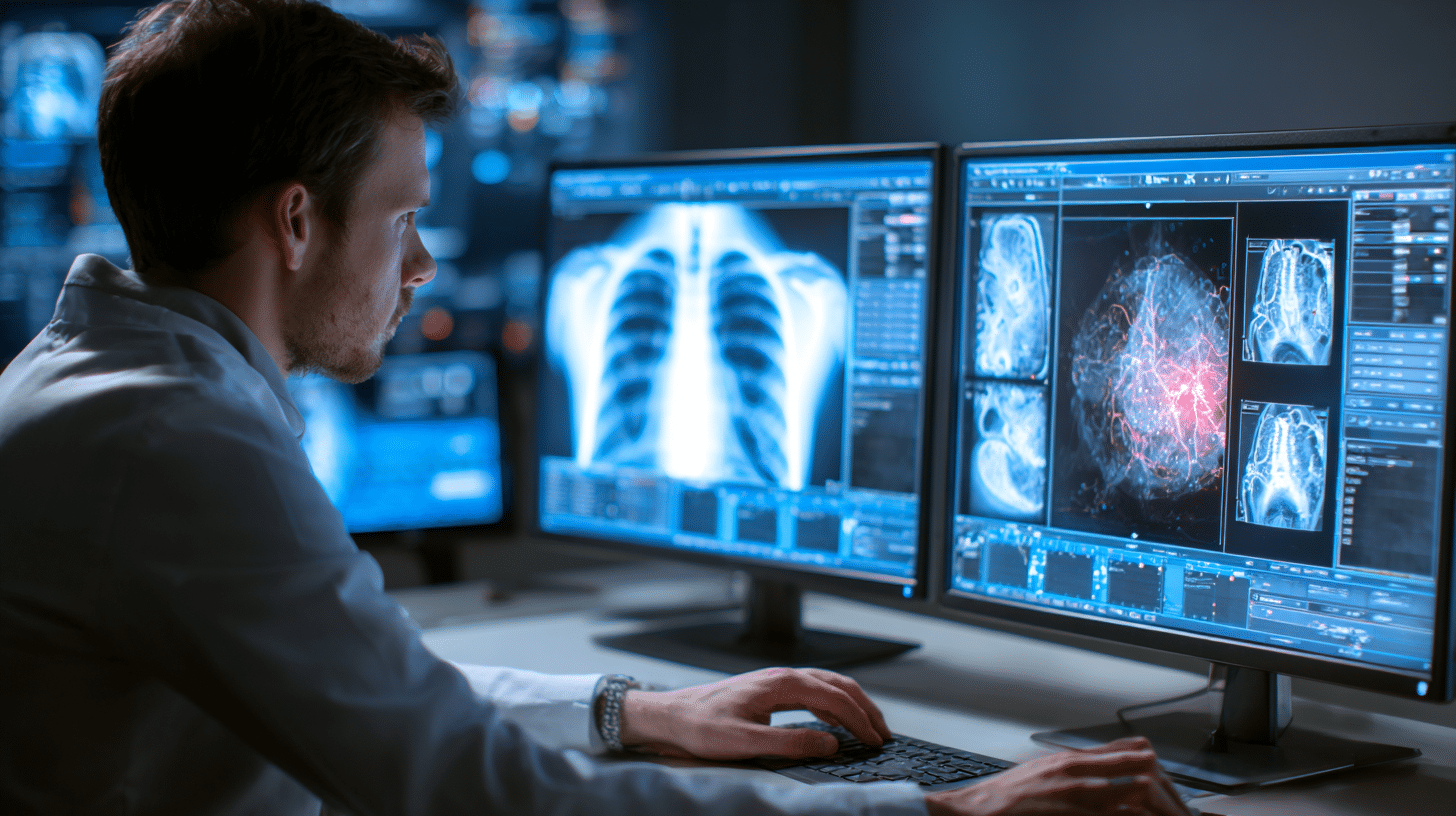
Radiologists are medical doctors who specialize in interpreting medical images from X-rays, CT scans, MRIs, ultrasounds, and nuclear medicine.
Their daily tasks involve reviewing images, writing diagnostic reports, and consulting with referring physicians.
They work in hospitals, outpatient clinics, specialty imaging centers, and sometimes remotely through teleradiology.
How Long does it Take to Become a Radiologist?
In total, the process generally takes 13–15 years after high school.
- 4 years for undergraduate study
- 4 years for medical school
- 4-5 years for residency, and
- Optional one to two years for a fellowship.
Delays may occur due to additional research, dual specialties, or reapplying for residency. Early preparation and maintaining focus at each phase can help keep your training on track.
The Radiologist Schooling
The first step is earning a four-year undergraduate degree in one of the science courses, such as biology, chemistry, or physics.
Competitive GPA and academic performance are crucial, as is success on the Medical College Admission Test (MCAT).
Pre-med students should also seek out research, shadowing, or volunteering opportunities to strengthen their applications.
You can apply for the MCAT here: click here
Medical School Path
Let’s take you through the complete path of Medical School in your odyssey to become a successful Radiologist.
Application Process
Admissions are highly competitive, requiring a strong undergraduate record and high MCAT scores.
Applicants need letters of recommendation, extracurricular activities, and clinical/shadowing experience to strengthen their application.
First Two Years: Preclinical Curriculum
Focus on foundational sciences: anatomy, physiology, biochemistry, pharmacology, pathology, and microbiology.
Classroom-based learning is combined with problem-based sessions and exposure to basic clinical skills. Early patient encounters and communication skills training help lay the groundwork for clinical work.
Second Two Years: Clinical Rotations
Students rotate through major specialties: internal medicine, surgery, pediatrics, obstetrics/gynecology, psychiatry, emergency medicine, and others.
Direct involvement in patient care under supervision teaches practical skills and clinical decision-making. Elective rotations allow students to explore areas of interest, including radiology.
Exams and Assessments
All students must pass USMLE Step 1 (after preclinical years) and Step 2 (during or after clinical years) for licensure and residency placement. Performance on these exams significantly affects residency opportunities.
Residency and Fellowship Training
Residency Training (4–5 Years)
After medical school, new doctors enter a diagnostic radiology residency, which provides hands-on training in imaging interpretation and image-guided procedures.
Residents progress from basic image reading and workflow to handling complex cases and participating in overnight calls, always under supervision.
Board examinations in diagnostic radiology are required to complete this phase.
Fellowship Specialization (Optional, 1–2 Years)
Fellowship offers advanced training, research opportunities, and focused mentorship in specific areas.
Completion of a fellowship may require additional board certification and improve job prospects, leadership potential, and career satisfaction.
Many radiologists pursue a fellowship in a subspecialty such as neuroradiology, interventional radiology, pediatric radiology, or musculoskeletal imaging.
Sub-specialties in Radiology
Radiology includes several focused sub-specialties, each playing a vital role in diagnosing and treating specific conditions through advanced imaging techniques.
- Neuroradiology: Specializes in imaging and minimally invasive procedures for the brain, spine, head, and neck to diagnose cancers, strokes, and neurologic conditions.
- Interventional Radiology: Uses image guidance for minimally invasive procedures like biopsies and vascular interventions, often providing alternatives to surgery for diagnosis and therapy.
- Pediatric Radiology: Focuses on imaging infants to adolescents, adapting techniques for children’s safety to diagnose congenital, developmental, and acquired diseases.
- Musculoskeletal Imaging: Specializes in imaging bones, joints, muscles, and soft tissues to diagnose injuries, arthritis, tumors, and guide image-based interventions.
- Abdominal (Body) Imaging: Covers imaging of abdominal and pelvic organs (liver, GI, urinary, reproductive) for diagnosis and follow-up of cancer, inflammation, and infection.
- Oncologic Radiology: Focuses on advanced imaging for cancer detection, staging, treatment planning, and follow-up; involves multimodality expertise (CT, MRI, PET) and multidisciplinary tumor board participation.
- Breast Imaging: Dedicated to the detection and diagnosis of breast diseases, especially cancer, using mammography, MRI, ultrasound, and image-guided biopsy.
- Nuclear Radiology: Uses radioactive tracers (PET/SPECT) for functional imaging in cancer, organ function studies, and targeted treatment monitoring.
- Cardiovascular Imaging: Involves imaging the heart and blood vessels with advanced CT and MRI for diagnosing congenital and acquired vascular diseases.
Career Opportunities for Radiologists

Hospital and Clinic Practice
Radiologists work in hospitals, academic medical centers, and outpatient clinics, providing interpretation of diagnostic images and collaborating with multidisciplinary teams for patient care.
This remains one of the largest and most stable sectors with consistent job demand.
Diagnostic Imaging Centers
Many radiologists practice in dedicated imaging centers, focusing on reading X-rays, CT, MRI, ultrasound, and nuclear medicine scans.
These centers are often private and offer flexible schedules, sometimes including part-time roles.
Teleradiology
With advancements in technology, teleradiology enables radiologists to review and report images remotely, offering flexibility and expanding access to rural or underserved healthcare facilities.
This sector is growing rapidly and supports diverse lifestyles.
Subspecialty Practice
Radiologists can pursue further training in areas like interventional radiology, neuroradiology, pediatric radiology, or breast imaging.
Subspecialties offer higher earning potential, more complex cases, and opportunities for research and leadership.
How much do Radiologists Earn?
Radiologists are among the highest-paid medical specialists, with average salaries varying based on experience, location, and subspecialty.
| Region/Country | Entry-Level Salary | Average Salary (Mid-Career) | Senior/Top Salary | Notes |
|---|---|---|---|---|
|
USA (Permanent) |
$450,000–$500,000 | $500,000–$550,000 | $600,000+ | Locum tenens: $500,000–$650,000 |
| India | ₹520,900–₹600,000 | ₹1,043,600–₹2,958,977 | ₹8,000,000+ | Consultant avg: ₹2.8M–₹4.97M |
| Germany | €80,000–€100,000 | €100,000–€130,000 | €130,000–€150,000+ | Private clinic/major city: up to €150,000 |
Beginners can expect lower earnings, but compensation rises significantly over time. Urban areas and certain subspecialties often command higher pay.
Other Benefits typically include health insurance, retirement plans, and opportunities for flexible or part-time work depending on the setting.
Skills and Qualities You Will Need
Success in radiology demands strong technical and analytical abilities to interpret complex images accurately.
Attention to detail is paramount, as is the ability to communicate findings clearly to other healthcare professionals.
Radiologists need stamina for long hours at the reading station and must stay calm under pressure when urgent cases arise.
In the End
Pursuing a career as a radiologist is a significant commitment both academically and personally, but it offers rewarding work at the intersection of medicine and technology.
If you are detail-oriented, enjoy problem-solving, and want to make a difference in patient care, radiology could be an excellent fit.
Start by focusing on your undergraduate performance and gaining medical experience to set a strong foundation for the journey ahead.