

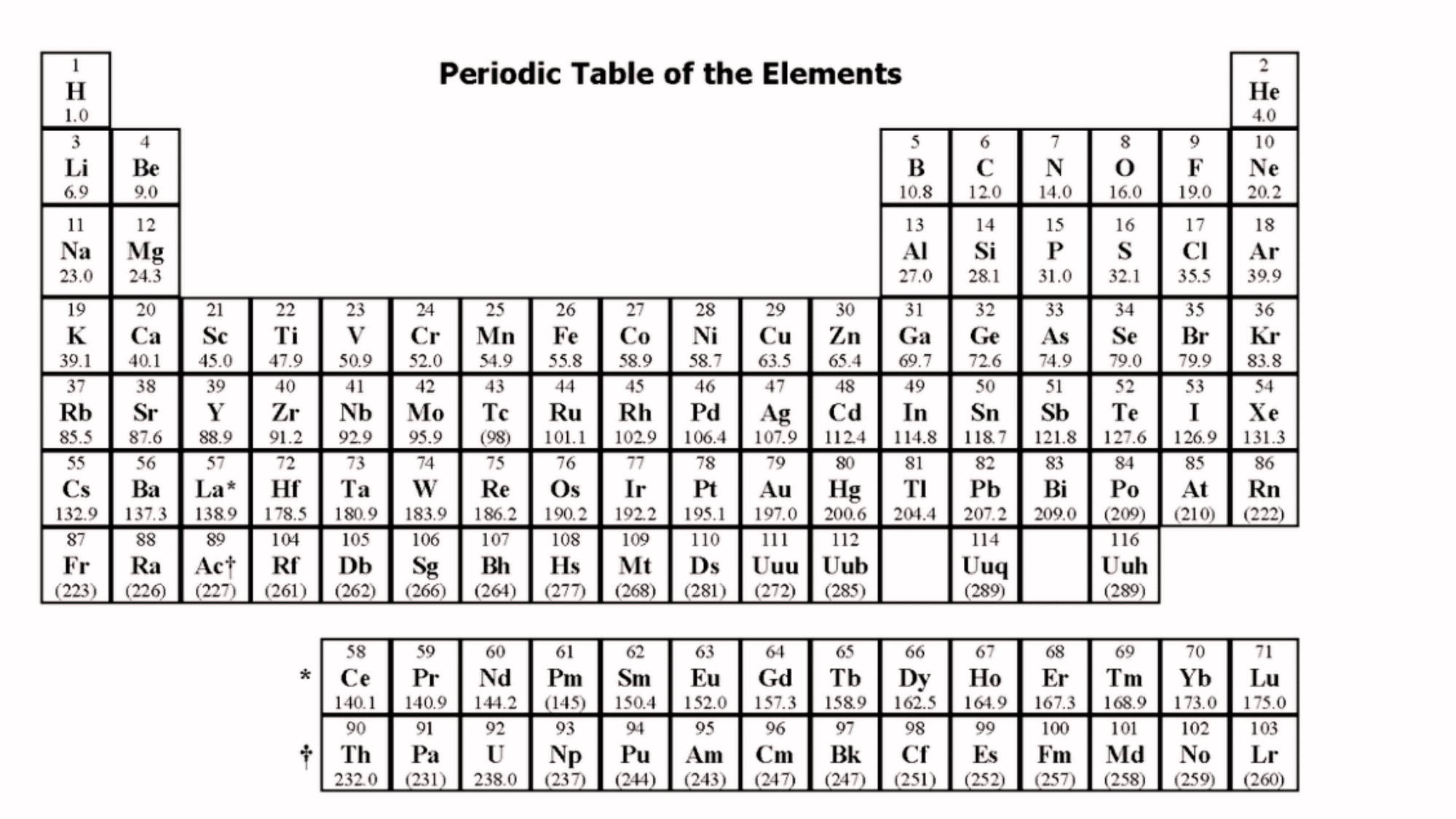
One of the most common questions pre-med students ask is whether they’ll have access to this essential chemistry reference during the MCAT (Medical College Admission Test).
The short answer is yes, you do get a periodic table on the MCAT, but it’s not the detailed version you might be used to.
Knowing exactly what’s included, what’s missing, and how the table actually looks on screen will help you prepare more efficiently and avoid wasting time hunting for information that simply isn’t there.
Here’s what you need to know before test day.
Do You Get a Periodic Table on the MCAT?
Yes, per official AAMC guidance, a periodic table is displayed on screen during the Chemical and Physical Foundations of Biological Systems section, since that’s the only section where it’s needed.
It includes element symbols, atomic numbers, and atomic weights, but lacks detailed chemical data like electron configurations or electronegativity values.
The table is accessible digitally within the exam interface rather than handed out on paper, so its layout is worth studying in advance rather than seeing for the first time on test day.
What the on-Screen Table Actually Looks Like
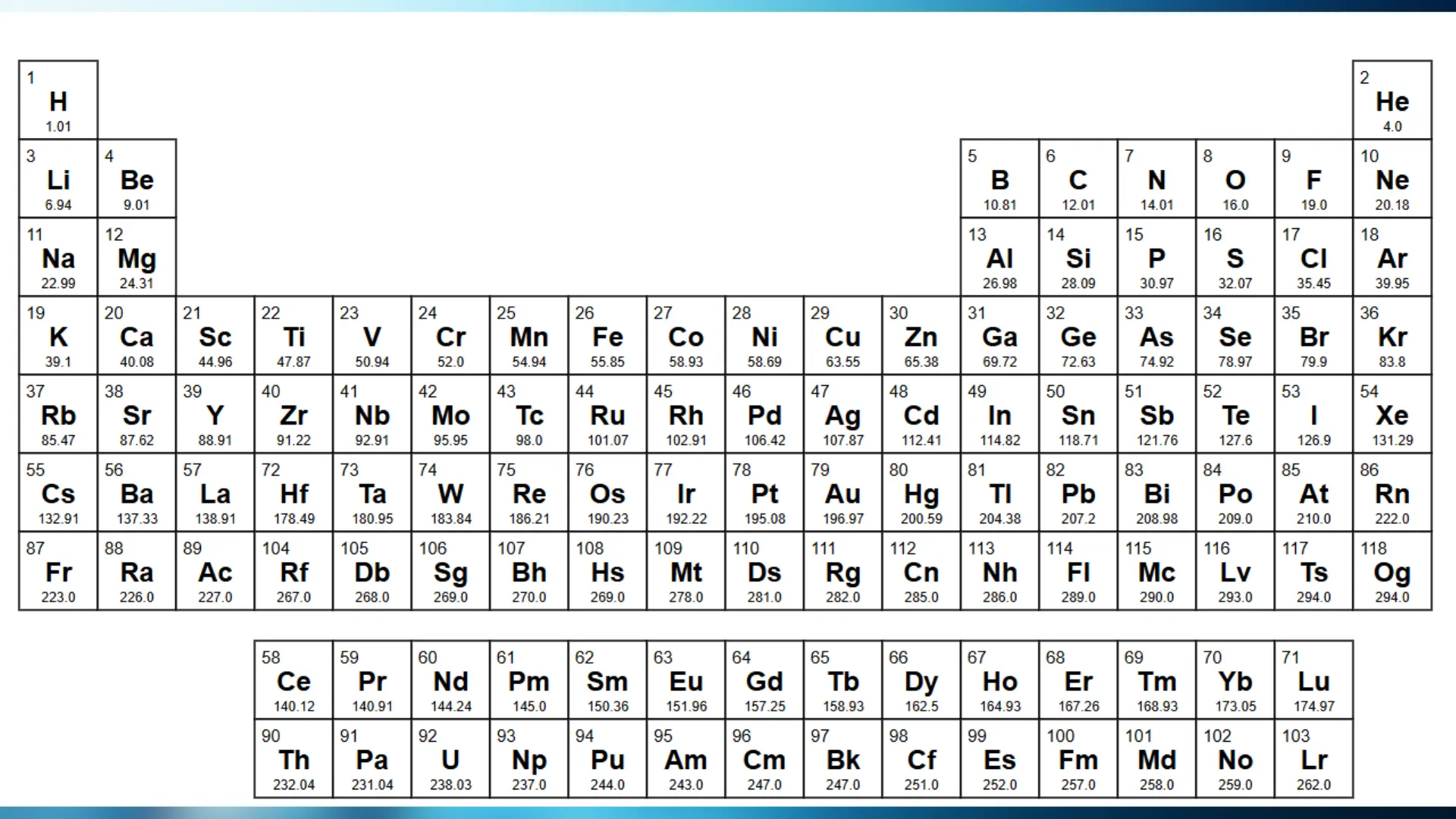
It’s a single, static grid formatted almost identically to a standard periodic table -18 groups across, 7 periods down, with the lanthanides and actinides pulled out below the main body.
Each element tile shows only three pieces of information: the atomic number (top), the element symbol (center), and the atomic mass (bottom).
There’s no color-coding for metals/nonmetals/metalloids, no electron configuration notation, and no legend.
It opens in a small resizable window you click open from a toolbar icon- it doesn’t zoom in or reflow, so the print stays the same size regardless of your screen.
Why is the MCAT Periodic Table So Important?
Think of the table less like a cheat sheet and more like a phone with no internet connection and then you can see the numbers, but you have to already know what to do with them.
It hands you element symbols, atomic numbers, and (rounded) atomic weights so you’re not stuck guessing basic identities mid-question.
But it stays silent on everything that requires reasoning: electron configurations, electronegativity, ionization energy, and oxidation states are nowhere to be found on it.
Here is a reference for clarification:
| On the Table | Not on the Table |
|---|---|
| Element Number | Electron configuration |
| Atomic Number | Electronegativity |
| Atomic Mass (rounded) | Ionization energy |
| Common oxidation states |
That’s by design- the MCAT is testing whether you understand periodic trends well enough to reconstruct that information yourself, not whether you can read a label.
Students who treat the table as a lookup tool for basic facts and rely on memorized trends for everything else tend to move through gen chem passages noticeably faster than those who try to re-derive concepts from the table itself.
How to Access the Periodic Table During Your Exam
The periodic table is available through the computer interface, accessible via a toolbar or a clickable icon.
You can use it at any time for relevant questions, but not during breaks or transitions.
Practicing navigation and timing your use ahead of the exam day will help you avoid delays and manage your test time efficiently.
Key Elements and Properties to Memorize
Here are some key elements and properties you should memorize beforehand to ensure time-saving in the exam hall.
- Memorize the first 20 elements, their symbols, and common ions and charges, as these are frequently tested.
- Understanding periodic trends, such as atomic radius and electronegativity across periods and groups, is vital.
- Knowing group and period characteristics will enable faster problem-solving without over-reliance on the table.
MCAT Chemistry Topics Requiring the Periodic Table

General Chemistry Applications
The periodic table provides essential information like atomic numbers and atomic masses needed for balancing chemical equations and calculating molar masses, core skills tested in general chemistry on the MCAT.
General Chemistry Applications Usually Contain These Important Subparts:
- Atomic Numbers and Atomic Masses
- Electron Configuration and Valence Electrons
- Periodic Trends (atomic Radius, Electronegativity, Ionization Energy, Electron Affinity)
- Stoichiometry and Molar Mass Calculations
- Chemical Bonding and Molecular Structure
- Balancing Chemical Equations
- Redox Reactions and Reaction Mechanisms
Organic Chemistry Connections
Familiarity with elemental valencies, especially those of carbon, hydrogen, oxygen, and nitrogen, helps in understanding functional groups and bonding patterns critical to organic chemistry questions.
Organic Chemistry Connections Usually Contain These Important Subparts:
- Element Valency and Bonding Patterns
- Functional Groups and Structure
- Orbital Hybridization
- Electronegativity and Bond Polarity
- Reaction Mechanisms (nucleophiles, Electrophiles)
- Molecular Geometry and Stereochemistry
Biochemistry Relationships
Quick recall of elemental properties supports understanding biochemical molecules and reactions, such as enzyme functions and metabolic pathways that depend on atomic behavior.
Biochemistry Relationships Usually Contain These Important Subparts:
- Enzyme Cofactors and Metal Ions
- Biochemical Molecule Composition and Elemental Roles
- Acid-Base Chemistry in Biological Systems
- Redox Reactions and Electron Transport Chain
- Metabolic Pathways and Element-Dependent Reactions
Physics Calculations Involving Elements
Some physics questions require knowledge of fundamental constants and atomic structure, using the periodic table to solve problems involving energy levels and particle interactions.
Physics Calculations Involving Elements Usually Contain These Important Subparts:
- Atomic Mass and Nuclear Properties
- Isotopes and Radioactivity (decay, Half-Life)
- Spectroscopy and Atomic Structure
- Quantum Mechanics Related to Electron Behavior
- Nuclear Imaging and Radiation Physics
How to Study for the MCAT Chemistry?
You need to study strategically if you wish to be among the top scorers of the MCAT. To do so, keep these things in mind.
- Practice chemistry problems both with and without the periodic table to strengthen recall.
- Use memory aids such as mnemonics or flashcards to memorize key facts.
- Timing yourself on practice tests will teach you when to refer to the table effectively and when to rely on memorized data.
- Integrate chemistry review with other MCAT sections for well-rounded preparation.
Questions to Practice for the MCAT
For your MCAT preparation, it’s essential to have a clear understanding of the variety of topics spanning the exam’s four sections, including biological sciences, chemistry, physics, psychology, and reasoning skills.
Below are three practice questions written in the style of real MCAT general chemistry discrete questions, each testing a different way the periodic table gets used on test day, with full explanations included.
For a more extensive set covering the remaining topics, a comprehensive PDF with additional practice questions and explanations is available below.
Question 1- Molar Mass Calculation
A student is preparing a 5.00 g sample of calcium carbonate (CaCO₃) for a titration. Using atomic masses from the periodic table (Ca = 40.08, C = 12.01, O = 16.00), what is the molar mass of CaCO₃?
A) 56.08 g/mol
B) 100.09 g/mol
C) 68.09 g/mol
D) 116.09 g/mol
Answer: B – 40.08 + 12.01 + (16.00 × 3) = 100.09 g/mol
Question 2 – Periodic Trends
Sodium, magnesium, and aluminum are all found in Period 3 of the periodic table. Which of the following correctly ranks these elements in order of decreasing atomic radius?
A) Al > Mg > Na
B) Na > Mg > Al
C) Mg > Na > Al
D) Al > Na > Mg
Answer: B – atomic radius decreases from left to right across a period as nuclear charge increases while shielding stays constant.
Question 3 – Isotopes and Neutron Count
An isotope of chlorine has a mass number of 37. Using the periodic table to find chlorine’s atomic number, how many neutrons are in this isotope?
A) 17
B) 18
C) 20
D) 37
Answer: C – neutrons = mass number − atomic number = 37 − 17 = 20
For more questions, click here: MCAT Chemistry Practice
Common Mistakes Students Usually Make
These are some common mistakes that hamper students’ preparation:
- Relying too heavily on the provided table can slow down your pace.
- Not memorizing essential properties leaves gaps that affect answer accuracy.
- Poor time management, such as spending too long accessing the table, can eat into overall test time.
- Misunderstanding which details are included may lead to confusing questions.
Wrap It Up!
The MCAT periodic table is a helpful but limited tool. Being familiar with what it offers and what it omits, along with committing key information to memory, will give you an edge on test day.
Keep practicing efficient access and balance your use of the table with tested knowledge.
With solid preparation, you will approach the exam confidently and be ready to tackle the chemistry sections successfully.
All the best for your exams!
Frequently Asked Questions(FAQ’s)
Is the Periodic Table Available During Every Section of the MCAT?
No, it only appears in the chemical and physical foundations of biological systems section, since that’s the only section requiring periodic-table-based chemistry.
What is the on-Screen Periodic Table Actually Called During the Exam?
It’s accessed through a toolbar button labeled “exhibit,” which opens the periodic table in a small, resizable pop-up window during testing.
Can You Bring Your Own Periodic Table or Reference Sheet into the Exam?
No, outside reference materials aren’t permitted; the only periodic table you can use is the one provided within the testing interface.
Are You Given a Calculator Alongside the Periodic Table on Test Day?
No, the MCAT doesn’t provide a calculator, and you can’t bring one; all math must be done by hand using the table.
Does the on-Screen Table Include All 118 Elements, Including Lanthanides and Actinides?
Yes, all known elements appear, including the lanthanide and actinide rows, though only atomic number, symbol, and mass are shown for each.