
When Kim Kardashian said the baby bar was harder than the real bar exam, most people had never even heard of it.
Turns out, it’s a real test for a specific group of law students.
It’s not something every future lawyer needs to worry about, but if it applies to you, it can shape your entire path forward.
This post covers what the baby bar tests, who has to take it, how it’s scored, and how many attempts you get if you don’t pass on the first try.
What is the Baby Bar Exam?
The Baby Bar is officially called the First-Year Law Students’ Examination, or FYLSX. It is run by the State Bar of California and is given twice a year, in June and October.
It gets the name “Baby Bar” because students take it early in their legal studies, usually after the first year.
Baby Bar Exam Format:
|
Feature |
Details |
|---|---|
|
Total Questions |
100 multiple-choice questions |
|
Time Allowed |
3 hours of testing time, split into two 90-minute sessions with a 20-minute break |
|
Subjects Tested |
Contracts, Criminal Law, and Torts |
|
Weight Per Subject |
Equal weight across all three subjects |
|
Passing Score |
560 out of 800 |
|
Scoring Method |
Scaled scoring system |
|
Testing Format |
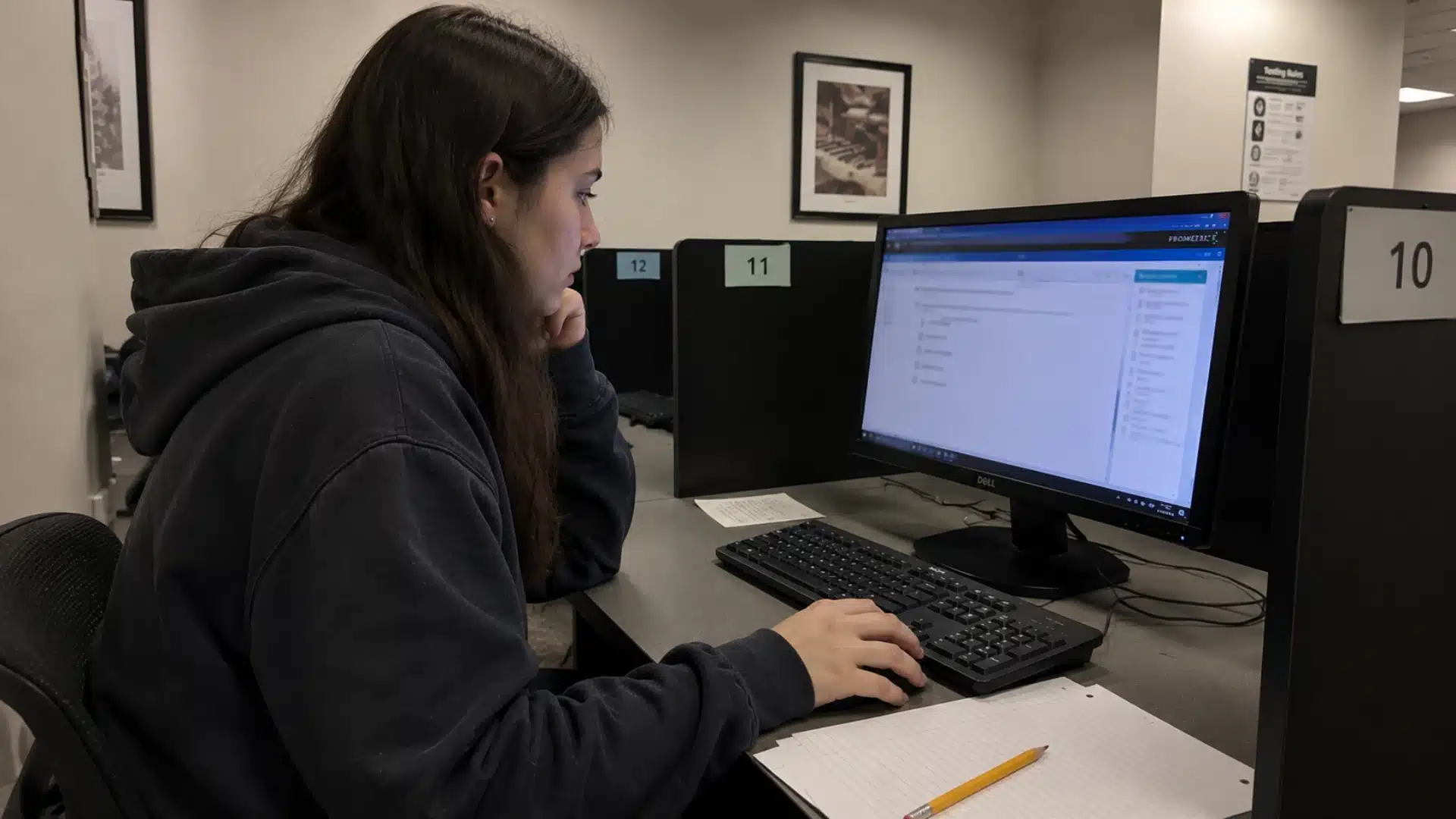
Remote testing from an approved location |
The Baby Bar works as a first-year checkpoint for certain California law students. Students required to take it must pass it before they can earn credit for the rest of their law studies.
Confirm current dates and locations on the State Bar’s official FYLSX exam page before you register, since testing details are set closer to each cycle.
What Does the Baby Bar Exam Cover?
The Baby Bar tests three core subjects every first-year law student studies. Each one focuses on general legal principles rather than California-specific rules.
1. Contracts
This section tests how agreements are formed, interpreted, and enforced. Expect questions on offer and acceptance, consideration, and the terms needed for a valid contract.
You’ll also see questions on breach of contract and the defenses a party might raise to avoid enforcement, such as lack of capacity or mutual mistake.
Some exams also touch on the first two articles of the Uniform Commercial Code, which govern contracts involving the sale of goods.
2. Criminal Law
This portion covers the elements of common crimes and how they’re proven. Topics include assault, battery, theft, embezzlement, kidnapping, and homicide.
Questions typically ask you to identify which elements the prosecution must establish, along with possible defenses like self-defense or lack of intent.
The focus stays on general criminal law principles rather than California’s specific criminal statutes, so the emphasis is on foundational legal reasoning.
3. Torts
This section deals with civil wrongs and who’s legally responsible for them. It includes negligence, intentional torts, and strict liability.
Questions often present a fact pattern and ask you to determine whether a duty was breached, whether that breach caused harm, and what damages might follow.
As with the other two subjects, the material tests general principles of tort law, not rules unique to California.
Until 2024, the baby bar included both essay questions and multiple-choice questions covering these three subjects. As of 2024, the essay portion was removed, and the exam is now multiple-choice only.
Why is Kim Kardashian Linked to the Baby Bar Exam?

Kim Kardashian is linked to the “baby bar” because it was a required early milestone in her non‑traditional path to becoming a lawyer in California.
Instead of attending law school, she enrolled in a four‑year legal apprenticeship, which requires students to pass the First‑Year Law Students’ Examination (nicknamed the “baby bar”) after their first year of study.
Kardashian failed this exam three times before passing on her fourth attempt in December 2021, a moment she publicly shared on Instagram and later discussed on “The Kardashians”.
Her repeated attempts and public updates made the exam widely associated with her name, especially as she continued preparing for the full California Bar Exam, which she has not yet passed.
Who Has to Take the Baby Bar Exam?
Not everyone studying law in California has to take the Baby Bar. It applies only to a specific group of students.
1. Students at State Bar-Unaccredited Law Schools
Students finishing their first year at a law school that is not accredited by the State Bar of California must take the FYLSX.
These schools are registered but do not hold full accreditation. Students at these schools cannot receive credit for their later law studies until they pass the exam.
2. Law Office Study Program Students
Students who study through California’s Law Office Study Program must also take and pass the FYLSX after completing one year of study.
This program allows a person to study law under the supervision of a licensed attorney or judge rather than attending law school.
It is a legal but less common path to becoming a lawyer in California, and passing the Baby Bar is a required step to continue.
3. Students With Limited College Credits
The State Bar says some students at California-accredited law schools may also need to take the FYLSX if they did not meet the required college credit hours before starting law school.
Most law school admission requirements assume at least two years of undergraduate coursework, and falling short of that threshold, not the school’s accreditation status, is what triggers this rule.
These students must pass the exam before they can continue earning credit toward their law degree.
Who Usually Does Not Need to Take It?
Most first-year law students never need to worry about the baby bar exam.
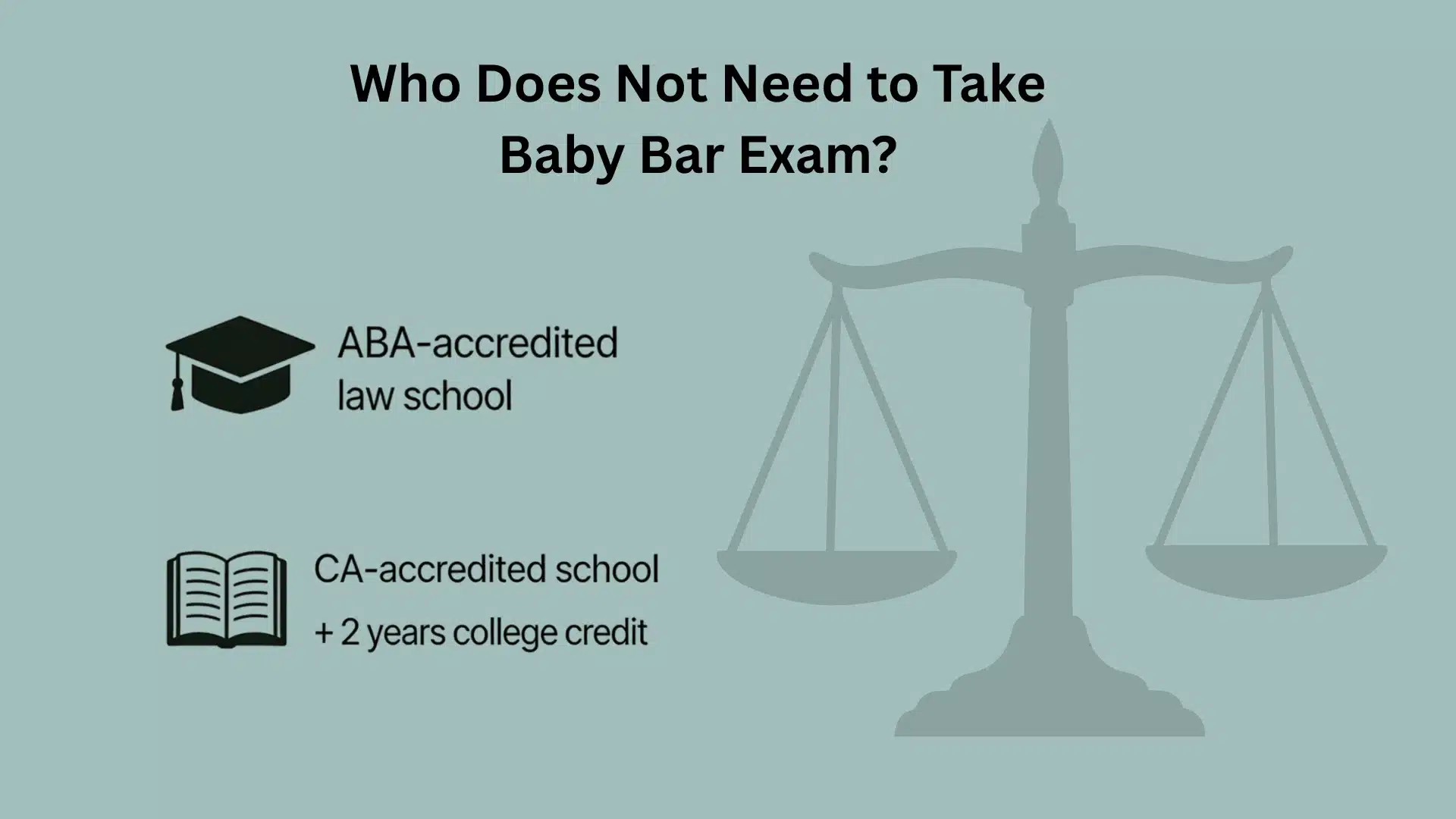
If you’re enrolled at an ABA-accredited law school, this exam does not apply to you at all; your path runs straight through your JD program to the general bar exam.
Students at California-accredited law schools are also generally exempt, but only if they’ve already completed at least two years of college coursework (60 semester or 90 quarter units) before starting law school.
So the two things that determine exemption are the type of school you attend and how much undergraduate work you’ve finished beforehand.
If you took a standard, accredited path into law school, there’s a strong chance the baby bar simply doesn’t apply to you.
Does the Baby Bar Test California-Specific Law?
No, it doesn’t. The baby bar focuses on general legal principles rather than California-specific statutes or case law.
The State Bar of California has confirmed that the exam is meant to test foundational knowledge in Contracts, Criminal Law, and Torts as they apply broadly, not how California courts interpret those areas differently from other states.
This is good news for anyone worried about needing to learn an extra layer of state-specific rules on top of the core subjects.
Your study time is better spent understanding the underlying legal concepts, how elements of a claim or crime are proven, and how courts typically reason through fact patterns, rather than memorizing California-only exceptions or statutes.
What Happens After You Pass the Baby Bar?
Passing the Baby Bar allows students to continue their legal education and move forward in their path toward becoming eligible for the California Bar Exam.
After passing, students can continue with advanced law coursework and focus on developing the knowledge needed for future exams. Key steps after passing include:
- Continue legal studies: Students can move ahead with the remaining years of their law program and complete required coursework.
- Build legal knowledge: Advanced subjects, case analysis, and practical legal skills become the main focus.
- Prepare for the California Bar Exam: Students should continue studying and developing strategies for the final licensing exam.
- Track eligibility requirements: Staying aware of California Bar rules helps students remain prepared for the next stages.
Passing the Baby Bar is a major achievement, but it is only one step in the overall legal journey.
Consistent preparation, dedication, and continued learning help students progress toward becoming licensed attorneys.
How Many Times Can You Take the Baby Bar?
California ties your attempts directly to whether you keep credit for the law study you’ve already completed.
Under California Business and Professions Code Section 6060(h), you must pass the exam within three administrations of first becoming eligible to receive full credit for your first year of law study.
In practice, that’s three tries total: your first sitting plus two retakes, spread across the June and October dates.
If you don’t pass within those three attempts, you don’t lose the right to keep studying law, but you do lose credit for the coursework completed before you pass.
I’m not fully certain how every edge case is handled, since eligibility windows and administrative exceptions can shift over time. Confirm your specific situation directly with the State Bar of California’s Office of Admissions.
Tips for Preparing for the Baby Bar
The Baby Bar has a low pass rate, but the right prep strategy can make a real difference. Here are five practical steps to help you walk into exam day ready.
- Start early with the three core subjects: Contracts, Criminal Law, and Torts- which need steady review from day one, not last-minute cramming.
- Practice with real MCQ-style questions: Working through actual multiple-choice formats builds the speed and pattern recognition the exam demands.
- Review past FYLSE questions: The State Bar of California publishes previous exams, which is the closest thing to a real practice run.
- Time yourself during practice sessions: The exam is timed in strict blocks, so practicing under similar conditions builds exam-day stamina.
- Consider tutoring or a structured program on a second or third attempt: Targeted support can help identify and fix the exact gaps holding you back.
Because Contracts, Torts, and Criminal Law draw on the same close-reading and reasoning skills tested on the LSAT, many students find that the discipline behind a typical LSAT study timeline transfers well to baby bar prep.
Conclusion
Having knowledge about the Baby Bar exam can help future law students see why this test matters and how it fits into the path toward becoming a lawyer.
While the exam is an early milestone, it requires dedication, preparation, and a strong understanding of legal principles.
Knowing how many times you can take the Baby Bar also helps students plan their next steps and stay focused if they need another attempt.
Keep learning, stay committed to your goals, and share your Baby Bar experience or questions in the comments below.
Frequently Asked Questions (FAQs )
Does Failing the Baby Bar Affect Your Ability to Apply to Other Law Schools Later?
Failing the Baby Bar itself typically doesn’t block new applications, but it can affect credit transfer and your standing at your current school.
Is Baby Bar Harder Than The Bar?
The Baby Bar can feel harder because it covers foundational legal concepts with fewer subjects and a lower pass rate. The full bar exam is broader and more comprehensive.
How Many Times Did Michelle Obama Fail The Bar Exam?
Michelle Obama failed the Illinois bar exam once before passing it on her second attempt. She later became a successful attorney and public figure.
Is There an Age or Education Requirement to Sit for the Baby Bar Besides Law School Enrollment?
There’s no separate age requirement, but you must have completed one year of law study before you’re eligible to register.