

Pick up almost any supplement bottle or skincare box, and you’ll spot the letters “GMP certified” somewhere on the label.
What does that actually mean for the product inside? Being certified means a facility has passed an independent check confirming it follows strict rules for cleanliness, consistency, and safety during production.
This isn’t just a marketing sticker; it’s proof that a company takes quality seriously at every stage of manufacturing.
In this blog, you’ll learn what GMP certification means, who grants it, which industries need it, how companies earn it, and how to check if a brand you trust actually holds one.
What is GMP Certified?
GMP certification is the formal, third-party confirmation that a manufacturing facility meets Good Manufacturing Practice standards. This differs from simply following GMP rules on your own.
Certification means an accredited outside body has audited the facility, reviewed its processes, and issued documentation showing operations consistently meet defined quality and safety benchmarks.
Auditors don’t just check paperwork.
They walk the floor, watch processes in action, and compare what’s documented with what actually happens.
It covers material sourcing, equipment upkeep, staff training, testing, and complaint handling.
For manufacturers, this provides independent verification.
For retailers, it lowers supply chain risk. For consumers, it means quality wasn’t left to chance.
Who Enforces and Issues GMP Certification?
Government agencies enforce GMP requirements, but independent third-party organizations usually issue certification.
In the United States, the FDA sets and enforces current GMP rules for medicines, food, and dietary supplements.
However, the FDA does not normally give supplement companies a GMP certification badge.
Manufacturers often hire accredited certification bodies, such as NSF or other recognized auditors, to inspect facilities and verify that processes meet specific GMP standards.
These organizations may issue certificates after successful audits and require regular follow-up inspections.
The instinct to double-check a certifier’s name and scope is the same instinct worth applying anywhere a credential is used to build trust.
Which Industries Need GMP Certification?
GMP certification isn’t limited to one sector; several industries rely on it, though the exact rules and certifying bodies differ.
Here’s how requirements shift by industry:
Regulation | Industry | Specific Standards |
|---|---|---|
Dietary Supplements and Nutraceuticals | Identity, purity, strength, and composition testing of finished products | |
Food and Beverages | Sanitation, pest control, employee hygiene, allergen controls, and preventive controls | |
Pharmaceuticals | Batch records, laboratory controls, stability testing, and in-process sampling | |
Medical Devices | Design controls, corrective actions, complaint handling, and device history records | |
Cosmetics, Supplements, OTC Drugs | Labeling accuracy, manufacturing controls, finished product testing, and retailer compliance | |
Cosmetics and Personal Care | Production controls, raw material testing, storage conditions, and shipment protocols | |
Global Pharmaceutical Export | Qualified personnel, validated processes, product traceability, and contamination prevention |
Each industry adapts the core GMP framework to its own risk level and product type.
Knowing which rules apply helps you judge whether a “GMP certified” claim actually fits the product category.
How Does a Company Become GMP Certified?
Getting certified follows a fairly consistent path regardless of industry, though timelines and paperwork vary by product type.
Here’s how the process typically unfolds from readiness check to final certificate.
Step 1: Internal Readiness Review
Before applying anywhere, a company reviews its own facility against the relevant GMP regulation, such as 21 CFR Part 111 for supplements or Part 117 for food.
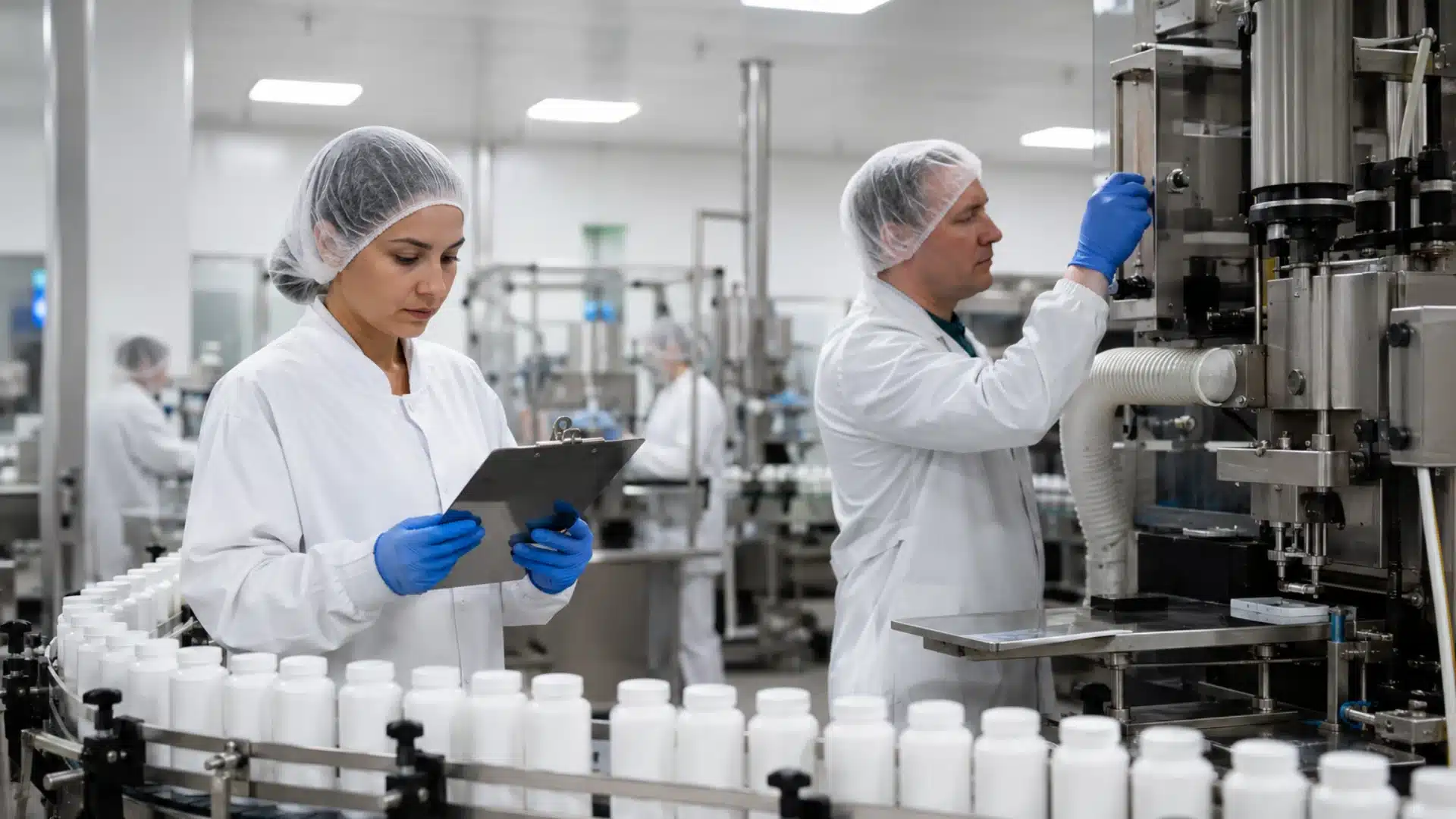
This means walking the floor and closely checking equipment condition, staff hygiene practices, raw material storage, and pest control measures.
Gaps get flagged here so they can be corrected internally, well before an outside auditor ever steps foot in the facility.
Step 2: Documentation and a Written Safety Plan
A GMP-compliant operation needs a documented quality system, not just good habits on the floor.
This includes standard operating procedures, batch production records, employee training logs, and a written food safety or quality plan covering hazard controls.
Regulators and auditors rely heavily on this paperwork to confirm that practices stay consistent and repeatable, rather than being left to individual judgment day to day.
Step 3: Pre-Assessment Audit
Many companies run a mock audit or hire an outside consultant before the real certification inspection.
This trial run mirrors exactly what a certifying body will check, surfacing weak spots in documentation or facility conditions while there’s still time to correct them properly.
Skipping this step is fairly common among smaller companies, but it noticeably raises the odds of failing the actual certification audit later.
Note: This step is optional but strongly recommended by certifying bodies.
Step 4: Formal Audit by an Accredited Body
An accredited certifying organization conducts a thorough on-site audit of the entire facility and its operations.
Auditors inspect the premises directly, observe live production processes, and cross-check documentation against what’s actually happening on the floor in real time.
This covers everything from raw material handling to equipment maintenance schedules and employee training records, leaving little room for gaps.
Step 5: Corrective Actions
If auditors uncover any deviations during the audit, the company must address them fully before certification can be granted.
This might mean updating a written standard operating procedure, retraining staff on a specific protocol, or physically fixing a facility condition that fell short of requirements.
Auditors typically set a firm deadline for the corrective action plan, and companies must submit documented proof that each issue has been properly resolved before moving forward.
Note: Repeated or serious non-conformances can delay certification by months.
Step 6: Certificate Issuance
Once the certifying body verifies corrective actions and confirms all requirements are fully met, it formally issues the GMP certificate to the company.
This isn’t a one-time achievement; companies must maintain ongoing compliance through regular audits, usually conducted annually, to keep the certification active and avoid it lapsing, expiring, or being revoked entirely.
What Do Auditors Actually Check? Key GMP Requirements
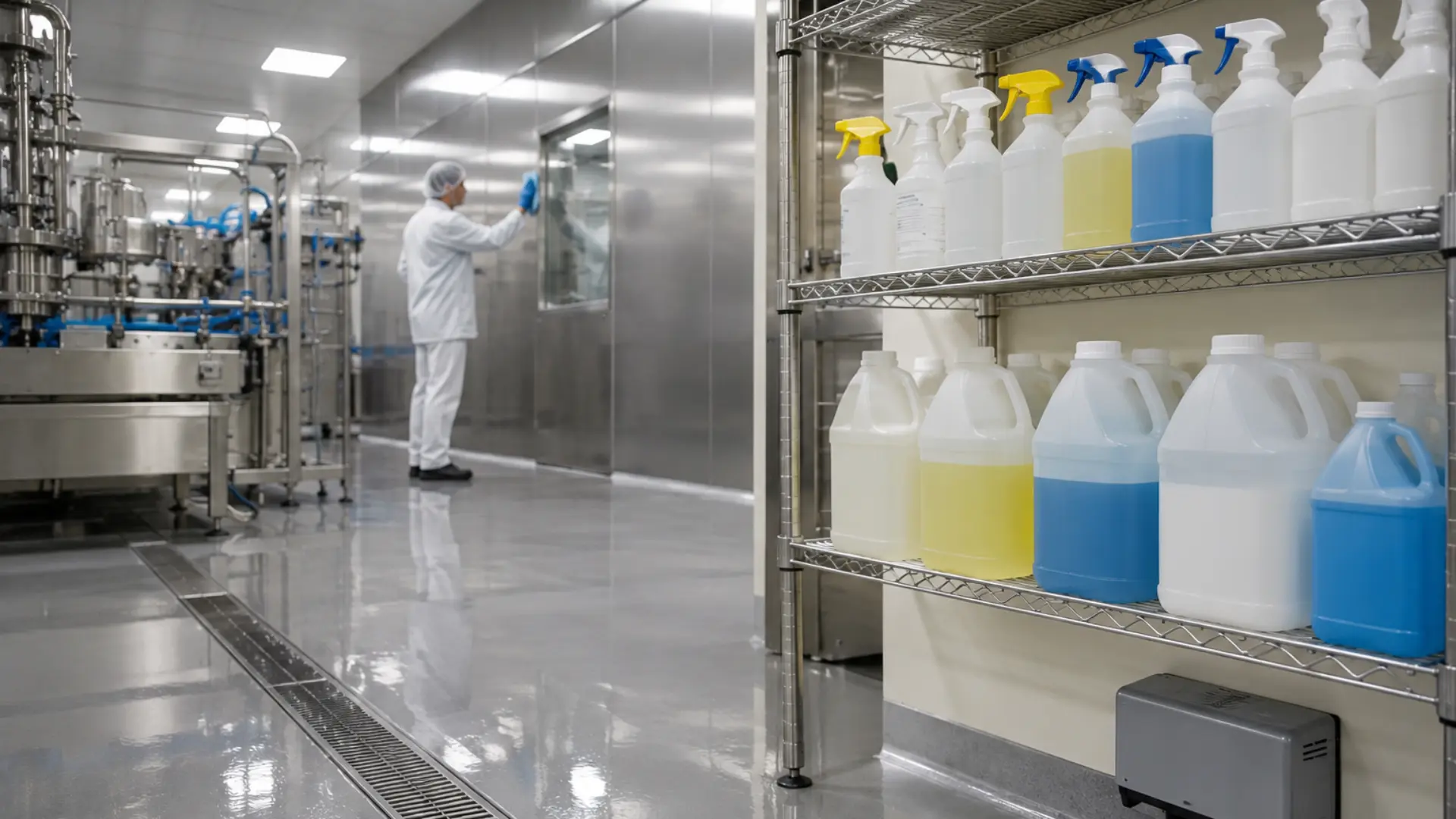
Beyond paperwork, auditors focus on what’s physically happening inside the facility.
- Facilities and Grounds: Premises must be sanitary, well-ventilated, and properly laid out to prevent cross-contamination between raw materials and finished products.
- Equipment and Machinery: All equipment must be maintained, cleaned, and calibrated regularly, with detailed logs kept on record for auditor review.
- Personnel and Training: Employees must be adequately trained, with documented records covering hygiene protocols, qualifications, and role-specific GMP procedures.
- Documentation and SOPs: Facilities must maintain written Standard Operating Procedures, batch records, testing logs, and corrective action reports for every critical process.
- Quality Control and Complaint Management: Manufacturers must test products at multiple production stages and have clear procedures for handling complaints, deviations, and recalls.
Auditors compare these physical observations directly against a company’s written procedures to spot inconsistencies.
This hands-on approach is what separates real certification from a facility that just looks compliant on paper.
Facility Certification vs Product Certification
Facility certification confirms that a manufacturing site itself has been audited and verified as GMP compliant, covering equipment, processes, documentation, and staff training across everything produced there.
Product certification is different: it means a specific product has been independently tested and verified to meet defined quality and safety benchmarks, such as label accuracy or absence of contaminants.
A facility can be fully GMP certified without every product it makes carrying separate product-level certification.
In most regulated industries, facility certification is the baseline requirement.
Product certification adds an extra layer of assurance that certain retailers, marketplaces, or export markets may specifically request before allowing a product on their shelves.
How Long Does GMP Certification Take and What Does it Cost?
Understanding thetime and financial commitmentinvolved in GMP certification helps manufacturers plan realistically and avoid unexpected setbacks during the process.
Stage | Estimated Time | Estimated Cost |
|---|---|---|
Internal Gap Assessment | 2 to 4 weeks | $2,000 to $10,000 |
Implementing GMP Standards and Updating SOPs | 4 to 12 weeks | $1,500 to $8,000 |
Staff Training and Development | 2 to 6 weeks | $1,000 to $5,000 |
Facility Upgrades and Equipment | Variable | $5,000 to $50,000+ |
Mock Audit and Pre-Assessment | 1 to 2 weeks | $2,000 to $5,000 |
Application and Scheduling | 4 to 8 weeks | Included in audit fees |
Third-Party Audit and Facility Inspection | 1 to 3 days | $3,000 to $15,000 |
Corrective Action and Certification Decision | 2 to 4 weeks | Included in audit fees |
Annual Surveillance Audit | Yearly | $1,500 to $5,000 |
While the upfront investment can be substantial, many manufacturers find that avoiding even a single recall or penalty can offset these costs, making certification a reasonable investment for businesses planning long-term market access.
Benefits of Being GMP Certified
GMP certification pays off differently depending on which side of the transaction you’re on.
Manufacturers and consumers both benefit when certification proves quality was verified, not simply claimed.
- Manufacturers catch errors early; consumers get safer products from the start.
- Certification opens doors with major retailers and makes entry into international markets smoother.
- Manufacturers cut waste through consistency; consumers get predictable product quality every time.
- Certification strengthens standing with regulators while giving consumers a simple way to judge a brand.
- Manufacturers reduce liability risk; consumers gain protection against unsafe or unregulated products.
GMP Compliance vs GMP Certification
These terms are often used interchangeably but have distinct obligations for manufacturers.
Factor | GMP Compliance | GMP Certification |
|---|---|---|
Required by Law | Yes | No, largely voluntary |
Verified By | FDA inspections | Accredited third-party body |
Documentation Issued | Warning letters if non-compliant | Certificate of compliance |
Validity Period | Ongoing legal obligation | Typically three years |
Who Requests It | Regulatory authorities | Retailers, distributors, international partners |
Consequences of Failure | Fines, recalls, shutdowns | Loss of certification status |
This mandatory-versus-voluntary split isn’t unique to manufacturing. Pharmacy technicians run into a similar mix-up when they try to sort out license versus certification requirements for their own credentials.
End Note!
GMP certification is a clear yet powerful signal.
For a manufacturer, it’s proof that quality checks run through every stage of production.
For a shopper, it’s a quick way to judge if a brand takes safety seriously.
Keep in mind that GMP certification is usually voluntary and granted by accredited third-party bodies such as NSF.
The next time you see “GMP certified” on a package, you’ll know exactly what work went into earning it and why it matters for the product in your hands.
Frequently Asked Questions
How Long is GMP Certification Valid?
GMP certification is typically valid for three years. Manufacturers must undergo annual surveillance audits during this period and complete a full recertification audit at the end of the three-year cycle.
What is the Difference Between ISO and GMP Certification?
ISO certification evaluates broader quality management systems across industries, while GMP certification focuses specifically on safe manufacturing, hygiene, ingredient handling, documentation, testing, and product consistency.
How Can You Check If a Supplement is GMP Certified?
Check the product label and manufacturer’s website for GMP certification details. Verify the certification through the issuing organization and look for independent third-party testing information.