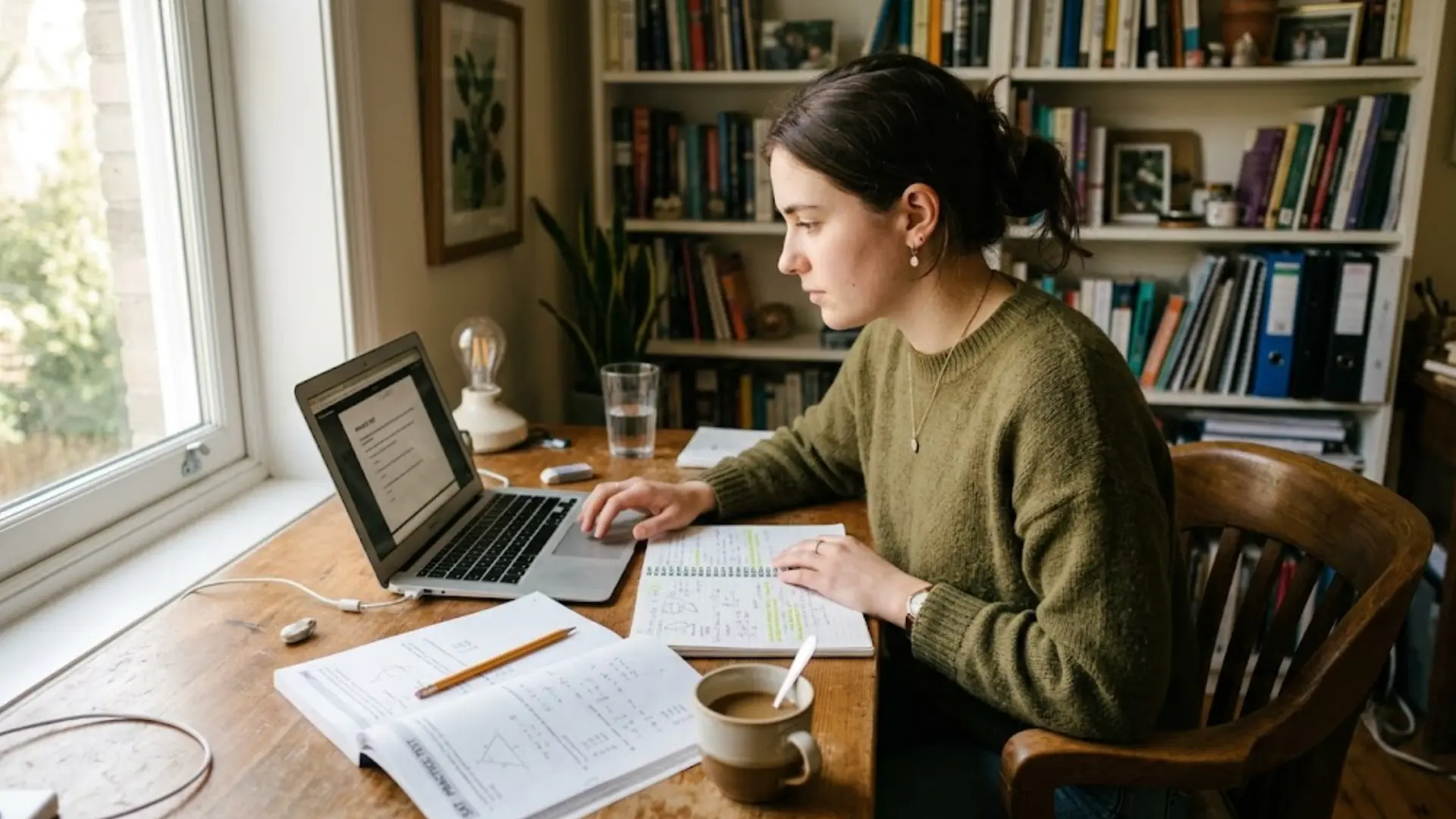


Your heart is racing, your palms are sweaty, and your mind has gone blank. You studied for days, yet nothing is coming back to you.
That is test anxiety, and more students deal with it than you might think. It is not simply feeling nervous before an exam.
It is a type of performance anxiety where evaluation pressure triggers a stress response. That response gets in the way of thinking clearly. When anxiety takes over, your brain shifts into survival mode.
Practical test anxiety strategies exist for every stage, and they are easier to apply than you expect.
Why So Many Students Experience Test Anxiety
Test anxiety is a common stress response that occurs when an exam feels like a threat rather than a task. It does not necessarily mean a student is unprepared.
Several factors can contribute to test anxiety, including past academic setbacks, high expectations from family, perfectionist tendencies, and low self-confidence. These factors can increase stress before and during exams.
A 2024 study published by the National Library of Medicine found that students in the early years of their programs and those with lower academic performance were more likely to report higher levels of test anxiety.
Knowing this does not make the anxiety disappear, but it does make it easier to address with the right strategies.
Signs of Test Anxiety You Should Not Ignore
Anxiety before an exam does not always announce itself clearly. Knowing what to look for is the first step toward managing it:
Physical Symptoms
Physical symptoms are often the first sign that something is off. Here are the most common ones your body may already be showing:
- Rapid heartbeat or chest tightness
- Sweaty or shaky hands
- Upset stomach, nausea, or headaches
- Feeling dizzy or lightheaded
- Muscle tension or an urge to leave the room
Mental and Emotional Signs
Test anxiety does not stop at the body. It can also trigger a range of emotional reactions before and during an exam:
- Going blank on answers you clearly knew before
- Constant negative thoughts like “I am going to fail.”
- Difficulty concentrating or reading questions properly
- Feeling a sense of dread days before the exam
- Irritability, mood swings, or sudden crying spells
Normal Stress or Test Anxiety?
A little nervousness before an exam is normal. It can actually sharpen focus and keep you alert. The difference is in how much it affects you.
If your anxiety is so intense that it stops you from sleeping, studying, or performing on the day despite being prepared, that is when it crosses into test anxiety territory.
The goal is not to eliminate nerves completely. The goal is to stop anxiety from taking the wheel.
Pre-Exam Strategies That Keep Anxiety in Check

Anxiety does not wait for exam day. It starts building the moment the exam is announced, and these strategies target that buildup directly:
1. Build a Study Schedule That Does Not Overwhelm You
A study schedule is a simple plan that maps out what you study, when you study, and for how long. It removes the guesswork that quietly builds stress before exams.
When your brain knows what is coming next, it stops running in panic mode.
Students who follow a set schedule feel more in control, experience less exam anxiety, and retain information far better than those who study without a plan.
How to do it:
- Break your syllabus into small daily topics so each session has one clear focus
- Assign each subject to a specific day so nothing piles up unexpectedly
- Keep study sessions to 40 to 50 minutes with short breaks in between
- Never cram every subject into one sitting, as breaks are not wasted time
2. Practice with Past Papers and Timed Tests
Past papers and timed tests help you become familiar with the exam format, question styles, and time limits before the real test.
One reason students feel anxious is uncertainty. When you know what to expect, exams feel less intimidating and more manageable.
Timed practice also trains your brain to work under exam conditions, making it easier to stay calm and focused when the actual test begins.
How to do it:
- Complete past papers under the same time limits as the real exam
- Set a timer and avoid using notes or textbooks during practice
- Review your answers afterward to identify weak areas
- Increase the number of timed sessions as exam day gets closer
3. Sleep As Your Grade Depends on It (Because It Does)
Sleep is the process that helps your brain store, organize, and retrieve information. It is one of the most important parts of exam preparation, yet many students cut back on sleep when they feel pressured.
Studying late into the night may seem productive, but a tired brain struggles to focus and recall information accurately.
Students who get enough sleep often feel calmer, think more clearly, and handle exam pressure better than those who stay up revising.
How to do it:
- Aim for 7 to 9 hours of sleep each night
- Follow a consistent bedtime and wake-up schedule
- Stop studying at least an hour before bed
- Keep screens away from your sleeping area
- Prioritize sleep during the week before the exam
4. Cut the All-Nighters, Try Spaced Repetition Instead
Spaced repetition is a study method that involves reviewing information multiple times over a period rather than trying to learn everything at once.
Many students become anxious because they leave revision until the last minute and then feel unprepared.
Reviewing information at regular intervals strengthens memory and reduces the fear of forgetting important material during the exam.
How to do it:
- Start revision several weeks before the exam
- Review topics on day one, day three, and day seven
- Use flashcards or study apps to schedule reviews
- Test yourself instead of simply rereading notes
- Focus on difficult topics more frequently
5. Talk to Someone You Trust About How You Are Feeling
Talking about your worries allows you to release some of the pressure that builds up before exams. Keeping anxiety to yourself often makes it feel larger than it really is.
Many students assume they need to deal with exam stress alone, but sharing concerns can provide reassurance and support.
A conversation with someone you trust can help you gain perspective and reduce feelings of isolation.
How to do it:
- Speak with a parent, teacher, friend, or counselor
- Explain what specifically is causing your stress
- Be honest about your concerns and fears
- Write your thoughts down first if talking feels difficult
6. Use Positive Self-Talk the Right Way
Positive self-talk means replacing negative assumptions with realistic and supportive thoughts. It is not about pretending everything is perfect.
Students with test anxiety often repeat thoughts such as “I am going to fail” or “I am not ready,” which can increase stress and make concentration harder.
Choosing balanced and accurate thoughts can help reduce anxiety and improve confidence before an exam.
How to do it:
- Replace negative thoughts with realistic alternatives
- Remind yourself of the preparation you have completed
- Write down topics you know well before studying
- Focus on effort and progress rather than perfection
7. Prepare Your Exam Day Kit the Night Before
Anxiety often increases when students are rushing around on the morning of an exam. Small problems can quickly add unnecessary stress.
Preparing everything in advance removes avoidable distractions and allows you to start the day feeling more organized.
A calm morning helps create a calmer mindset before you enter the exam room.
How to do it:
- Pack all required stationery the evening before
- Prepare identification documents if needed
- Check the exam location and reporting time
- Set more than one alarm
- Lay out everything you need before going to bed
8. Eat Well and Move Your Body Before Exam Day
Food and physical activity affect both your energy levels and your ability to manage stress. They play a bigger role in exam performance than many students realize.
Low energy and physical tension can make anxiety symptoms feel stronger and harder to control.
Regular movement and balanced meals help support focus, concentration, and emotional stability during exam preparation.
How to do it:
- Eat balanced meals that include protein and complex carbohydrates
- Drink enough water throughout the day
- Include light physical activity in your daily routine
- Avoid excessive sugary snacks and energy drinks
- Never skip breakfast on exam day
9. Limit Studying in the Final Hour Before the Exam
The final hour before an exam should be used to settle your mind rather than trying to learn new information.
Many students keep studying until the last possible minute because they believe it will improve their performance. In reality, this often increases stress without adding meaningful knowledge.
Giving yourself time to slow down before the exam can help you enter the room feeling more focused and in control.
How to do it:
- Review only short notes or key formulas
- Avoid learning new topics at the last minute
- Take a short walk or sit quietly for a few minutes
Mid Exam Strategies That Stop Anxiety From Taking Over
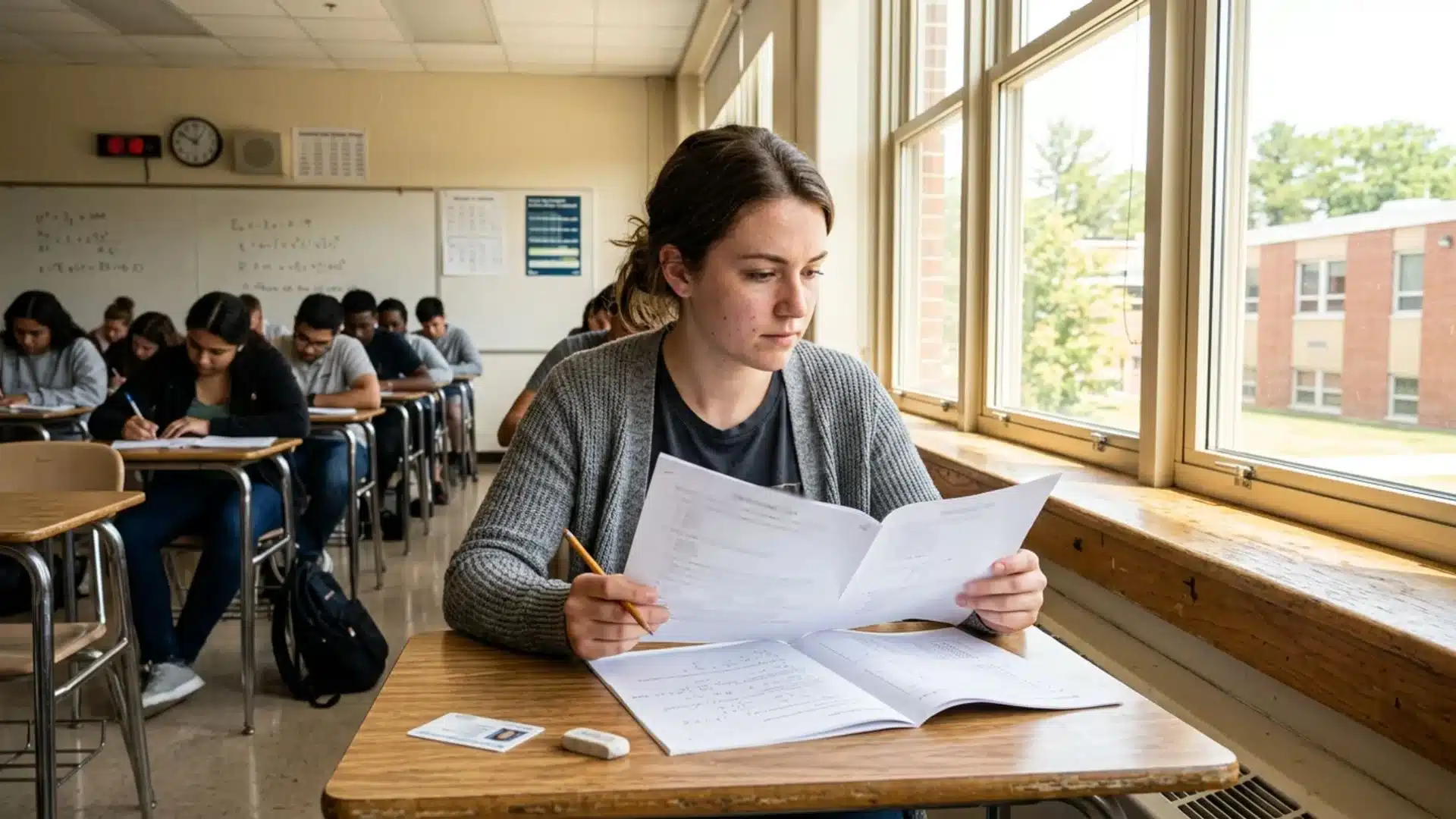
Knowing your content is only part of it. How you manage yourself inside the exam room decides how much of that knowledge actually shows up on paper. These strategies help you stay in control when the pressure peaks.
10. Try Box Breathing the Moment Panic Hits
Box breathing is a simple breathing exercise that helps calm your body’s stress response. It involves breathing in, holding your breath, breathing out, and pausing again for equal counts.
When anxiety rises, breathing often becomes fast and shallow. This signals the body to stay alert and stressed.
Box breathing helps slow that process down, making it easier to regain focus and think clearly during an exam.
How to do it:
- Inhale slowly for 4 counts
- Hold your breath for 4 counts
- Exhale slowly for 4 counts
- Hold again for 4 counts
- Repeat the cycle three to four times
11. Read Every Question Twice Before Answering
Anxiety can make students rush through instructions and questions without fully understanding them. This often leads to avoidable mistakes unrelated to knowledge.
Taking a few extra seconds to read carefully improves accuracy and reduces the chances of missing important details.
It also helps slow your thinking down, which can make you feel more in control throughout the exam.
How to do it:
- Read the question once for general understanding
- Read it again to identify important details
- Underline keywords if permitted
- Pay attention to instructions and command words
- Check that your answer matches the question being asked
12. Skip and Come Back, Do Not Get Stuck
Every student encounters questions they cannot answer immediately. Spending too much time on one difficult question can increase anxiety and affect the rest of the exam.
Moving on lets you keep earning marks elsewhere while maintaining momentum. Many students find that answers become clearer when they return later with a calmer mindset and fresh perspective.
How to do it:
- Mark difficult questions and move forward
- Answer easier questions first
- Return to skipped questions later
- Keep track of unanswered sections
- Use the remaining time to review them calmly
13. Ground Yourself with the 5-4-3-2-1 Technique
The 5-4-3-2-1 technique is a grounding exercise that brings your attention back to the present moment. It is especially helpful when anxious thoughts begin to spiral during an exam.
Instead of focusing on worst-case scenarios, this method directs your attention to your surroundings.
This can help reduce panic, improve concentration, and make it easier to continue working through the exam.
How to do it:
- Notice 5 things you can see
- Notice 4 things you can feel
- Notice 3 things you can hear
- Notice 2 things you can smell
- Notice 1 thing you can taste
14. Manage Your Time Section by Section
A clear time plan prevents the stress that comes from constantly worrying about the clock. Without one, students often spend too long on certain questions and run out of time later.
Knowing how much time to allocate to each section creates structure and reduces uncertainty. It also helps you stay focused on the task at hand rather than becoming distracted by time pressure.
How to do it:
- Scan the paper before you begin
- Divide time according to the marks available
- Set target completion times for each section
- Check progress at planned intervals
- Leave a few minutes for review at the end
15. Stop Comparing Yourself to Others in the Room
It is easy to feel anxious when another student finishes early or seems to be writing faster than you. However, these comparisons rarely provide useful information.
Every student works at a different pace. Focusing on what others are doing can distract you from your own exam and increase self-doubt.
Staying focused on your paper helps protect your concentration and confidence.
How to do it:
- Keep your attention on your own work
- Avoid looking around the room unnecessarily
- Refocus on the current question if comparisons start
- Remind yourself that speed does not equal accuracy
- Measure progress against your own time plan
16. Write a Quick Brain Dump Before You Start Answering
A brain dump involves writing down important information you are worried about forgetting before you begin answering questions. This may include formulas, dates, definitions, or key concepts.
Many students fear forgetting something important during an exam. Getting that information down on paper early can reduce mental pressure and free up attention to solve questions effectively.
How to do it:
- Write key facts on scrap paper if allowed
- Focus on information you commonly forget
- Keep notes brief and organized
- Refer to them when needed during the exam
- Cross them out once they are no longer useful
Once the Exam Is Over, What to Do Next

The exam is over, and you cannot change a single word you wrote. What you can control is what happens next.
These strategies stop post-exam anxiety from taking over and affecting everything that comes after.
17. Resist the Urge to Discuss Every Answer Right After the Exam
The moment an exam ends, many students start comparing answers with friends. While this may seem harmless, it often creates unnecessary doubt about answers that cannot be changed.
Even a single difference can trigger stress and make you question your performance.
Protecting your mental space after an exam helps prevent anxiety from carrying over into the rest of your day or the next test.
How to do it:
- Walk away from answer-comparison discussions
- Politely decline conversations about specific questions
- Focus on resting or preparing for your next exam
- Remind yourself that the paper is already submitted
- Save your energy for what comes next
18. Do Something That Makes You Feel Good Right After
Exams require a great deal of mental energy, and your mind needs time to recover once the pressure is gone.
Moving immediately into worry mode or the next study session can keep stress levels high and make it harder to recharge.
A short break after an exam helps your brain shift out of exam mode, reduces tension, and leaves you feeling more refreshed for future challenges.
How to do it:
- Plan a small activity you enjoy after the exam
- Spend time with friends or family
- Listen to music or watch something relaxing
- Take a walk or spend time outdoors
- Give yourself permission to take a short break
19. Reflect Honestly without Being Harsh on Yourself
Reflection helps you learn from an exam, but it should not become a session of self-criticism.
Looking back at what went well and what could be improved gives you useful information for future exams without damaging your confidence.
Students who reflect constructively are often better prepared for the next test because they focus on growth rather than mistakes they cannot change.
How to do it:
- Wait until you feel calm before reflecting
- Identify what worked well during preparation
- Note any areas you would handle differently next time
- Keep your observations brief and practical
- Focus on learning rather than judging yourself
One exam does not define your ability. Use what you learn from it and move forward.
Long-Term Ways to Reduce Test Anxiety
Managing test anxiety is not just about what you do the night before or during the exam. Building certain habits consistently over time lowers your baseline anxiety so that when exam season arrives, you are already in a steadier place.
| Strategy | How Often | Why It Helps |
|---|---|---|
| Regular physical activity | Daily, even 20 minutes | Lowers baseline stress hormones over time |
| Journaling thoughts and worries | A few times a week | Reduces mental clutter and processes anxiety before it builds |
| Mindfulness or meditation | Daily, even 5 minutes | Trains the brain to stay calm under pressure |
| Consistent sleep schedule | Every night | Keeps the nervous system regulated and less reactive to stress |
| Regular low-stakes self-testing | Throughout the term | Builds familiarity with exam pressure so it feels less threatening |
These habits will not eliminate anxiety overnight. But practiced consistently, they change how your brain responds to pressure over time, making every exam season easier to handle than the last.
Why Do Test Anxiety Strategies Work Differently for Everyone?

Test anxiety is not the same for all experiences. For some students, it is rooted in fear of failure; for others, it stems from perfectionism, past bad experiences, or external pressure.
Because the root cause differs, the strategies that bring relief differ too. A student whose anxiety stems from feeling underprepared will respond well to structured schedules and past-paper practice.
A student driven by negative self-perception will find more relief in self-talk and grounding techniques.
Try several approaches rather than dismissing them after one attempt. Give each strategy at least two to three exam cycles before deciding if it works. Over time, you will build a personal set of tools that fits your specific anxiety pattern.
When to Seek Additional Support
The strategies listed here work well for most students. But if anxiety is affecting your daily life, disrupting sleep, or making it impossible to study, it is time to go beyond self-help.
These support options can help you manage anxiety more effectively and prevent it from becoming a bigger obstacle during exams.
- Talk to your parents about your anxiety symptoms, fears, and challenges so they can provide understanding, reassurance, and support.
- Speak with a teacher or school counselor early. They can offer guidance, support, and practical solutions before exams.
- Consider professional support if anxiety affects daily functioning. CBT and other therapies can help reduce test anxiety.
Remember, needing support is not a sign of weakness. The right help and tools can make test anxiety much easier to manage.
Apps That Can Help You Track and Manage Test Anxiety
Several tools exist to help students monitor and manage anxiety on a daily basis:
| App | Best For | How It Helps | Key Features |
|---|---|---|---|
| Headspace | Stress relief | Reduces stress and improves focus through guided mindfulness exercises | Guided meditation, breathing exercises, focus sessions, sleep support |
| Calm | Better sleep and relaxation | Helps lower anxiety and improve sleep quality before exams | Sleep stories, meditation sessions, breathing exercises, relaxing sounds |
| Wysa | Managing anxious thoughts | Helps students process anxiety through AI-guided conversations and exercises | AI chat support, mood tracking, guided exercises, journaling tools |
| MindShift CBT | Test anxiety management | Helps challenge anxious thoughts and develop coping skills using CBT methods | CBT tools, thought journals, relaxation exercises, anxiety coping strategies |
If anxiety has reached a point where it is controlling your decisions around studying and exams, using one of these tools alongside professional support is a strong starting point.
Frequently Asked Questions
Why Do I Blank out During Exams Even when I Have Studied?
Test anxiety shifts your brain into survival mode, blocking access to stored information. It is not a memory problem. It is a stress response that specific strategies like box breathing and brain dumps can help manage.
Can Test Anxiety Affect Students Who Are Well Prepared?
Yes. Test anxiety is not always linked to preparation levels. Even well-prepared students experience it because the trigger is the pressure of being evaluated, not the absence of knowledge.
Is It Normal to Feel Physically Sick Before an Exam?
Yes. Nausea, headaches, and stomach discomfort are common physical symptoms of test anxiety. They are your body’s stress response and can be reduced through breathing techniques, proper sleep, and eating well before the exam.
Final Thoughts
One bad exam does not define you, and one wave of anxiety does not have to either. Test anxiety is real, but it is also manageable with the right approach.
The test anxiety strategies covered in this article are not generic advice. They are specific, practical, and built for every stage: before you sit down, while the clock is ticking, and after you walk out.
The difference between a student who freezes and one who stays in control often comes down to preparation and the right tools. You now have both.
Try these strategies in your next exam and drop a comment below telling us which ones worked best for you.