

Your child stares at a simple instruction, then forgets it within seconds. Minutes later, the task still sits untouched, even with the best intentions.
This happens often, and it has nothing to do with effort or smarts. Executive functioning curriculum encompasses mental skills such as planning, organizing, focusing, and following through.
Many kids struggle with these skills for no clear reason. Structured, research-backed curricula can teach these skills step by step.
This breakdown covers three leading programs built to strengthen these exact skills.
Each program takes a different approach to building the same core skills. You can compare each one and find the best fit for your child.
Why Executive Function Skills Have Become a Priority in Schools
Students today juggle multiple assignments, deadlines, and responsibilities. Schools expect more independent learning. Strong executive function skills are directly linked to academic success.
Many students struggle with organization, time management, and focus. Teachers see incomplete assignments every day.
These challenges show up at every grade level. Students with ADHD or learning differences often struggle most, but any student can fall behind.
Schools teach subjects well, but often skip the skills needed to manage learning. There’s a gap between knowing content and using it. That’s why instruction in executive function is getting more attention.
Structured programs teach planning, organization, and flexible thinking. They work both school-wide and in individual classrooms.
Core Executive Function Skills Covered in Curriculum Programs
Executive functioning curricula exist to help students bridge the gap between knowing what they need to do and having the skills to plan, organize, manage time, and follow through effectively.
Skill | What It Means | How Curricula Address It |
|---|---|---|
Organization Skills | Managing materials and information to reduce chaos | Checklists, folder systems, structured routines |
Time Management | Planning how long tasks take and meeting deadlines | Visual timers, planning templates, deadline mapping |
Working Memory | Holding and using information to follow instructions | Chunking, repetition strategies, memory anchors |
Task Initiation | Starting tasks without excessive delay | Prompt hierarchies, visual cues, structured warm-ups |
Emotional Regulation | Managing feelings to stay engaged during frustration | Self-monitoring tools, regulation check-ins |
These six skills do not develop in isolation; when one improves, the others tend to follow. That interconnection is exactly what well-structured executive functioning curricula are designed to build on.
Best Executive Functioning Curriculum Programs
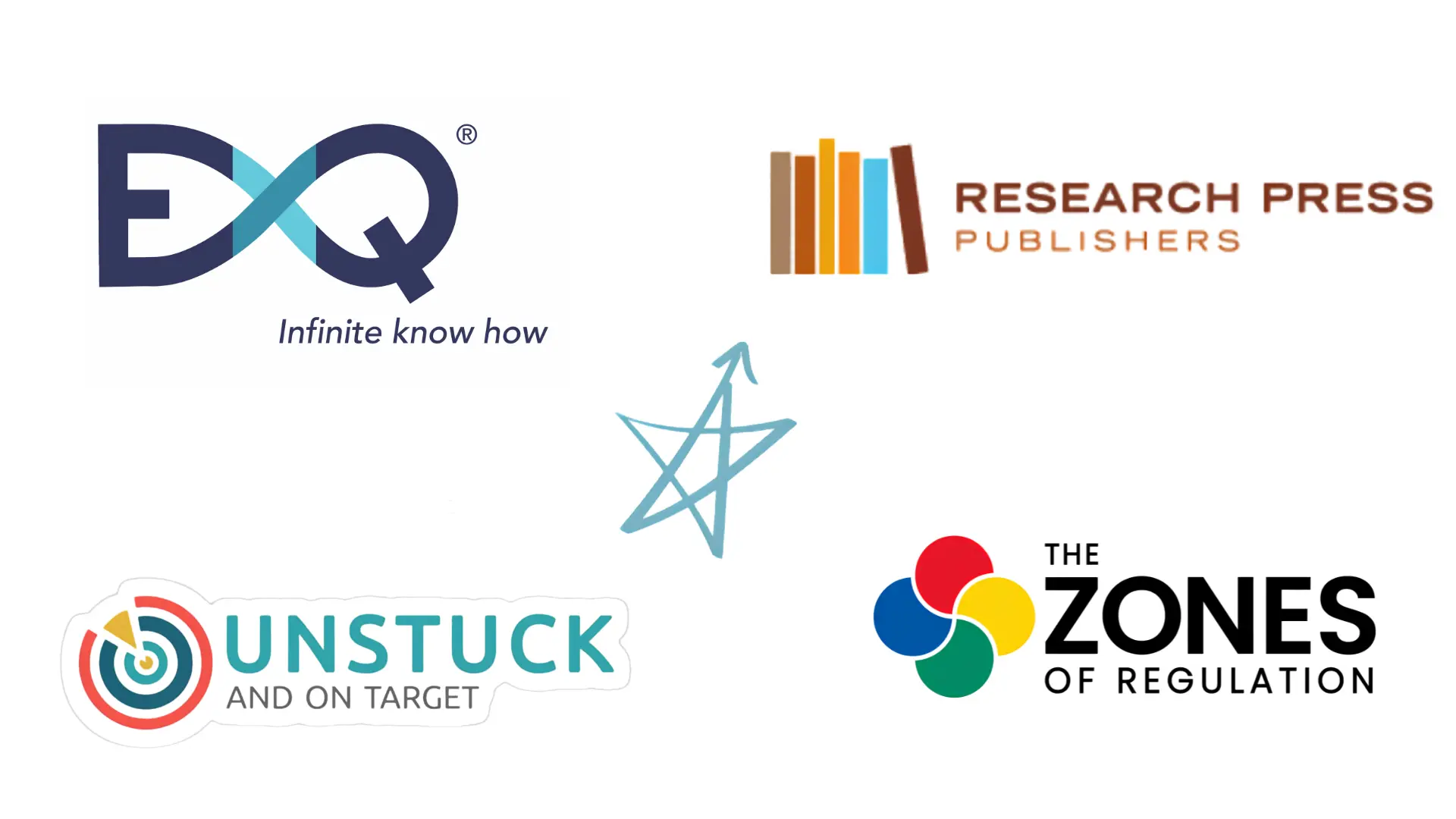
Here are five of the most effective executive functioning curriculum programs available today.
1. SMARTS Executive Function Curriculum
- Timeline: Full academic year; ~50 lessons; individual units available independently
- Cost: ~$595–$599 per teacher/year; volume discounts available for schools and districts
- Ideal For: Middle and high school students; ADHD and learning disabilities
SMARTS is a research-based curriculum developed by ResearchILD. It teaches students specific strategies for planning, organizing, and managing tasks.
The program builds metacognitive skills, helping students recognize when a strategy works and when to adjust.
Flexible lesson plans fit both general and special education classrooms, making it practical for a wide range of school settings and student needs.
2. Unstuck and On Target!
- Timeline: Full school year; ~21–30 lessons; in-person and virtual delivery
- Cost: ~$39.99 for a two-year online subscription; bulk pricing available for clinics and organizations
- Ideal For: Elementary students ages 8–11; autism spectrum disorder and ADHD
Unstuck and On Target! is a classroom-based executive function program focused specifically on building flexibility and goal-setting skills in younger learners.
Developed with autism support programs in mind, the curriculum combines social and behavioral support with hands-on classroom activities that make abstract EF concepts tangible and accessible for elementary students.
Lessons are structured around real-life scenarios that help students practice flexible thinking, manage frustration, and work toward goals in a supportive, low-pressure environment.
3. ExQ Infinite Know How
- Timeline: Self-paced; weekly game-based lessons delivered digitally throughout the school year
- Cost: Custom pricing; contact ExQ directly for school and home rates
- Ideal For: Middle and high school students; home and school settings
ExQ Infinite Know How is a digital executive functioning platform that takes a technology-driven approach to skill building.
Rather than following a fixed lesson structure, the platform delivers personalized coaching tailored to each learner’s specific EF profile.
Built-in progress tracking allows students, parents, and educators to monitor growth over time, while interactive learning tools keep engagement high by making skill practice feel less like a lesson and more like an experience.
4. Zones of Regulation
- Timeline: Flexible; can begin any time of year; full academic year implementation recommended
- Cost: ~$120 per user/year; 10% discount for 10+ users; 20% for 30+ users
- Ideal For: Ages 4 and up; emotional regulation challenges across general and special education settings
Zones of Regulation is an emotion regulation curriculum that directly supports the development of executive function.
The program teaches students to identify and categorize their emotions into four color-coded zones, each representing a different state of alertness and emotional readiness.
Through self-regulation strategies and emotional awareness lessons, students learn to recognize what zone they are in and understand how it affects their behavior and learning.
5. Skillstreaming Programs
- Timeline: Ongoing weekly group sessions; flexible duration based on skill areas targeted
- Cost: Program books from ~$46.99; full bundles from ~$89
- Ideal For: Early childhood through adolescence; behavioral challenges and high-functioning autism
Skillstreaming is a social and executive functioning skills instruction program built on the idea that behavioral and cognitive skills can be taught the same way as academic subjects are.
The program uses a group-learning format in which students practice skills together through structured role-play, discussion, and feedback.
Behavioral skill reinforcement is central to the approach, with each session designed to help students internalize prosocial and self-management behaviors through repetition and real-world application.
How Executive Functioning Curriculum Helps Students

Executive functioning skills shape how well students plan, focus, and finish their work. Here is how executive functioning curriculum supports students in the classroom:
- Improves Academic Performance: When students build stronger executive functioning skills, they manage assignments and deadlines better.
- Builds Independence: Executive functioning curricula teach students to trust their own systems instead of relying on constant reminders.
- Reduces Classroom Frustration: These curricula reduce repeated reminders, unfinished work, and emotional outbursts.
- Strengthens Emotional Control: Curricula that target EF skills help students spot emotional triggers and pause before reacting.
- Supports Neurodivergent Learners: Students with ADHD, autism spectrum disorder, and other learning differences benefit from clear, consistent EF instruction.
These benefits show why schools now treat executive functioning instruction as a core teaching priority. Students who build these skills carry the benefits well beyond the classroom.
Executive Functioning Curriculum for Different Age Groups
Executive functioning skills develop gradually across childhood and adolescence. The right curriculum depends heavily on a student’s developmental stage, not just their academic stage.
Age Group | Focus Areas | What It Looks Like |
|---|---|---|
Early Childhood | Self-control, attention, basic routines | Play-based learning, visual supports, and short structured activities around turn-taking and impulse control |
Elementary School | Organization, task initiation, flexible thinking | Planning tools, classroom routines, and self-monitoring strategies using programs like Zones of Regulation, Unstuck, and On Target! |
Middle School | Time management, goal setting, self-advocacy | Managing multiple classes, longer assignments, and increasing independence using programs like SMARTS |
High School and College Readiness | Long-term planning, self-regulation, and independent decision-making | Building executive functioning stamina for college coursework, deadlines, and daily life without structured support |
No matter where a student is in their educational journey, there is an executive functioning curriculum built for that exact stage.
How to Choose the Right Executive Functioning Curriculum?
Choosing an executive functioning curriculum is not a one-size-fits-all decision. The right program depends on who you are teaching, what you are trying to achieve, and what your setting can realistically support.
- Assess Your Student Population: Identify age range, diagnoses, and specific EF challenges before shortlisting any program.
- Identify Program Goals: Clarify what the curriculum must achieve up upfront to avoid choosing based on popularity rather than fit.
- Consider Budget and Resources: Factor in materials, training time, and implementation costs before making any financial commitment.
- Review Research and Outcomes: Prioritize peer-reviewed, evidence-based programs with documented outcomes matching your student population.
- Evaluate Professional Development Support: Choose programs that offer training, implementation guides, and ongoing support to ensure consistent, confident delivery.
- Pilot Programs Before Full Adoption: Test with one class first, gather feedback, and use real data before school-wide rollout.
How Schools Implement Executive Function Curricula
Schools are increasingly recognizing that executive functioning skills cannot be taken for granted. They have to be taught, and implementation looks different depending on the setting and structure of the school.
- Advisory Periods: Many middle and high schools use short, recurring advisory sessions to teach and practice executive functioning skills such as planning, organization, and self-reflection.
- School Counseling Programs: School counselors introduce EF strategies through individual sessions, small-group work, and classroom visits, using structured curricula such as SMARTS or Zones of Regulation.
- Special Education Services: For students with IEPs and 504 plans, EF goals are often written directly into their plans and delivered by special education teachers or learning specialists.
- Integrated Classroom Instruction: The most sustainable EF instruction happens when it is woven into everyday classroom teaching rather than delivered as a separate program.
Common Challenges When Teaching Executive Function Skills
Teaching executive functioning skills is deeply rewarding, but it comes with real obstacles that educators and parents need to anticipate and plan for.
Challenge | Why It Happens | What It Means in Practice |
|---|---|---|
Lack of Student Motivation | Skills feel abstract and disconnected from daily life | Build real-world relevance into lessons from the start |
Inconsistent Practice | Practice is sporadic or limited to one setting | Consistency across home, school, and therapy is critical |
Overwhelming Lesson Structures | Struggling students are quickest to shut down | Break lessons into smaller, manageable steps |
Measuring Progress Effectively | A single assessment rarely reflects true growth | Combine observations, self-reflection, and structured assessments |
The educators and parents who see the strongest results are typically those who build flexibility, consistency, and patience into their approach from day one.
Frequently Asked Questions (FAQs)
What is an Executive Functioning Curriculum?
An executive functioning curriculum is a structured, teachable program designed to help students build skills like planning, organization, time management, and emotional regulation.
What Are Executive Functioning Skills?
Executive functioning skills are the cognitive abilities that help people manage their thoughts, actions, and emotions to achieve goals. Core skills include working memory, cognitive flexibility, inhibitory control, task initiation, emotional regulation, and planning and organization.
Which Executive Function Curriculum is Best?
SMARTS works well for middle and high schoolers; Unstuck and On Target! is strong for elementary students with ASD; Zones of Regulation suits younger learners needing emotional support; and ExQ Infinite Know How fits teens and young adults who need a flexible digital approach.
Are Executive Function Programs Evidence-Based?
Programs like SMARTS, Unstuck, and On Target! have peer-reviewed research supporting their effectiveness, particularly for students with ADHD and Autism Spectrum Disorder.
What Students Benefit Most from Executive Functioning Instruction?
While all students can benefit from EF instruction, those with ADHD, Autism Spectrum Disorder, learning disabilities, and anxiety tend to see the most significant gains.
Final Thoughts
Executive functioning skills are the foundation every learner needs, yet millions of students never receive direct instruction in them.
We tried to cover everything: EF skills, top executive functioning curriculum programs, age-specific approaches, ADHD and autism support, and how schools implement these programs effectively.
The right executive functioning curriculum can change the trajectory of a student’s academic and personal life.
Bookmark this page and come back whenever you need a reliable reference point. The information here will help you make informed, confident decisions about the EF support your student deserves.