

The classroom hasn’t changed much since 1950.
Same bells. Same rows. Same one-size-fits-all curriculum logic. Yet, we keep expecting different results.
Charter schools said enough. They’re public. They’re free.
Unlike regular schools, they have to earn their spot. No automatic funding.
A school focused on science and technology in Detroit. One built around the arts in Atlanta. A Spanish-English school in Texas. All charter schools. All completely different, and that’s the whole idea.
What is a Charter School?
Charter schools run on government funding but operate free from district control.
Teachers get creative freedom. Administrators make real decisions. Students get a learning environment designed around outcomes, not tradition. They’re accountable too.
No performance? No renewal. Simple as that.
Each charter school carries a unique mission, whether that’s language immersion, STEM, or fine arts.
One system, countless approaches. A charter school is still a public school.
It cannot charge tuition or turn students away based on grades, income, or background. Its uniqueness lies in the contract, or charter, signed with a state or local authorizer, like a school board, state agency, or university.
That contract spells out the school’s mission and the results it has to show to stay open.
The Origins and Purpose of Charter Schools
The idea took shape in 1991 when Minnesota passed the first charter school law in the country.
By 1992, City Academy in St. Paul opened its doors, becoming America’s very first charter school. What started as one bold experiment in one city quietly sparked a nationwide movement that nobody saw coming.
But why were they created in the first place?
- Reformers wanted an alternative to a public school system that wasn’t working for every child.
- Too many students were slipping through the cracks, and nobody was being held responsible.
- Teachers needed freedom to experiment with better ways of teaching.
- Traditional schools boxed students into the same methods, pace, and outcomes every year.
- Parents deserved real choices beyond their assigned neighborhood school.
The purpose was simple: create schools that had to perform. No excuses. No bureaucracy protects failure. Just results. The first time, families had somewhere else to turn.
How Charter Schools Differ from Traditional Public Schools
Same funding source, completely different world inside the classroom.
One follows the system. The other rebuilds it.
| Factor | Traditional Public Schools | Charter Schools |
|---|---|---|
| Curriculum | Set by the district | Designed by the school itself |
| Teacher Hiring | Union-controlled | The school decides independently |
| School Hours | Fixed district schedule | Can set their own hours |
| Class Size Rules | District mandated | Flexible by school policy |
| Specialization | Generalized teaching | Built around a specific focus |
| Admission | Automatic by address | Open enrollment, sometimes lottery |
| Governance | School board controlled | Run by independent organizations |
| Innovation | Limited room to experiment | Encouraged and expected |
Types of Charter Schools and Their Specializations
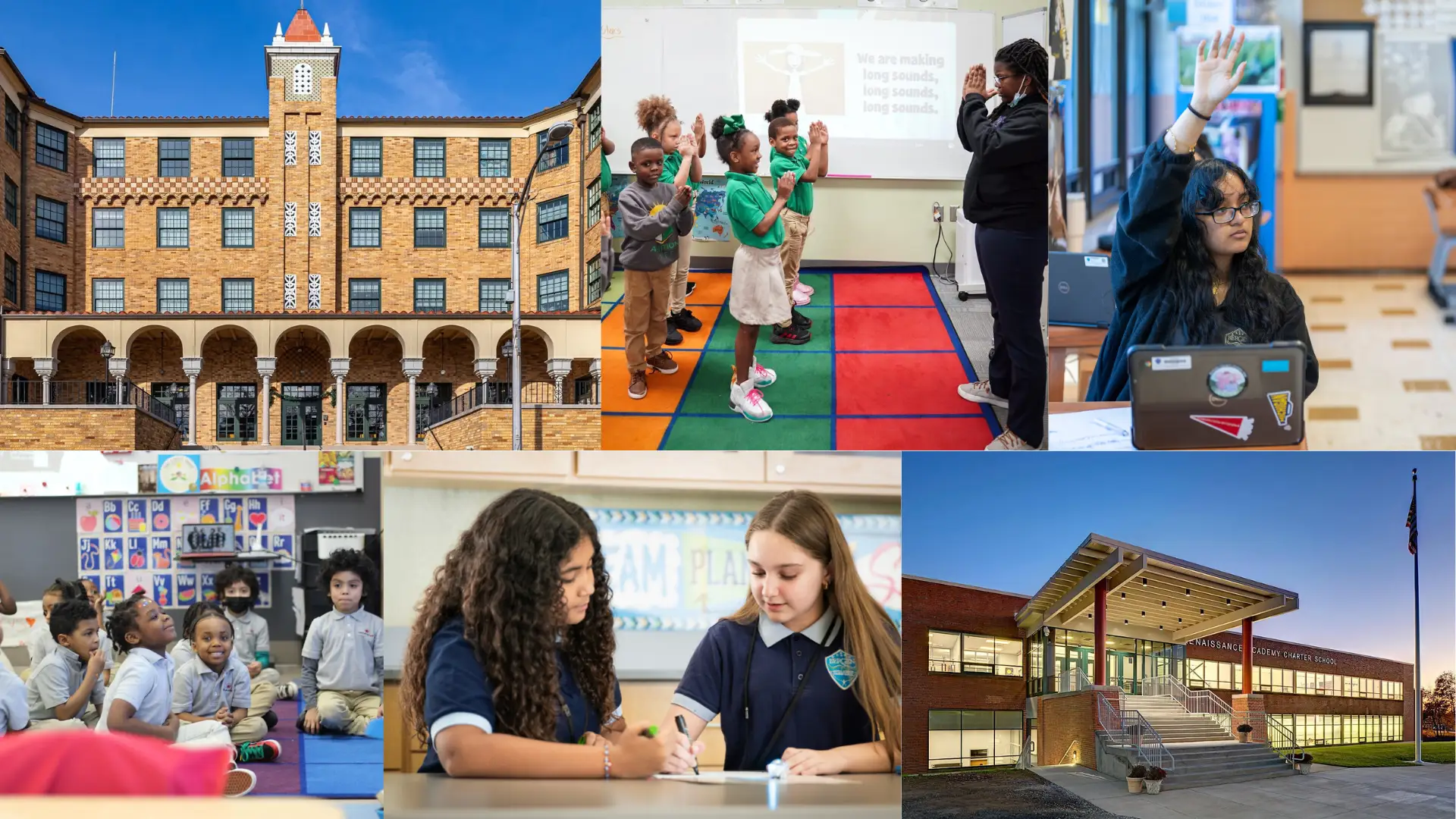
Not every charter school looks the same; each is built around a specific purpose.
1. STEM-Focused Schools
Built around science, technology, engineering, and math.
Students solve real-world problems through hands-on experiments and project-based learning daily. Unlike traditional schools, where science means textbooks, here it means labs, prototypes, and actual problem-solving.
Kids graduate thinking like engineers and analysts.
Design Tech High School in California is a STEM charter school noted for its human-centered design in all subjects.
2. Arts-Integrated Schools
Every subject gets taught through creative expression.
Music, theatre, and visual arts aren’t extracurriculars here; they’re core to the curriculum.
A history lesson might become a theatrical performance. A math concept might be explored through rhythm and pattern. Learning sticks because it’s experienced, not just memorized.
Arts Academy stands out nationally for blending rigorous academics with artistic training under one roof.
3. Bilingual and Language Immersion Schools
Students learn entirely in two languages at the same time. Fluency becomes a skill they carry for life.
What sets these apart from a standard language class is that total immersion, math, science, and literature are taught in both languages from day one. It rewires how a child thinks and communicates.
Alain Leroy Locke College in Los Angeles is known for bilingual excellence and strong academics.
4. College-Preparatory Schools
Rigorous academics from an early age.
Every lesson, every assignment is deliberately designed with university readiness in mind.
Advanced coursework, critical-thinking exercises, and SAT preparation are woven into everyday learning, not saved for senior year, as most schools do.
KIPP operates 270+ schools and sends thousands of first-generation students to university.
5. Vocational and Career-Based Schools
Trade skills meet classroom learning.
Students graduate with certifications and job-ready expertise alongside their diploma. Electricians, healthcare workers, and web developers are being trained here, while other kids are still guessing what they want to do.
It bridges the gap between education and actual employment.
High School for Construction Trades, Engineering and Architecture, known for graduating career-ready students.
6. Virtual Charter Schools
Fully online, fully accredited. Students learn from home without sacrificing the structure of a formal education.
Schedules are flexible, but expectations aren’t.
Unlike homeschooling, certified teachers, graded assignments, and a real curriculum are delivered through a screen instead of a classroom.
K12 International Academy is a widely verified virtual charter school serving students nationwide.
If you’re comparing online school options by grade level, it’s worth looking at how virtual charters structure their school day versus a fully private online program.
Flexibility and Innovation: Charter School Curriculum
Charter schools don’t inherit a curriculum; they build one from scratch around what actually works.
- No district official approves every lesson plan before a teacher can move forward.
- Teachers adapt content in real time based on how students respond.
- Project-based learning replaces rote memorization in most charter classrooms.
- Schedules can be restructured entirely to give more time to struggling subjects.
- Students experience learning; they don’t just sit through it.
That freedom is the whole advantage.
Unlike traditional schools, charter schools can pivot mid-year without permission.
That kind of flexibility is also why building strong study habits early matters just as much at a charter school as anywhere else, since the pace and format can shift from one unit to the next.
Charter School Grades and Fees Breakdown
Charter schools are free at the core. Any extra costs are set by the individual school, so the ranges below are general and can vary by state and campus.
Check with the specific school before assuming any of these apply.
| Fee Type | Details |
|---|---|
| Tuition | Free publicly funded |
| Registration Fee | Free in most states |
| Activity Fee | $0 – $50 annually in some schools |
| Uniform Fee | $50 – $150 depending on school policy |
| Lunch Fee | Varies; free lunch available for qualifying families |
| Transportation Fee | Some schools charge; others provide free busing |
| Extracurricular Fee | $0 – $100 depending on activity |
| Supply Fee | Some schools provide supplies for free |
| Technology Fee | Some virtual charter schools charge $0 – $75 annually |
| Field Trip Fee | Occasional small charges per trip |
| Special Program Fee | Art, music, or STEM programs may carry minimal costs |
Charter schools are free at the core, but small additional costs can vary from school to school.
Enrollment and Admissions Process
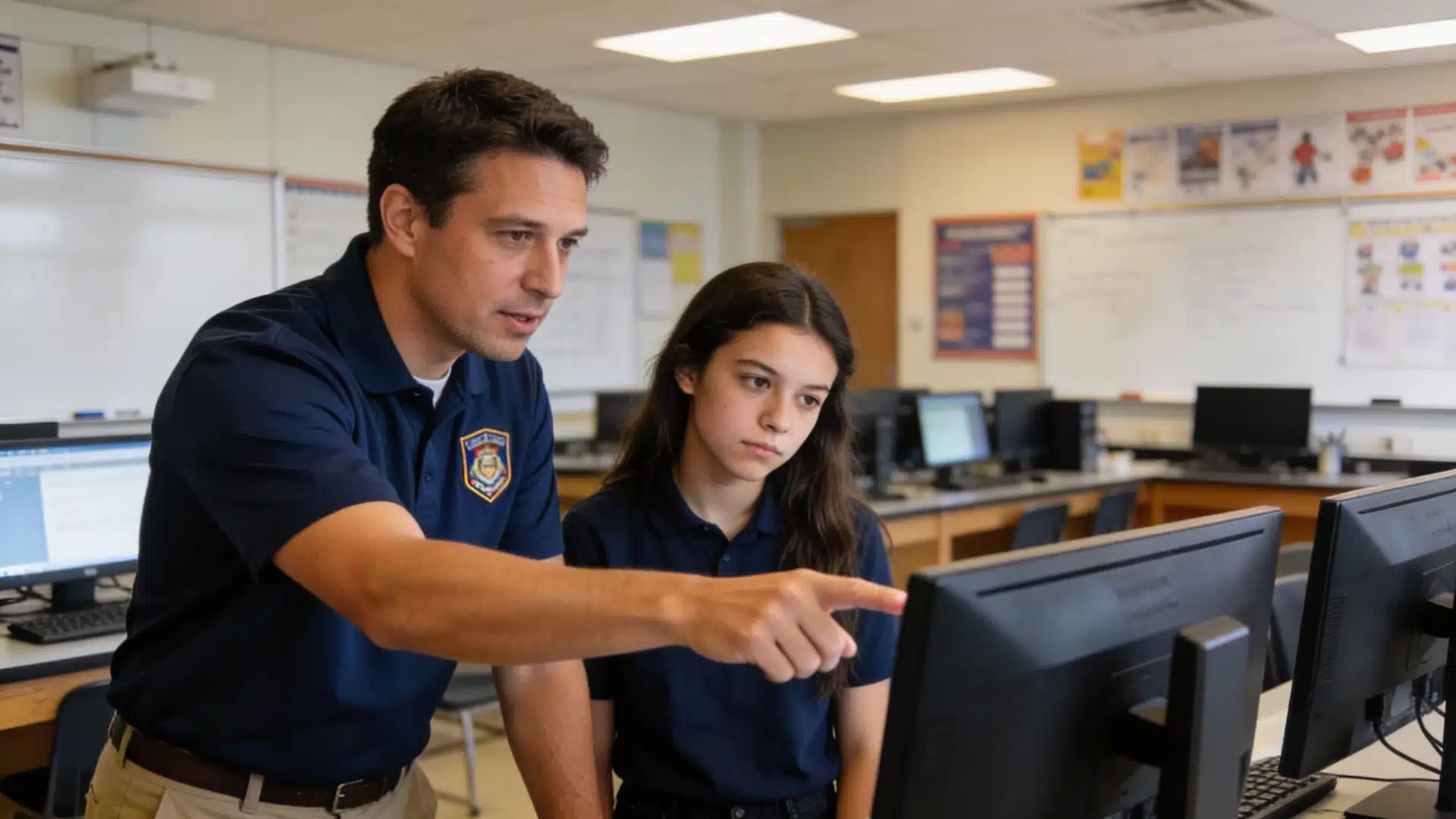
Getting into a charter school isn’t complicated, but it works differently than a traditional public school.
Most charter schools open enrollment between January and March for the following academic year. Some schools run a second enrollment window in July and August for families who missed the first round.
Deadlines vary by state and school, so checking the specific school’s website early matters.
Missing the window often means waiting a full year or joining a waitlist.
- Step 1: Parents research available charter schools in their area.
- Step 2: Parents submit an application during the school’s open enrollment period.
- Step 3: If seats are limited, a random lottery system determines admission.
- Step 4: Selected families receive an enrollment offer with an acceptance deadline.
- Step 5: Submit required documents, proof of residency, birth certificate, and immunization records.
- Step 6: The student is officially enrolled, and orientation details are shared.
No academic screening. No income requirements. Equal chance for every applicant.
Academic Performance and Accountability
Charter schools operate under a performance contract: deliver results or close down. That’s non-negotiable.
State authorizers review academic outcomes every three to five years.
Test scores, graduation rates, and college enrollment numbers all get examined closely. Underperforming schools don’t get unlimited second chances. Charters that consistently fail students lose their license to operate.
That pressure creates a culture that traditional public schools rarely experience.
Every teacher, every administrator knows the stakes. Performance isn’t optional; it’s existential.
Funding and Operational Model
Charter schools receive public funding, but the similarities with traditional schools stop right there.
Per-pupil funding follows the student directly to the charter school. No student, no money.
That alone forces a level of accountability that traditional schools never face. Charter schools don’t receive local property tax revenue. That’s a considerable funding gap they have to fill themselves.
Private donations and grants become essential. Budgets stay lean, and every dollar gets scrutinized.
Staffing, facilities, and daily operations are handled independently, with no district stepping in to help.
And if enrollment drops? There’s no financial safety net waiting.
Advantages of Attending a Charter School
Charter schools offer real options and accountability, something traditional public schools struggle to provide.
Personalized Learning Environment
Classrooms are built around specific teaching philosophies.
Students learn in ways that match how they actually think, not how the system prefers to operate.
Stronger Parent Involvement
Parents get a genuine seat at the table.
Open communication keeps families invested and creates a tighter, more accountable school community.
Faster Academic Adaptation
When something isn’t working, charter schools change course immediately, with no waiting for district approval or annual reviews to fix what students need today.
Smaller Class Sizes
Fewer students allow more teacher attention, catching struggles early and preventing slip-throughs.
Safe and Focused Environment
Strict behavioral standards maintain discipline, reduce disruptions, and allow more time for learning.
Challenges and Criticisms
Charter schools aren’t without flaws, and the debate around them is very much alive.
- Uneven quality across schools with no consistent performance standard.
- Funding shifts away from traditional public schools as students leave.
- Limited transportation options make access difficult for many families.
- Some schools push out low-performing students to protect academic rankings.
- Financial mismanagement and governance scandals have surfaced in several cases.
- Lottery-based admissions leave the most underserved families out of the loop.
How to Decide if a Charter School is Right for Your Child
Choosing the right school starts with knowing your child, not just the school’s reputation.
Start by identifying how your child learns best.
Some thrive in structured environments; others need creative freedom. Visit the school in person before making any decisions. Sit in on a class if possible. Ask about teacher turnover; high turnover is a red flag.
Check publicly available performance data for every charter school.
Talk to current parents, not just administrators. Trust what you observe, not just what the brochure promises.
The Future of Charter Schools
Charter schools have come a long way from that first classroom in St. Paul, Minnesota.
The debate around them won’t quiet down anytime soon, and that’s not entirely a bad thing.
Scrutiny maintains high standards, and policy discussions on funding and regulation will influence how schools operate. Emerging models focus on mental health, environmental education, and entrepreneurship.
One thing is clear, though. The demand for education that actually fits the child, not the system, isn’t going away.
Charter schools, for all their imperfections, answer that demand.
As long as they keep delivering results, they’ll keep earning their place in American education.
Frequently Asked Questions (FAQ’s)
1. Are Charter Schools Completely Free to Attend?
Yes, charter schools are publicly funded and charge no tuition whatsoever.
2. Do Charter Schools Follow the Same Rules as Public Schools?
They follow state standards but operate independently without district-level administrative control.
3. Can Any Child Apply to a Charter School?
Yes, no academic testing, income threshold, or citizenship status is required.
4. What Happens if a Charter School Performs Poorly?
Underperforming charter schools lose their operating license and are permanently shut down.
5. Are Charter School Diplomas Accepted by Colleges and Universities?
Absolutely, charter school diplomas carry the same weight as those from accredited public schools.