

The AP Psych exam catches a lot of students off guard. Knowing how long the AP Psych exam is helps you stop guessing and start preparing.
Most students walk in without a clear picture of what the test looks like. That lack of prep shows up in your score. The exam covers everything from brain biology to mental health.
Each section tests a different skill, so your study plan needs to match that. You cannot rely on memorization alone to do well.
Understanding the format early gives you a real edge over other test takers. Plan your prep the right way, and exam day feels a whole lot calmer.
AP Psychology Test Format
The AP Psychology exam is 2 hours and 40 minutes long. The exam has two main sections: Section I: Multiple Choice and Section II: Free Response. Together, these sections make up the full AP Psych exam time.
The exam tests the knowledge of psychological terms, major theories, research methods, data analysis, and the ability to explain ideas clearly.
If you have been asking how hard AP Psychology is, the answer depends on how early you start preparing.
The College Board says AP Psychology is a fully digital exam taken through Bluebook. Students should understand the format early so they can plan their study time, practice each section properly, and feel more confident before exam day.
What Topics Are Covered on the AP Psych Exam?
The AP Psychology exam covers content across 5 course units. The curriculum was restructured from 9 units to 5, so older study materials may be out of date. Here is what each unit covers:
- Unit 1: Biological Bases of Behavior covers neurons, brain structures, neurotransmitters, the endocrine system, sensation, and perception.
- Unit 2: Cognition includes memory, decision-making, problem-solving, creativity, and intelligence, with concepts tested through real-life examples.
- Unit 3: Development and Learning covers classical conditioning, operant conditioning, observational learning, and human development across life stages.
- Unit 4: Social Psychology and Personality includes conformity, obedience, prejudice, aggression, attraction, and key personality theories.
- Unit 5: Mental and Physical Health covers categories of disorders, treatment methods, coping strategies, and the connections between mental and physical health.
The five units cover everything from brain biology to mental health. Each unit carries a different weight on the exam, so some areas need more study time than others. The full unit-wise breakdown is available on College Board, covering all five units and their topics.
Section I: Multiple Choice Questions Breakdown

The AP Psychology exam tests three distinct skills across all multiple-choice questions. There is no penalty for guessing, so knowing each question type helps you prep smarter and attempt every single one:
| Question Type | What It Asks You To Do | No. of Questions | Time Taken | Score Impact |
| Concept Application | Use psychological theories, perspectives, and research findings in real-life situations | 49 questions | 59 mins | Highest |
| Research Methods | Assess qualitative and quantitative study designs and identify their key components | 19 questions | 23 mins | Medium |
| Data Interpretation | Read and conclude tables, graphs, charts, and diagrams linked to psychological concepts | 7 questions | 8 mins | Lowest |
| Total | Questions | 75 questions | 90 mins | 67% of the exam |
Questions are not purely about memorizing definitions. The AP Psychology exam structure tests three distinct science practices across all 75 questions. Knowing how many questions fall under each type helps with both preparation and time management on exam day.
Source: “What It Asks You To Do” column referenced and adapted from the official AP Psychology Exam page, The College Board.
Section II: Free Response Questions Breakdown
This section of the AP Psych test format consists of 2 free-response questions completed in 70 minutes. Each one tests a different skill and requires a different approach. The remaining 50 minutes are to be utilized as follows:
| FRQ Type | Key Tasks | No. of Questions | Time Taken | Score Impact |
| [AAQ] | Identify the research method, recognize key variables, and understand ethical considerations | Part 1 of the 1st question | 13 mins | High |
| [AAQ] | Interpret results, draw conclusions, and connect findings to a psychological concept | Part 2 of the 1st question | 12 mins | High |
| [EBQ] | Form a clear claim and support it with the provided evidence | Part 1 of the 2nd question | 13 mins | High |
| [EBQ] | Apply relevant psychological knowledge to strengthen the argument | Part 2 of the 2nd question | 12 mins | High |
| Total | Clear, organized answers that directly address the prompt, beyond just memorizing terms | 2 questions | 50 mins | 33% of the exam |
The College Board lists the two free-response question types as the Article Analysis Question [AAQ] and the Evidence-Based Question [EBQ]. 10 minutes of reading time should be allotted at the start of the free response section, giving students time to review both questions before writing begins.
AP Psychology Digital Exam
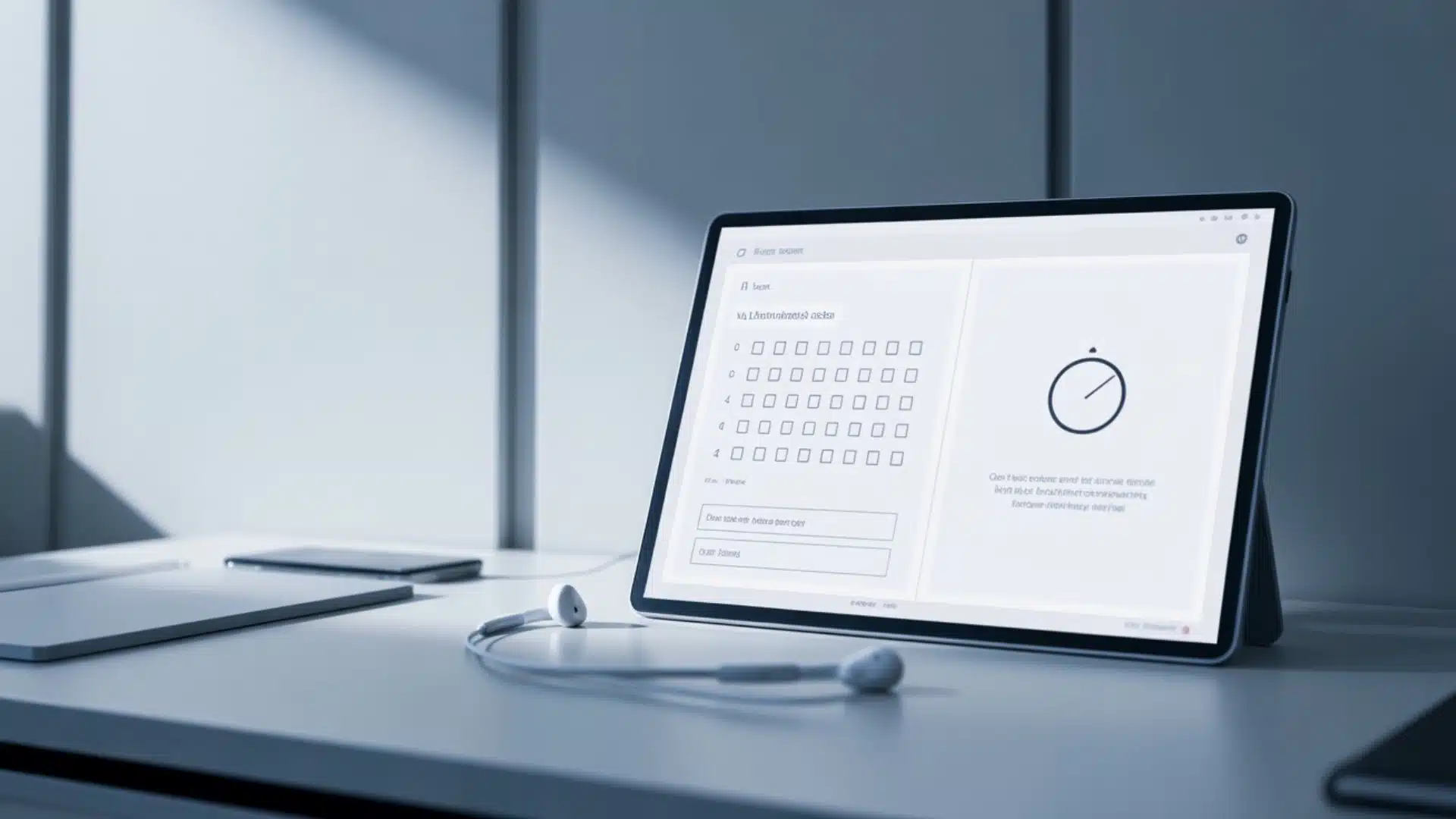
The AP Psychology exam is digital. Students take the test through Bluebook, the digital testing app used by The College Board. Both multiple-choice and free-response sections are completed digitally.
Here is what students need to know before exam day:
- Download the Bluebook app ahead of time, not the night before
- Log in using your College Board account credentials
- Run a test preview inside the app so the interface feels familiar on exam day
- All responses are automatically submitted when the exam ends, so there is no manual submit button to worry about
Running at least one full-time practice session inside Bluebook before exam day is strongly recommended. It removes the stress of an unfamiliar interface when it matters most.
How is the AP Psych Exam Scored?
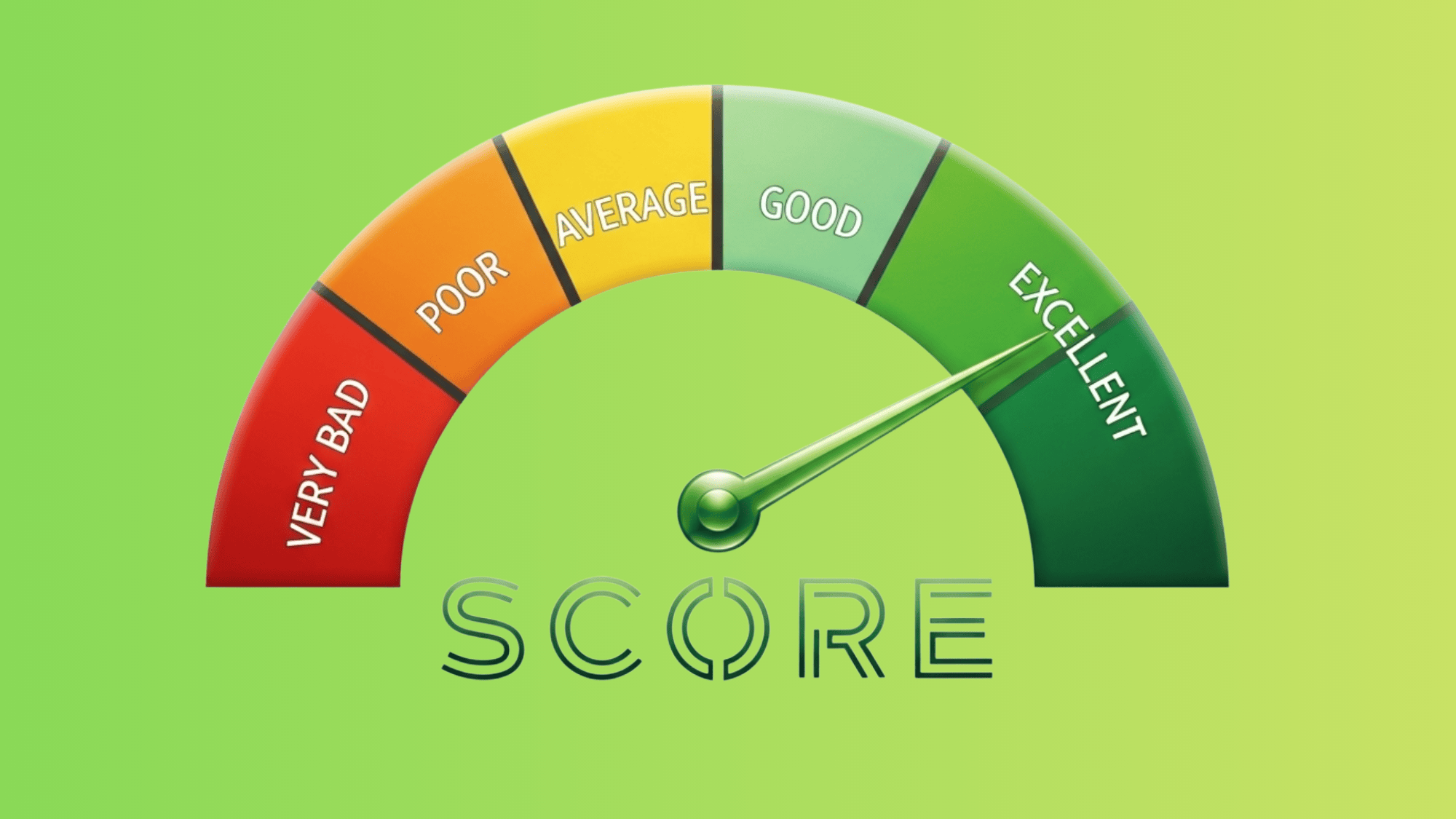
The AP Psychology exam uses a weighted scoring system. Section I accounts for about 67% of the total score, while Section II accounts for about 33%. Raw scores from both sections are combined into a final composite score, which is then converted to the AP scoring scale of 1-5.
A score of 5 means the student is extremely qualified and is often linked with more than 70% correct. A score of 4 means well qualified and is often linked with roughly 50% to 69% correct. A score of 3 means qualified and is often linked with around 40% to 49% correct.
Many colleges require a 3 or above for credit. More selective schools may ask for a 4 or 5. Since credit policies vary, students should check each target school before exam day. These ranges are estimates only, as score conversion can vary by year.
4-Week AP Psychology Study Schedule
A four-week study plan gives you enough time to cover both sections without feeling rushed. Each week builds on the last, so you go into exam day with stronger skills and better pacing:
Week 1: Learn the Format and Review Core Concepts
Students should start by understanding the AP Psych test format, including section timing, question count, and score weight. ‘
For multiple-choice practice, begin with short sets of 10 to 15 questions to learn the question style and spot weak areas.
For free-response practice, read one sample FRQ and review the scoring guide to understand how answers are graded.
Week 2: Strengthen Term Knowledge and Concept Application
Students should focus on using psychology terms correctly in real examples, not just memorizing definitions.
For multiple-choice practice, complete timed sets of 15-20 questions and review each wrong answer carefully.
For free-response practice, write one answer that applies psychology terms to the prompt clearly and directly.
Week 3: Focus on Research Methods, Data, and FRQ Skills
Students should give extra attention to research methods, data, and study design because these skills appear in both sections. Review variables, experiments, ethics, bias, surveys, correlation, and data basics.
For multiple-choice practice, complete research-based questions.
For free-response practice, complete one Article Analysis Question and one Evidence-Based Question within the time limit.
Week 4: Take Timed Practice and Review Weak Areas
Students should use the final week for timed practice and review.
For multiple-choice practice, complete one full 75-question section in 90 minutes to build pacing and focus.
For free-response practice, complete two FRQs in 70 minutes. After practice, compare answers with the scoring guide and review weak areas before exam day.
What Skills Should Students Build?
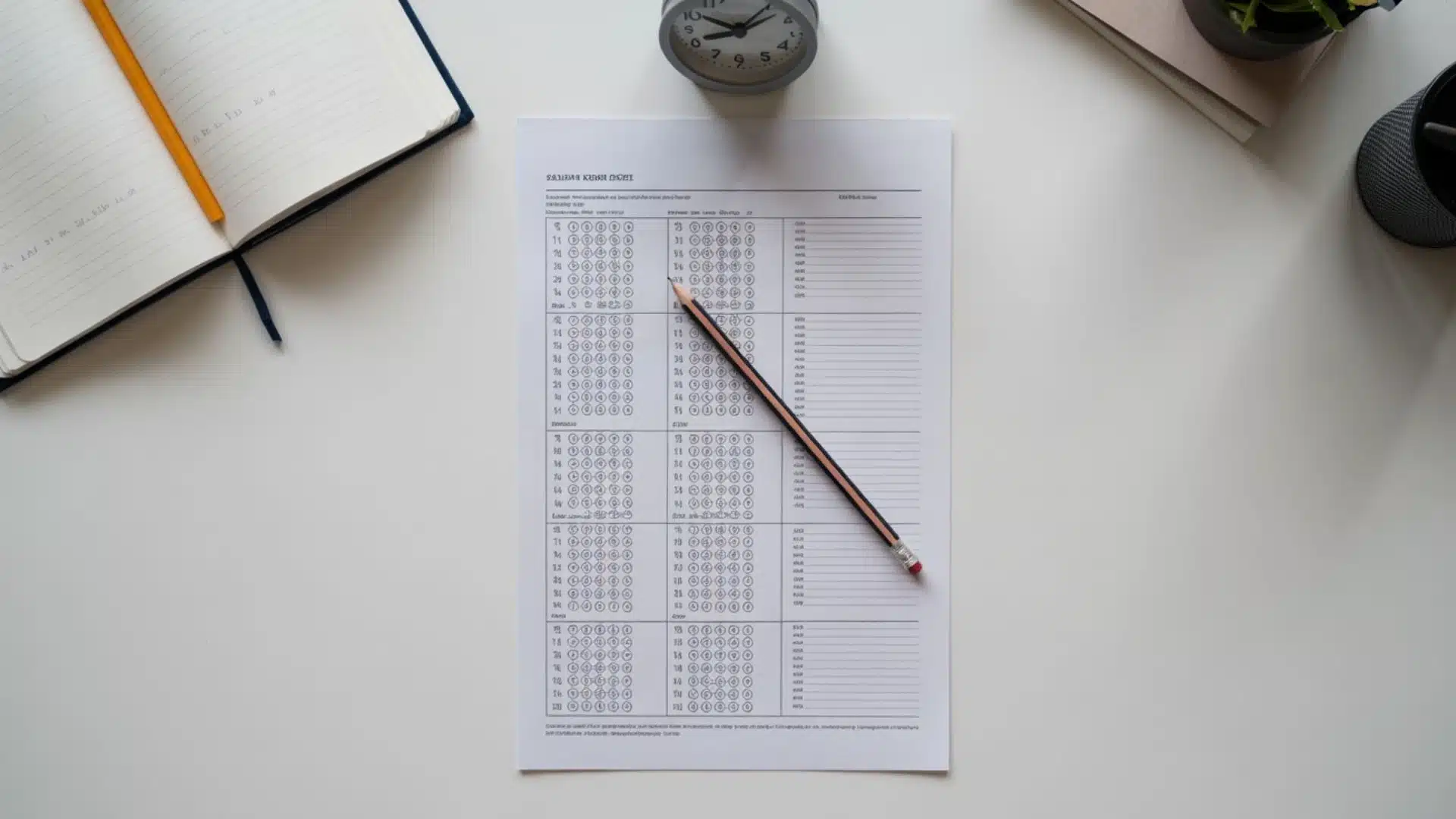
Students need more than memorization to do well on the AP Psychology exam. Many questions ask them to apply concepts, read research examples, interpret data, or explain behavior using psychological ideas.
Concept application is one of the most important skills. Students should be able to use terms such as classical conditioning, working memory, conformity, and neurotransmitters to explain real situations. Instead of only knowing definitions, they should practice giving simple examples for each term.
Students also need strong research and data skills. AP Psychology often includes questions about experiments, surveys, variables, bias, ethics, charts, tables, and research results. Students should know how to identify key parts of a study and explain what the data shows without making claims beyond the evidence.
Time management is also important. Timed practice helps students move through multiple-choice questions steadily and save enough time to plan and write clear free-response answers.
Common Mistakes to Avoid on the AP Psychology Exam
Avoiding common mistakes can help students manage time, answer clearly, and improve performance in both exam sections.
- Only Memorizing Definitions: Students should apply terms to real examples, not just remember definitions.
- Ignoring Research Methods: Students should review variables, study types, ethics, bias, samples, and data basics.
- Not Practicing the Digital Format: Students should practice the Bluebook to get comfortable with screen reading, typing, and flagging questions.
- Spending Too Long on Hard Questions: Students should answer, flag, and return later rather than wasting time on a single question.
- Writing Vague Free-Response Answers: Students should use clear terms, connect them to the prompt, and explain answers directly.
These simple fixes can help students avoid losing points and feel more prepared on exam day.
Resources Available to Practice
These are the closest materials available to the real exam and should form the foundation of any preparation plan.
| Resource | Type | Best Used For | Exam Section |
|---|---|---|---|
| Course and Exam Description PDF | Official PDF | Reviewing unit breakdown, exam format, and scoring details | Both |
| AP Psych MCQ Practice | Practice Quiz | Practicing multiple-choice questions by topic and concept | Section I |
| FRQ Practice | Practice Questions | Practicing free response questions sorted by unit | Section II |
Use these resources alongside your unit review for the most effective preparation.
Frequently Asked Questions
AP Psychology exam date 2026
AP Psychology Exam will take place on Tuesday, May 12, 2026, at 12:00 p.m. local time. Make sure to arrive early and prepared.
Is 70% a 5 on AP?
Not exactly, but it is close. A composite score of approximately 73% or higher is generally needed to earn a 5 on the AP Psychology exam. Consistent practice and review will get you there.
Is AP Psych the hardest AP exam?
No. AP Psychology is one of the more manageable AP exams with a 70% pass rate, making it a great choice for most students.
Final Words
The AP Psychology exam becomes manageable the moment students stop guessing and start preparing with the right information.
Knowing what each section asks, how scoring works, and what the free response types actually require puts students ahead before the first question even appears on screen.
Review key concepts, practice applying them to real scenarios, work through data questions, and write timed free-response answers every week.
Most importantly, start with understanding how long the AP Psych exam is and what fills every minute of it. That single step changes how students study, plan, and perform on exam day.