

What if the science section had nothing to do with science?
The ACT Science section does not test knowledge of biology or chemistry. It does not care how well you memorized the periodic table. It tests how fast you can read data, compare experiments, and make sense of information under time pressure.
Students waste weeks reviewing content that never shows up. The ones who score well work through every ACT science practice test they can find until reading graphs becomes second nature.
This article covers what the section looks like, where to find the best practice tests, and how to use them effectively.
What to Expect From the ACT Science Section
Students spend their ACT prep drilling grammar rules and algebra formulas. The Science section gets maybe a week of attention, usually right before the test. That is the wrong call.
Science is the section where preparation pays off fastest because the format is completely learnable. You get 40 questions across 6 to 7 passages and exactly 40 minutes to finish them.
Passages draw from biology, chemistry, physics, and earth and space sciences, yet the subject is almost irrelevant. What the section actually tests is your ability to find the right data point and match it to the question.
The subject changes every passage. The strategy never does.
| Component | Details |
|---|---|
| Questions Per Passage | 5 to 7 questions each |
| Scoring | 1 to 36, reported separately |
| Composite Impact | Does not affect composite score |
| Section Status | Optional under the Enhanced ACT 2025 format |
Know the format cold before test day, and you have already removed the biggest source of lost points in this section.
The Three Passage Types You’ll Encounter
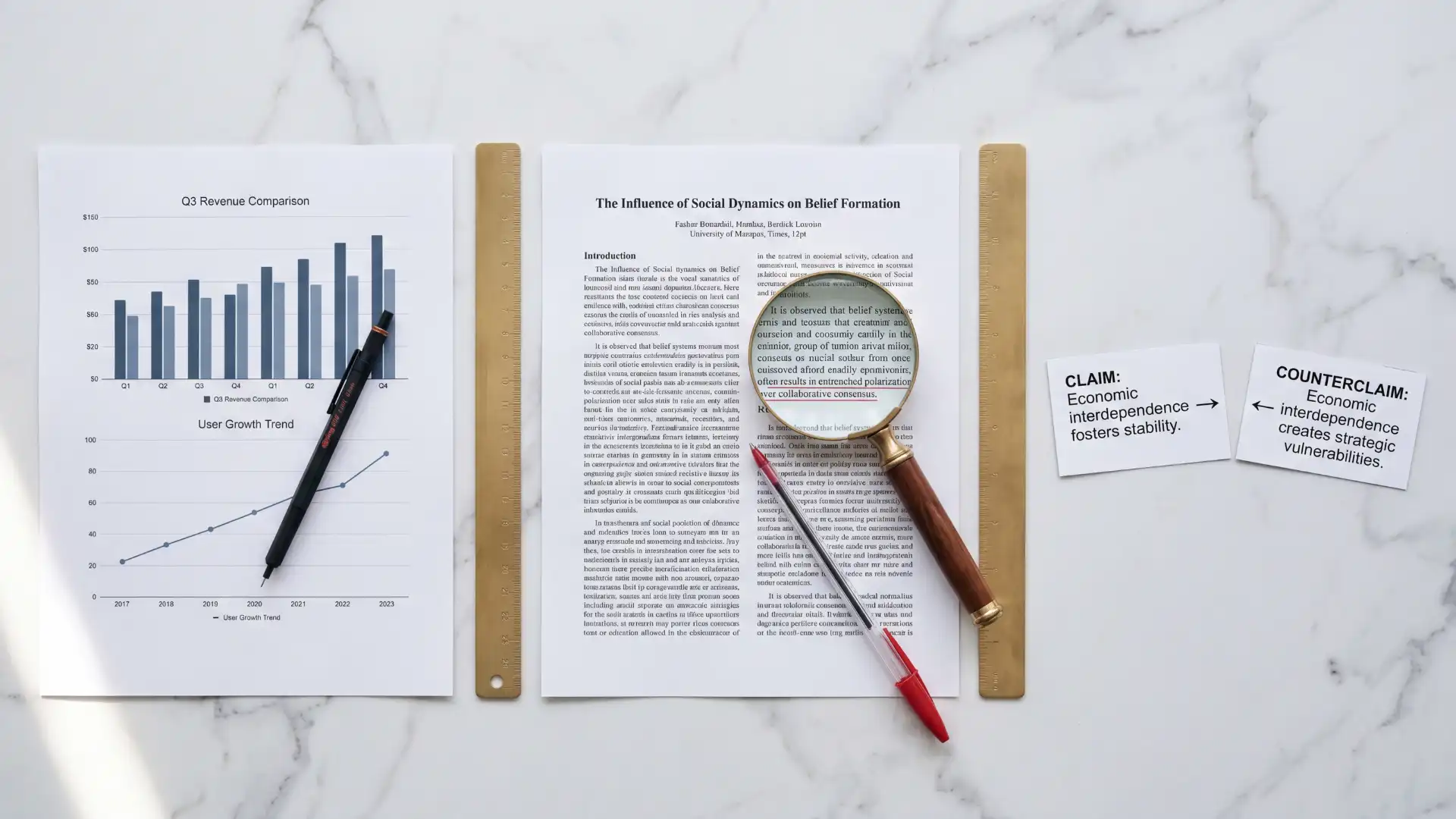
Every passage in the ACT Science section falls into one of three formats. Knowing what each type looks like and what it’s actually asking you to do lets you shift gears instantly rather than spending precious seconds figuring out the rules of the game.
1. Data Representation (25–35%)
Presents charts, tables, and diagrams similar to those found in science journals. You’re asked to read values, identify trends, interpolate between data points, or translate between a table and a graph.
These passages usually cover a single scientific concept and are the most straightforward of the three types. If you can read a graph quickly, these are where you bank easy points.
2. Research Summaries (45–60%)
Describes one or more related experiments, often labeled Study 1, Study 2, or Experiment 1, Experiment 2. Questions focus on experimental design, variables, controls, and how results from one experiment compare to another. Because this format makes up the bulk of the section, it deserves the most practice time.
3. Conflicting Viewpoints (15–20%)
Usually one passage per test, always featuring 7 questions. Two or more scientists offer competing explanations for the same phenomenon.
Questions ask where the viewpoints agree, where they differ, and what evidence supports or weakens each side. This is the most reading-heavy passage, so plan for 7–8 minutes here instead of the usual 5–6.
Where to Find Free ACT Science Practice Tests
1. Act.org
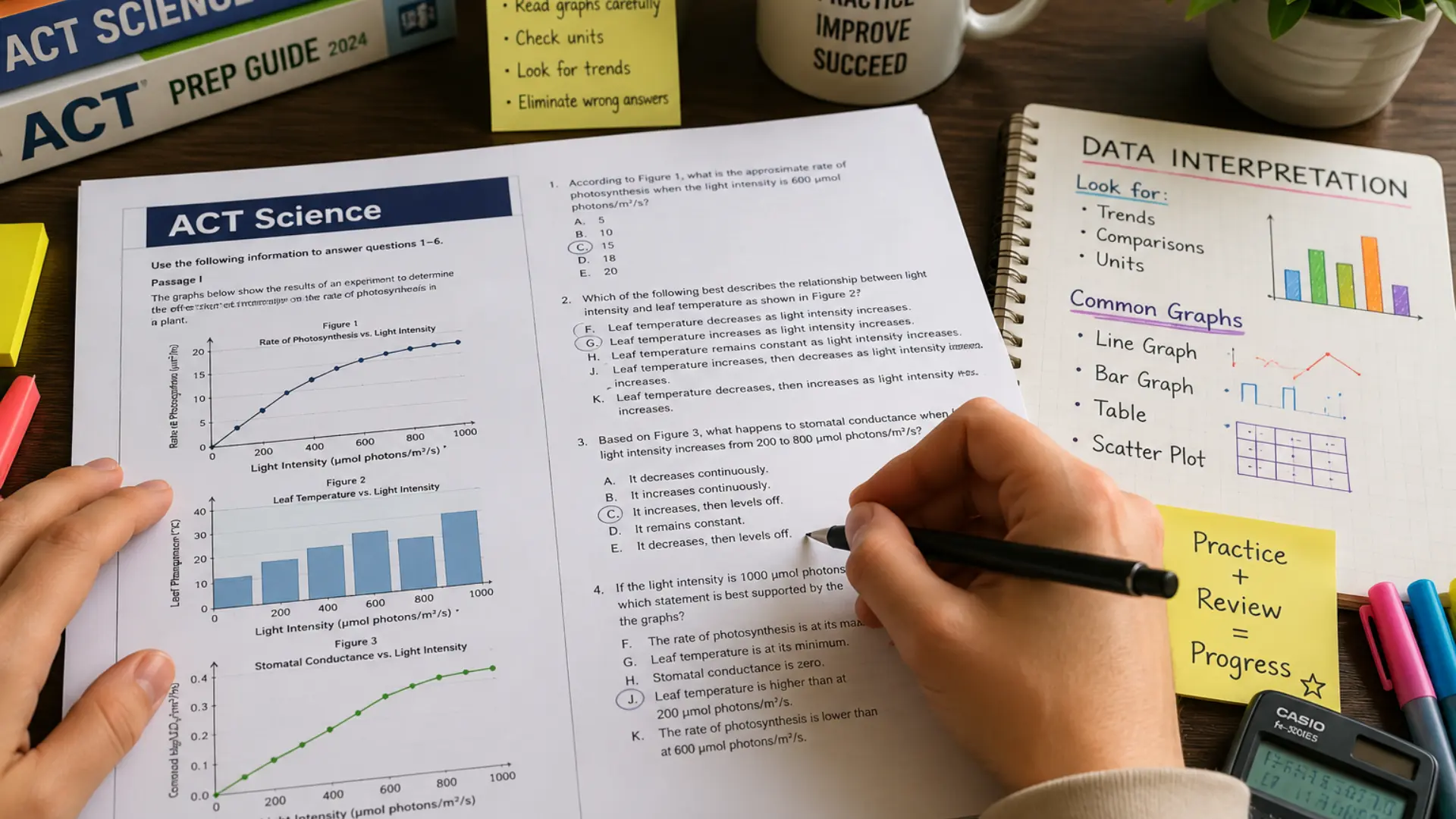
The official ACT website offers free released tests that are as close to the real thing as you will get. The passages, the timing, the question style, all of it matches what you will see on test day. Start here before anywhere else.
If you only use one source in your prep, this should be it. The free section includes fully released tests with answer keys, so you can score yourself and see where you stand.
2. Khan Academy
Khan Academy has ACT Science practice questions with explanations. It is free, well-organized, and good for targeted practice if you want to work on a specific passage type rather than sit through a full test.
If Conflicting Viewpoints is giving you trouble, you can go straight to that and work on it without touching anything else.
3. PrepScholar
PrepScholar offers free ACT Science practice tests with detailed explanations and score breakdowns. It works well if you want something structured that tells you not just what you got wrong but why.
If you want something that functions more like a study plan than a raw practice test, PrepScholar is worth your time.
4. CrackACT
CrackACT hosts full, previously released ACT tests, making it one of the most valuable free resources out there. If you want volume and authenticity, this is a good one to bookmark.
If you want volume and want to be sure you are practicing with real material, this is one to bookmark and return to regularly.
5. Varsity Tutors
Varsity Tutors has a large bank of free ACT Science practice questions organized by passage type and difficulty. Useful for drilling specific areas rather than taking full tests.
If you already know that Data Representation is your weak spot, you can go straight to those questions without wading through everything else.
6. Kaplan
Kaplan offers free ACT Science practice questions and a sample test. The quality is generally high, and the explanations are clear. Good for a second or third source once you have worked through the official material.
It works best as a second or third source once you have already worked through the official material and want more practice without repeating the same tests.
7. Albert.io
Albert has a solid set of ACT Science practice questions with explanations written in plain language. It is particularly good for students who want to understand the reasoning behind each answer rather than just check if they got it right.
The questions are well matched to the actual ACT in terms of style and difficulty, and the platform makes it easy to track which areas you have covered.
Taking a practice test and actually improving from it are two different things. Here is how to make sure you are doing the second one.
Free ACT Science Practice Test PDF

Get hands-on practice with our free ACT Science practice test PDF designed to match the real exam format. The test includes realistic passage types, data interpretation questions, research summaries, and timing practice to help you prepare with confidence.
Use it to improve pacing, identify weak areas, and become more comfortable with charts, graphs, and scientific reasoning before test day.
Click here to download the Free ACT Science practice test PDF.
30 Day ACT Science Preparation Plan
Following a simple 30-day schedule can help you feel better prepared and more confident on test day. Consistency matters more than studying for long hours once in a while.
| Week | Main Goal | Focus Activity |
|---|---|---|
| Week 1 | Learn ACT Science format and passage types | Understand Data Representation, Research Summaries, and Conflicting Viewpoints |
| Week 2 | Practice untimed questions and graph reading | Improve accuracy while reading charts, tables, and experiments |
| Week 3 | Take timed practice tests and track scores | Build speed and identify recurring mistakes |
| Week 4 | Focus on weak areas and improve pacing | Review difficult question types and strengthen time management |
A simple study schedule can make ACT Science prep feel less stressful and more manageable. The key is to stay consistent and give yourself enough time to practice, review mistakes, and gradually improve your pacing.
Strategies to Score Higher on ACT Science
Most students treat ACT Science like a biology exam. It isn’t. Every strategy below is built around one idea: the answers are already in front of you, and your job is to find them fast.
- Treat it Like a Reading Test: Almost every answer lives somewhere in the passage. You don’t need deep science knowledge; you need to know where to look.
- Skim First, Question Fast: For Data Representation and Research Summary passages, skim for the big picture, then go straight to the questions. The passage is a reference, not required reading.
- Save Conflicting Viewpoints for Last: It needs more careful reading and will eat up your time in the mid-section. Do the data-driven passages first, then return to them with flexibility.
- Cap Each Passage at 5 to 6 minutes: With 6 to 7 passages in 40 minutes, you can’t afford to linger. Guess, move on, and come back if time allows.
- Prioritize Accuracy Over Speed: Getting 35 questions right beats guessing through 40. Master 5 passages cleanly before pushing to finish all 7.
- Watch for Key Words in the Question Stem: Words like “NOT,” “EXCEPT,” and “Experiment 1 only” change the answer entirely. Read the question carefully, even when moving fast.
- Go to the Figure, Not the Text: For data questions, skip straight to the graph or table. The trend, value, or comparison you need is almost always readable from the visual itself.
The section rewards technique more than knowledge. Students who practice the passage strategy consistently, not just science content, are the ones who see the biggest score jumps.
ACT Science Score Goals & Benchmarks
Knowing where you stand is one thing. Knowing where you need to get to shapes your prep.
| Score Range | What It Means | Schools |
|---|---|---|
| 1 to 16 | Below average. Focused practice will move this quickly. | Open enrollment in community colleges |
| 17 to 20 | Around the national average. Competitive for many schools. | University of Montana, Eastern Michigan University |
| 21 to 23 | Above average. Solid for most mid-tier universities. | University of Arizona, Colorado State University |
| 24 to 27 | Strong. Competitive for most selective universities. | Penn State, University of Georgia, Michigan State |
| 28 to 32 | Very strong. Puts you in a good position for top schools. | UCLA, University of Michigan, Georgetown |
| 33 to 36 | Top few percent nationally. Competitive for the most selective schools. | MIT, Harvard, University of Chicago, Princeton |
Your ACT composite is the average of your four section scores, English, Math, Reading, and Science. That means Science carries equal weight across the board. A weak Science score will pull your composite down even if everything else is strong.
ACT Science Section: Test Day Checklist
Walk in prepared, and you have already won half the battle. Here is everything you need to remember before, during, and on the day of your ACT Science section.
- Calculator Rules: They are not allowed in the ACT Science section.
- Important Documents: Bring your ACT admission ticket and a valid photo ID.
- What to Pack: Carry pencils, erasers, and water.
- What to Wear: Wear comfortable clothes since the test session is long.
- When to Arrive: Reach the test center early to avoid unnecessary stress.
- Before the Science Section: Take deep breaths and avoid discussing difficult questions during breaks.
- Time Management Reminder: Do not spend too much time on one passage or graph.
- Staying Focused: Read charts and tables carefully before looking at the answer choices.
Everything on this list takes five minutes to sort out the night before. Do it then, so the test morning is the easy part.
Frequently Asked Questions (FAQs)
Where Can I Find Free ACT Science Practice Tests?
You can find free practice tests on official ACT websites, educational platforms, and trusted test prep sites. Many of these resources include downloadable PDFs, answer keys, and explanations to help you practice effectively.
How Many Questions Are in the ACT Science Section?
The ACT Science section has 40 questions that need to be completed in 35 minutes. The section mainly tests data interpretation, analysis, and reasoning skills through charts, graphs, and experiments.
Why Are ACT Science Practice Tests Important?
Practice tests help you get comfortable with the exam format and improve your timing. They also show you the types of questions that appear often, making it easier to build confidence before test day.
How Can I Improve My ACT Science Score?
You can improve your score by practicing regularly, carefully reviewing mistakes, and learning to read scientific data quickly. Timed practice sessions also help increase speed and accuracy over time.
What Topics Are Covered in ACT Science?
The section focuses on scientific reasoning, research summaries, data interpretation, and conflicting viewpoints. It does not require memorizing advanced science, but it tests how well you understand and analyze information.
Final Thoughts
Getting Ready for the ACT Science Section Takes More Than Reading Concepts. It Takes Real Practice with The Right Tools.
Free ACT Science Practice Tests, Scorecards, the Section Format, Why Consistent Practice Matters, and Smart Ways to Use Practice Tests to Improve Speed and Accuracy. We tried to cover everything.
The More Familiar You Become with Question Patterns and Timing, the More Confident You’ll Feel on Test Day. Start Practicing Regularly, Track Your Progress, and Turn Every Test into a Chance to Improve Your Score.
Ready to take the next step? Use these free resources today and begin building stronger ACT Science skills.