

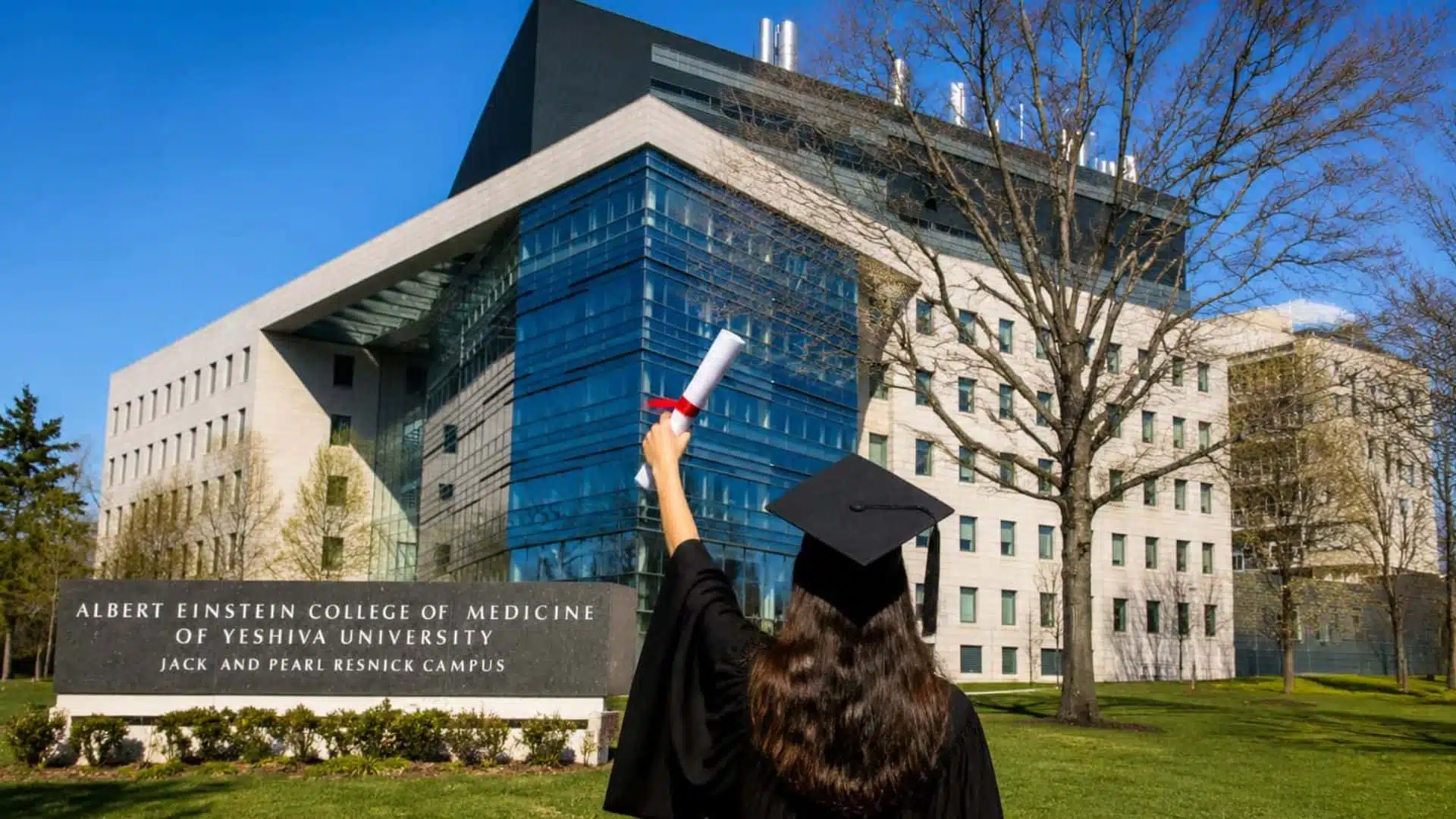

Some medical schools don’t just test your grades; they test your patience, your focus, and how you respond when every detail of your application feels under a microscope.
When you start looking into the Albert Einstein College of Medicine acceptance rate, you quickly realize it reflects far more than a simple admissions outcome.
It points to a process in which your academic record, experiences, and personal drive all carry real weight.
As you move through what it takes to stand out, you begin to see how your choices shape your chances long before an application is even submitted.
Albert Einstein College of Medicine: A Quick Overview
Before looking at admissions statistics, it helps to understand what makes Albert Einstein College of Medicine unique.
Its mission, academic programs, research opportunities, and clinical training environment all contribute to its strong reputation and highly competitive admissions process.
Detail | Facts |
Location and Type | Private, research-intensive medical school in Morris Park, the Bronx, New York City |
Founded | 1953; independent degree-granting institution within the Montefiore Einstein Health System |
Degrees and Programs | MD, PhD, MD/PhD (MSTP), MD/MPH with CUNY, Master’s programs |
Research Facilities | Active laboratories on campus |
Tuition | Zero dollars: all MD students receive the David S. and Ruth L. Gottesman Scholarship, covering full tuition and fees |
Cost After Scholarship | The estimated total cost of attendance across four years is around $138,000, covering housing, insurance, and living expenses |
On-campus housing is available in three 28-story towers, from studios to three-bedroom penthouses. With that grounding, here is what Einstein actually looks for in applicants.
Admissions Requirements and Selection Factors
Einstein uses a competency-based, holistic review, meaning no single number gets you in or keeps you out.
- Academic Foundation: You must complete 40 credit hours in science and math (including advanced biology) and 40 credit hours in humanities and social sciences.
- Coursework Validity: No prerequisite can be older than five years at the time of matriculation.
- MCAT Requirements: Your score must be from no later than September of the application year and no older than three years.
- Application Process: Submit your primary application through AMCAS; secondary applications are due by December first, with a $120 fee.
- Rolling Admissions: Applications are reviewed as they arrive. Submitting early gives you a real advantage.
- Four Core Competencies: Einstein evaluates co-curricular experiences, communication skills, personal and professional development, and academic knowledge.
- Open to All Majors: No specific undergraduate major is required; twenty-seven percent of enrolled students hold a non-science degree.
Meeting the requirements gets your application read, but what determines who advances is a different question entirely.
Breaking Down the Albert Einstein College of Medicine Acceptance Rate
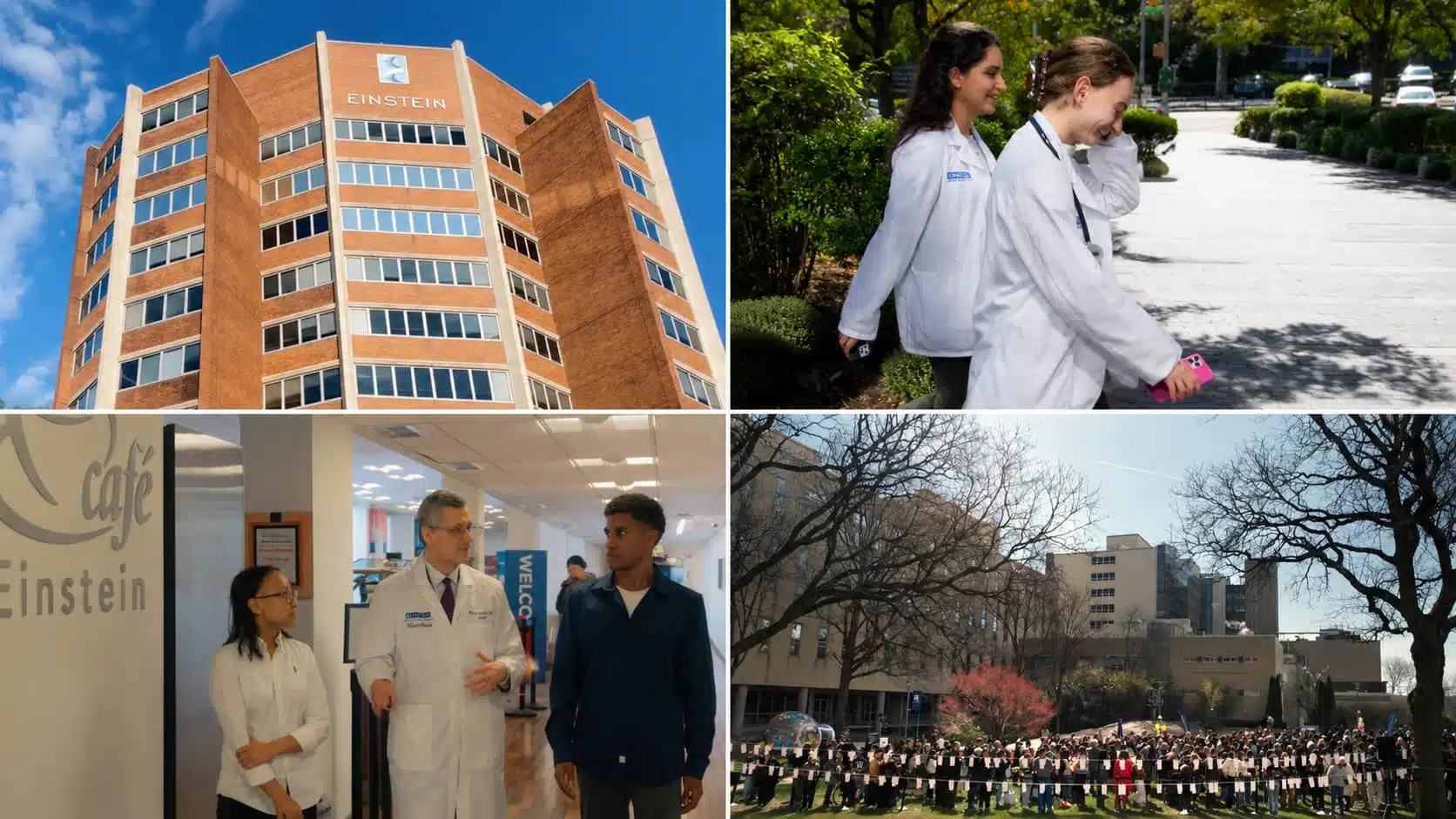
Alt Text: albert einstein college of medicine campus collage showing building, students, indoor and outdoor scenes
A single acceptance rate percentage does not tell the full story; the trend behind it, the stats on admitted students, and MCAT and GPA scores are what actually help you gauge your chances.
Also, keep in mind that Einstein has not published an official acceptance rate figure, so the numbers below are estimates pulled from admissions data trackers and outside reporting.
The Current Acceptance Rate
Einstein’s College confirms 8,897 applications for the 2024-25 cycle, with 966 interview invitations and 165 seats in the first-year class.
That puts the acceptance rate at 1.85%, less than half the national average of 3.8% for U.S. medical schools. When measured by final enrollment for 2025–26, the rate falls further to 1.05% across 14,035 applicants.
That makes Einstein currently ranking among the 12 most selective medical schools in the country.
GPA and MCAT Scores of Accepted Students
Your academic numbers are the first filter your application passes through.
Enrolled students have an average GPA of 3.88, compared to the national average of 3.82, and an average MCAT of 516, compared to the national average of 513.
Einstein does not publish a hard minimum for either metric, and upward movement in scores across multiple attempts is viewed positively.
27% of enrolled students hold non-science degrees, so your GPA is always read in context.
If your MCAT date is still months out, mapping out a realistic MCAT study timeline now will help you hit Einstein’s three-year score validity window without rushing your prep
How to Make Your Application Stand Out?
A strong application should clearly connect your experiences, academic preparation, and personal goals with Einstein’s values. Focus on depth, consistency, and specific examples rather than simply listing achievements.
- Show Meaningful Clinical Experience: Explain what you learned while observing patient care and how those experiences strengthened your commitment to medicine.
- Highlight Your Research Contributions: Describe the work you completed, the value you added, and why the research experience mattered to your development.
- Demonstrate Consistent Service: Include long-term service work, especially in communities with limited access to healthcare, and explain the impact of your involvement.
- Write a Personal and Focused Statement: It shows how your experiences have shaped your goals, values, personal growth, and decision to pursue medical training.
- Support Your Strengths With Evidence: Use strong mentor recommendations and a solid academic record to demonstrate readiness for Einstein’s demanding training environment.
Crafting a Personal Statement and Interview Strategy That Reflects You
A strong personal statement shows your motivation in a way that feels honest, clear, and specific to your path toward medicine.
Listing experiences helps when you show what each experience meant to you and how it shaped your decision to pursue medicine.
You need to connect your clinical exposure, academic work, and service activities into a story that highlights your growth and purpose.
Your writing should reflect who you are, not what you think admissions teams want to hear.
Interview preparation should build directly on your personal statement.
Practice speaking about your work in a calm, structured way so your answers feel natural and confident. You should also prepare for follow-up questions that dig deeper into your reflection, communication, and decision-making skills.
Consistency matters here too. Applicants who build effective study habits well before matriculating tend to describe their prep years as less chaotic once they’re inside the program.
Application Timeline and Deadlines
Getting into Einstein takes more than strong stats. It takes careful timing too. Here is a simple month-by-month walkthrough:
Stage | Timing | What You Need to Know |
Early Decision Primary | Early August | Apply only to Einstein exclusively |
Secondary Application | Early December | Sent after AMCAS verification completes |
Interviews | August through April | Virtual one-on-one faculty sessions held |
Decisions Released | Fall through spring | Offers sent on a rolling basis |
Enrollment Selections Open | February through April | Narrow choices to three schools |
Final Commitment | Mid July | Locks your seat, withdraws others |
Rolling admissions rewards early movers. Submitting your primary application months ahead of the deadline gets you read sooner and interviewed sooner.
Application cycle dates shift from year to year, so confirm the exact 2026–27 dates on Einstein’s official admissions page before you plan around them.
Application Mistakes To Avoid Before You Lose Your Seat
Even strong applicants get rejected at Einstein, not always because of weak stats, but because of avoidable errors that signal poor fit or lack of preparation.
Here is what to watch out for.
- Applying Late on a Rolling Cycle: Einstein reviews files as they arrive. By the time you submit close to the deadline, the best seats are already gone.
- Treating the Secondary as an Afterthought: Both prompts are optional, but skipping them signals low interest. This is your clearest chance to show mission alignment beyond AMCAS.
- Leading With Tuition-Free Status: Every applicant knows about the Gottesman Scholarship. If that is your primary reason for applying, the committee will notice, and it will not work in your favor.
- Listing Research Without Reflection: Describing what you did without explaining what you learned tells the committee very little. Einstein wants depth, not a resume line.
- Inconsistent Narrative Across Materials: Your personal statement, activities, and secondary essays should present a single coherent narrative. Gaps or contradictions raise immediate questions.
- Ignoring the Four Competency Framework, Einstein evaluates co-curricular experience, communication, personal development, and knowledge. If your application does not address all four, you are failing to meet the evaluation criteria.
These are not difficult mistakes to avoid, but they require intention. Getting the fundamentals right clears the path for the strengths in your application to actually land.
The Bottom Line
The Albert Einstein College of Medicine acceptance rate shows just how competitive admission has become, but the number alone should not define your chances.
Authoritative admissions data, applicant totals, interview figures, class size, GPA, and MCAT averages give a more complete picture of what the school expects.
Use those details to judge your readiness honestly, strengthen weaker areas, and focus your application on meaningful clinical work, research, service, and personal growth.
A selective process demands preparation, but it also rewards applicants who present a clear purpose and strong evidence of commitment.
Where are you in your premed preparation? Drop a comment below.
Frequently Asked Questions (FAQs)
Can International Students Apply to Albert Einstein College of Medicine?
International applicants are not eligible for the MD program. Einstein requires a bachelor’s degree from an accredited U.S. or Canadian institution to qualify.
Does Einstein Use a Pass/Fail Grading System?
Yes. Einstein uses a noncompetitive pass/fail system throughout the MD program, designed to encourage collaboration rather than academic competition among students.
How Many Times Can You Reapply to Einstein?
You may reapply once. Applicants who have submitted two prior AMCAS applications to Einstein are no longer eligible for reapplication under the current admissions policy.
Does Einstein Offer Any Pathway Programs for Underrepresented Applicants?
Yes. Einstein runs pipeline and pathway programs starting at the high school and undergraduate level, specifically designed to create entry points for students underrepresented in medicine.