



Every year, thousands of people ask the same question before starting their medical career. “Is the pay actually worth it?” It’s a fair thing to wonder.
You put in the work, get certified, and then hope the paycheck reflects that effort.
But what most salary guides won’t tell you upfront: the registered medical assistant salary varies more than you’d think, and knowing why can make a real difference.
This blog breaks down what medical assistants actually earn, what factors drive that number, and where the best opportunities sit right now.
Read on, because the numbers might surprise you.
What is a Registered Medical Assistant?
A registered medical assistant (RMA) is a certified healthcare professional who works in clinics, hospitals, and doctor’s offices.
They handle both clinical and administrative tasks every day. On the clinical side, they take patient vitals, assist with exams, and prepare treatment rooms.
On the admin side, they manage patient records, schedule appointments, and handle billing.
To become an RMA, a person must pass a certification exam through the American Medical Technologists (AMT). This sets them apart from a general medical assistant.
Employers often prefer hiring RMAs because they bring verified skills to the job. It’s a role that sits right at the heart of patient care and offers real career potential.
Average Registered Medical Assistant Salary in the United States
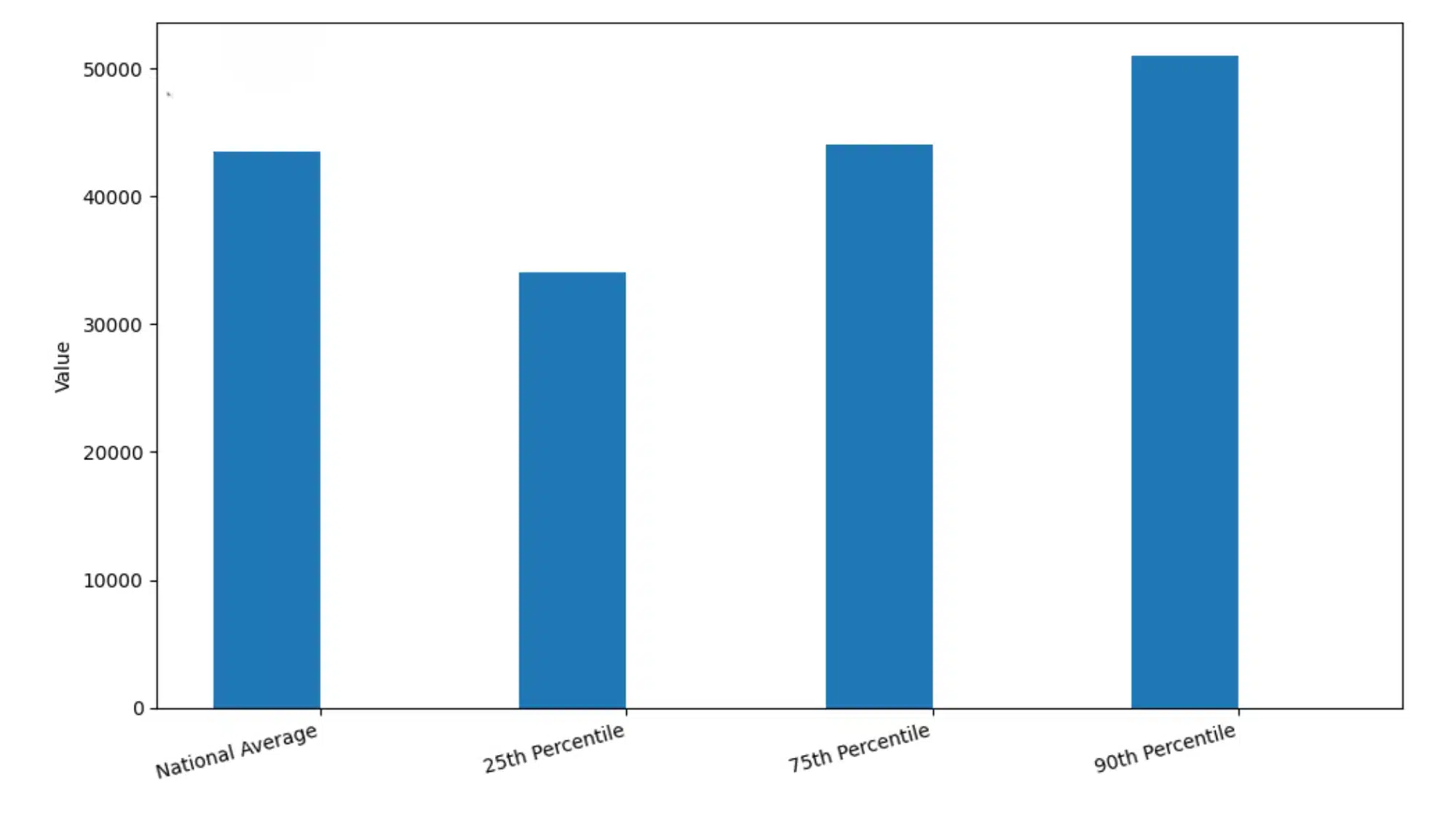
The average RMA salary in the United States reflects the strong value placed on skilled support in healthcare settings.
National Average Annual and Hourly Pay
Nationwide, the average RMA stands at $43,221 per year, or $20.78 per hour.
Broader medical assistant data shows a very similar annual figure of $44,108, confirming stable earnings of around $43,000 to $44,000.
These amounts represent reliable compensation for entry into the field, where certification provides a small but noticeable lift in starting pay.
Consistent national averages like these demonstrate the dependable income potential for professionals delivering essential patient care support across various healthcare environments.
Salary Range and Percentiles
Nationwide, registered medical assistant salaries span an encouraging range, from $24,000 annually to $56,500 for top performers.
Breaking it down by percentiles, the 25th percentile sits around $34,000, the 75th percentile reaches $44,000, and the 90th percentile hits $51,000.
This progression rewards dedication and accumulated skills, offering clear steps for income growth throughout a career in healthcare support.
Entry-level professionals typically start at the lower end, while those with several years of experience quickly move into the upper percentiles.
| Metric | Annual Salary | Hourly Rate |
|---|---|---|
| National Average | $43,500 | $21.00 |
| 25th Percentile | $34,000 | $16.35 |
| 75th Percentile | $44,000 | $21.15 |
| 90th Percentile | $51,000 | $24.50 |
Registered vs Certified Medical Assistant Salary Nationally
Nationally, the RMA’s salary closely mirrors that of the certified medical assistant, both averaging approximately $43,500 per year, with matching ranges from $24,000 to $56,500.
This close alignment means the choice of credentials has minimal impact on initial pay levels.
Small variations arise mainly from employer needs or regional factors rather than from the specific title.
Such parity ensures that pursuing either registered or certified status opens equally rewarding financial opportunities in outpatient clinics, hospitals, and other care facilities throughout the country.
Registered vs. Certified Medical Assistant Salary Comparison
People often confuse registered and certified medical assistants, but the two titles do differ in pay.
A registered medical assistant (RMA) earns slightly more on average, around $42,000 a year, compared to a certified medical assistant (CMA) who earns closer to $38,000 annually.
The RMA credential tends to carry a bit more weight with employers. It signals a higher level of training and competency.
That said, both credentials open solid doors in healthcare. The real difference shows up over time, especially as you gain more experience and take on more responsibilities.
So if you’re choosing between the two, the RMA title does give you a small but noticeable edge in pay.
How to Boost the Registered Medical Assistant Salary
Your starting salary isn’t your final salary. There are several practical ways to increase what you earn as a registered medical assistant over time.
- Get additional certifications, such as phlebotomy or EKG technician, to stand out to employers.
- Specialize in a high-demand area such as cardiology, pediatrics, or dermatology.
- Move to a higher-paying state or city where medical assistants are in greater demand.
- Take on supervisory or lead roles within your clinic or hospital.
- Negotiate your salary during performance reviews with data to back your ask.
- Gain experience consistently, as most employers reward longevity with pay raises.
- Work in outpatient care centers or specialty clinics, which tend to pay more than general practices.
Total Compensation – Benefits and Perks
Salary is just one part of the equation. Many employers offer a full compensation package that adds real value beyond your base pay.
Health Insurance: Most medical facilities offer health, dental, and vision coverage. This alone can save you thousands of dollars a year.
Paid Time Off: Vacation days, sick leave, and holidays are standard in most full-time roles.
Retirement Plans: Many employers offer 401(k) plans, sometimes with matching contributions.
Continuing Education Support: Some employers cover the cost of certifications and training programs.
Flexible Scheduling: Shift options, such as part-time or per-diem work, give you more control over your time.
These perks add up, making the overall package worth careful consideration.
Wrapping it up
Understanding the registered medical assistant salary goes beyond just a number. It’s about knowing your worth and taking steps to grow.
You’ve seen how credentials, location, specialization, and experience all play a role in what you can earn.
The gap between entry-level and experienced pay is real, and closing that gap is entirely in your hands.
Focus on building skills, pursuing certifications, and choosing the right work setting. Small, consistent steps lead to bigger paychecks over time.
So what’s your next move? Drop your thoughts or questions in the comments below. We’d love to hear where you are in your career.