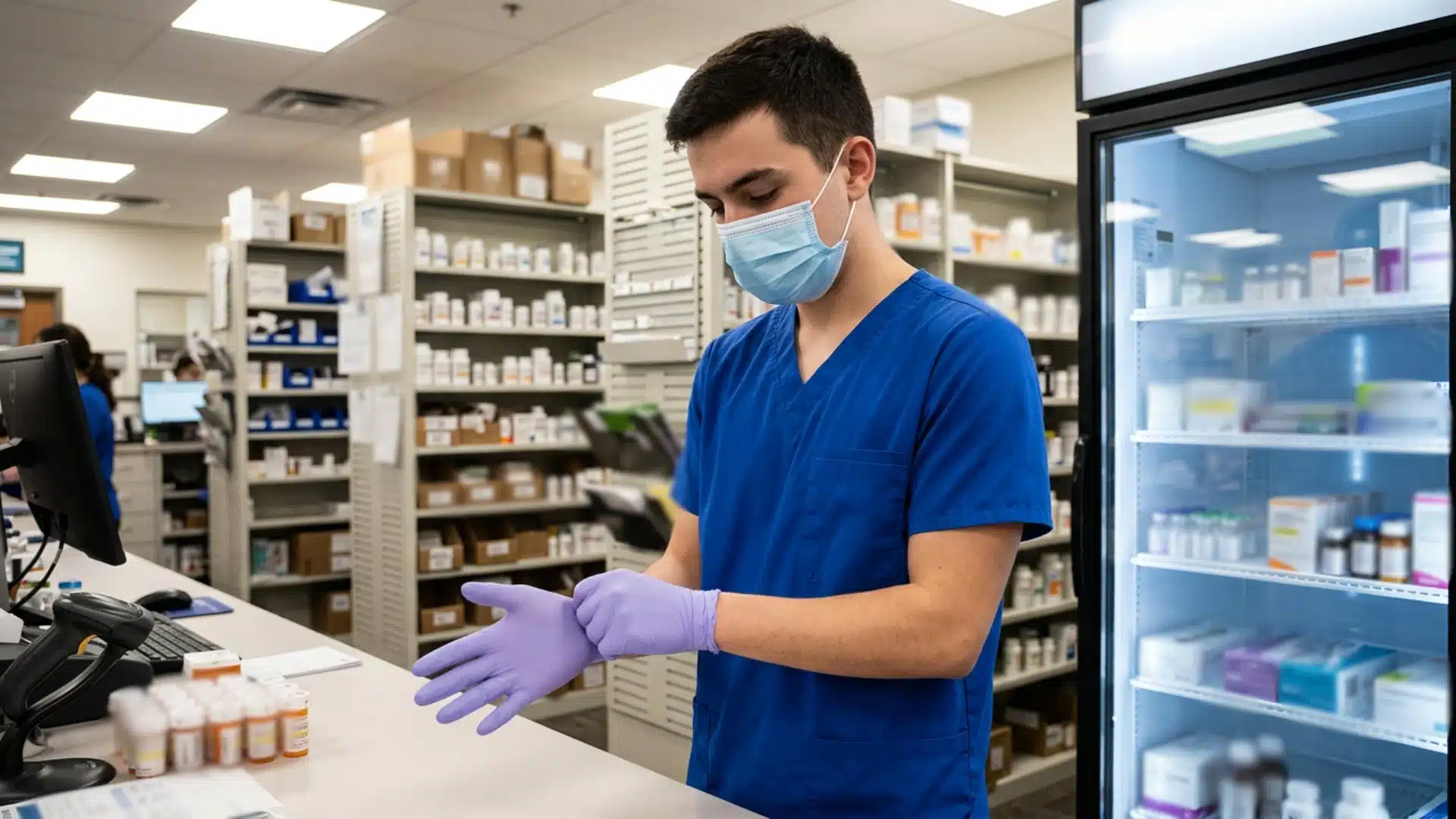



No experience? No certification? A lot of people land pharmacy tech jobs without any of that.
It sounds hard to believe, but it happens all the time. Employers care more about your attitude than your resume, especially when you’re just starting out.
The tricky part is knowing where to begin. That’s where most people get stuck.
This blog breaks it all down for you. By the end, you’ll know exactly what to do to get your foot in the door.
Why Pharmacy Technician Roles are Beginner-Friendly
A pharmacy tech is one of the few healthcare jobs where you can start with zero background.
Retail pharmacies like CVS and Walgreens hire constantly.
Openings come up all the time because demand is high. Most employers will train you on the job. They’re not looking for someone who already knows everything.
They want someone who shows up on time, communicates well, and takes the work seriously.
Soft skills matter more than technical know-how at this stage.
If you’re reliable and easy to work with, you’re already ahead of many applicants
What Employers Actually Look for in Entry-Level Candidates
Hiring managers aren’t expecting you to know everything on day one. But they are watching for a few key things:
- Accuracy: Prescriptions can’t have mistakes. Small errors have big consequences.
- Communication: You’ll deal with patients and pharmacists daily. Being clear and calm matters.
- Customer interaction: A friendly, professional attitude goes a long way at the counter.
Beyond that, employers want someone they can count on.
Will you show up? Can you be trained? Are you consistent? That’s the real hiring filter. Reliability lowers their risk. And a good attitude tells them you’re worth the investment
Basic Requirements You Need Before Applying
Before you send out a single application, make sure you have the basics covered.
Education
A high school diploma or a GED is the minimum most employers require. Nothing more at this stage.
Age and background
Most states require you to be at least 18 years old.
A clean background check is also standard; pharmacies take this seriously, given the nature of the work.
State registration
Some states require you to register before you can legally work as a pharmacy tech.
Requirements vary, so check your state’s board of pharmacy website.
Workplace responsibilities
You’ll be expected to follow strict privacy laws and safety rules from day one. Knowing this upfront shows employers you’re serious.
Certification vs. No Certification: What’s the Smart Move?
Not sure if you need a certification before applying? Here’s a quick breakdown to help you decide.
| Factor | No Certification | With Certification (e.g., PTCB) |
|---|---|---|
| When it applies | Most entry-level retail roles | Hospital or specialty pharmacy roles |
| Requirement level | Optional in many states | Required in some states and settings |
| Hiring chances | Possible with strong soft skills | Noticeably better across the board |
| Pay potential | Standard entry-level rate | Higher starting pay in most cases |
| Best strategy | Apply first, certify while working | Certify first if roles in your area demand it |
The smart move depends on your local job market. If entry-level openings are available, apply now and work toward certification on the side. If most listings ask for it upfront, get certified first.
How to Build Relevant Skills without Experience

You don’t need pharmacy experience to build pharmacy-ready skills. Worked in retail, admin, or customer service?
Those roles taught you more than you think. Here’s what carries over directly:
- Organization and accuracy Managing orders, handling files, or counting inventory all build this muscle.
- Customer service, dealing with people daily, trains you to stay calm, listen well, and communicate clearly.
- Multitasking under pressure, handling busy counters, and meeting tight deadlines quickly sharpen this skill.
Want to build more before applying? Volunteer at a clinic, take a free online pharmacy tech prep course, or practice data entry to improve speed and focus.
Crafting a Resume that Gets Attention
Your resume doesn’t need to be long. It needs to be clear and relevant. Here’s what to focus on:
- Lead with a short summary that mentions your interest in pharmacy tech.
- List any customer service, retail, or admin experience you have.
- Highlight soft skills, such as punctuality, attention to detail, and communication.
- Mention any pharmacy-related courses or prep work you’ve done.
- Keep it to one page; hiring managers scan fast.
- Use simple formatting, no graphics, no fancy fonts.
- Match your wording to the job listing as closely as possible.
- Proofreading a pharmacy resume twice for typos is a red flag.
Interview Tips for Candidates with No Experience
Walking into an interview with no experience feels nerve-wracking. But preparation changes that.
Expect questions like Why pharmacy? or How do you handle mistakes? Answer honestly.
Show you understand the role involves accuracy, patient interaction, and adherence to strict procedures.
What really stands out?
Telling them you’re ready to learn and won’t need hand-holding past the basics. Employers respect that.
Dress neatly, arrive early, and ask one smart question at the end, like What does a typical first week look like? It shows genuine interest without needing a resume full of experience.
Where to Apply and How to Increase Your Chances?
Start with CVS, Walgreens, and Rite Aid, which regularly hire techs and are known for taking on beginners.
Check hospital pharmacy departments and grocery store pharmacies. Use Indeed, LinkedIn, and your state’s job board for listings. Many openings aren’t posted widely, so walk in and ask directly.
That alone puts you ahead of most online applicants. A few things that boost your chances:
- Apply to multiple locations at once; don’t wait for one.
- Follow up within a week if you don’t hear back.
- Get a reference from a past employer who can speak to your reliability.
- Mention in your cover letter that you’re open to training.
Practical Timeline and First Job Expectations
Here’s a look at what to expect from your first application to settling into the role.
Go in knowing it won’t be perfect from day one. Ask questions, stay consistent, and give yourself time to find your footing.
| Stage | What Happens | Realistic Timeframe |
|---|---|---|
| Applying and hearing back | Submissions reviewed, phone screen scheduled | 1–2 weeks |
| Interview to offer | One or two rounds, background check | 1–2 weeks |
| First week on the job | Orientation, shadowing, learning systems | Days 1–5 |
| On-the-job training | Supervised tasks, prescription handling basics | Weeks 2–4 |
| Learning curve | Mistakes happen, that’s expected and normal | First 30–60 days |
| Working independently | Handling tasks with less supervision | Around 60–90 days |
Final Thoughts
Getting a pharmacy tech job with no experience is completely within reach.
You just need to take the right steps in the right order. Fix your resume, apply to the right places, and walk into that interview prepared. That’s really all it takes to get started.
The first few weeks will test your patience. Stick with it, the learning curve flattens faster than you think.
Update that resume today and send out your first application.
The sooner you start, the sooner you’ll have a paycheck and a career to build on.