



Every physical therapy student has to take the NPTE at some point in their career. NPTE practice exams show you what test day is actually like.
They help you see which topics you know and which ones need more review. Some practice exams are free, and some cost money, but both are useful.
Picking the right test for each stage of your prep keeps things simple. The sections below cover exam format, key topics, scoring, and where to find good practice questions.
Getting familiar with NPTE practice exams early makes your prep easier to manage. A little practice now goes a long way later.
NPTE Practice Exam Format at a Glance
The National Physical Therapy Exam, or NPTE, is a licensing test for physical therapy graduates.
The Federation of State Boards of Physical Therapy, known as FSBPT, creates and organizes this exam. It comes in two parts: the NPTE-PT for physical therapists and the NPTE-PTA for physical therapist assistants.
Here’s a side-by-side breakdown of how the two exams compare in format and structure.
| Feature | NPTE-PT | NPTE-PTA |
|---|---|---|
| Total Questions | 225 | 180 |
| Scored Questions | 180 | 140 |
| Unscored Pretest Questions | 45 | 40 |
| Sections | 5 sections of 45 questions each | 4 sections of 45 questions each |
| Testing Time | 5 hours | 4 hours |
| Break | Mandatory 15-minute break after Section 2; unscheduled breaks count against testing time | Scheduled break included during the appointment |
It’s important to note that the exam format and content can change when FSBPT updates its blueprint. Always check the latest outline on FSBPT’s website before finalizing your study plan.
NPTE Syllabus: Key Domains Explained

The NPTE covers several core content areas that test clinical knowledge and decision-making skills. Here is a quick breakdown of what each domain includes:
- Physical Therapy Examination and Evaluation: Patient history, systems review, tests and measurements, examination findings, and clinical decision-making.
- Diagnosis, Prognosis, and Plan of Care: Physical therapy diagnosis, prognosis and expected outcomes, goal setting, and developing or modifying the plan of care.
- Interventions: Therapeutic exercise, functional training, manual therapy, cardiopulmonary interventions, neuromuscular and balance training, modalities and physical agents.
- Diseases and Health Conditions: Musculoskeletal, neuromuscular, cardiovascular and pulmonary, and integumentary conditions, along with pediatric and geriatric considerations.
- Safety, Professional Responsibilities, and Ethics: Patient safety, infection control, professional conduct, ethical decision-making, and legal and regulatory responsibilities.
Each of these areas plays a role in real clinical practice, not just the exam itself. Candidates who understand what each domain covers can study with more direction and less guesswork.
How is the NPTE Scored?
Scoring works the same way for both exams, and the content blueprint follows a similar pattern too. Test takers need a scaled score of 600 to pass.
Scores fall somewhere between 200 and 800 on this scale. Most people pass with around 67 to 69 percent correct answers. This is not an official passing percentage, just a general guide.
Wrong answers do not cost extra points, so answer every question. Musculoskeletal conditions make up the largest content area on the exam.
This section carries about 24 to 30 percent of all scored questions.
Expect somewhere between 44 and 54 scored questions from this area alone. Knowing this helps you focus your study time wisely.
Free and Paid NPTE Practice Exam Websites
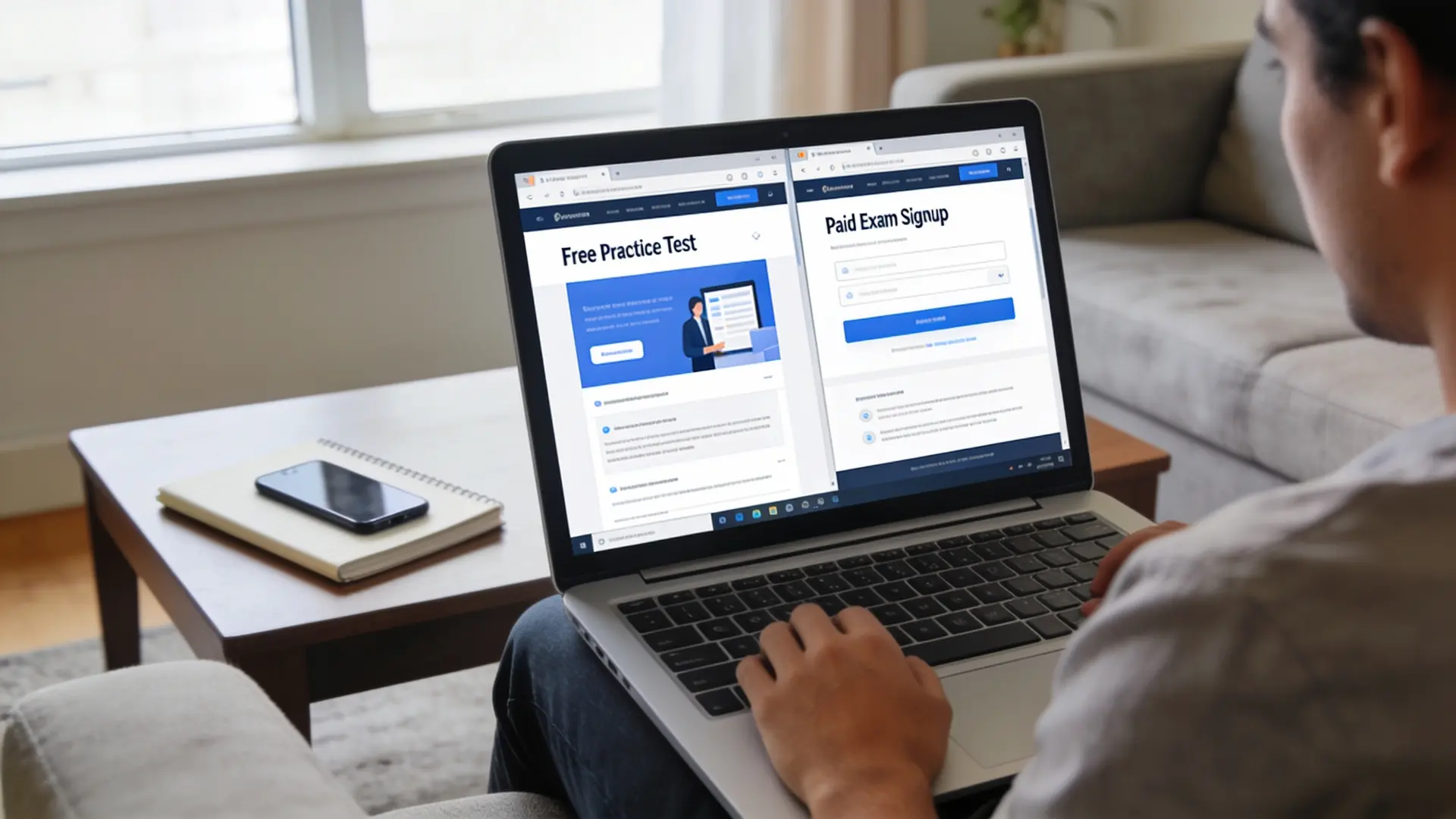
This section should compare reliable practice exam websites, highlighting what each platform offers, such as full-length tests, timed questions, and score reports.
Free Options
Getting started with free resources is a smart first move before committing to a paid course. Here are some solid options:
- Mometrix offers free NPTE-PT and NPTE-PTA practice tests on their website. It’s a good, low-pressure way to get started.
- Achievable provides a free 35-question NPTE-PTA sample exam. Each answer comes with a detailed explanation.
- OpenExamPrep offers 200+ free practice questions with no signup required, plus AI-based topic tracking.
- PracticeTestMaster gives you free sample NPTE questions and also has a timed exam simulator.
These free tools work well for early practice and building basic confidence. Once you outgrow them, a paid option can take your prep further.
Paid Options
Free resources only go so far once your prep gets more serious. Paid platforms offer deeper practice and better tracking tools:
- FSBPT’s PEAT is the official paid tool. It’s made by the same board that creates the real exam.
- NPTE Final Frontier provides full-length timed exams, detailed answer explanations, and performance reports.s.
- TrueLearn offers question banks, predictive scoring, and peer benchmarking.
- Scorebuilders is a well-known NPTE prep resource with a large question bank.
- TherapyEd is an established provider that offers practice exams and content review.
- Achievable also has a paid adaptive prep course, along with their free sample exam.
- Typical PT offers mock exams and bundles of clinical scenario-based questions.
- ExamEdge includes timed practice exams as part of a larger exam prep package.
For beginners, it’s helpful to start with a free test to get comfortable; later, you can decide accordingly.
Few Sample NPTE Practice Questions
Reading about the exam format only gets you so far. Below are 5 sample questions pulled from different body systems, so you can get a feel for the clinical reasoning style and difficulty you’ll see on test day.
1. Musculoskeletal:
A patient reports a popping sensation during a pivoting injury while playing basketball, followed by immediate swelling and instability.
Which special test would best assess for an anterior cruciate ligament (ACL) injury?
A. McMurray’s test
B. Lachman’s test
C. Varus stress test
D. Thessaly test
2. Neuromuscular:
A patient recovering from a stroke presents with right-sided weakness and difficulty producing speech, though comprehension remains intact.
This presentation is most consistent with damage to which artery’s territory?
A. Posterior cerebral artery
B. Anterior cerebral artery
C. Middle cerebral artery
D. Vertebral artery
3. Cardiovascular & Pulmonary:
During aerobic exercise, a patient’s blood pressure drops from 130/80 mmHg to 100/70 mmHg along with reports of dizziness. What should the therapist do?
A. Increase the exercise intensity to stabilize blood pressure
B. Stop the activity and have the patient sit or lie down
C. Continue exercise but decrease intensity slightly
D. Document the finding and continue as planned
4. Lymphatic:
A patient recovering from a mastectomy with lymph node removal reports mild arm swelling. Which precaution is most appropriate during therapy?
A. Avoid blood pressure readings and injections on the affected arm
B. Apply heavy resistance training immediately to reduce swelling
C. Recommend keeping the arm immobilized at all times
D. Ignore the swelling unless it becomes severe
5. Non-Systems:
Professional Responsibilities. Before initiating a new treatment technique that carries some risk, which action is most appropriate for the physical therapist?
A. Proceed with treatment and inform the patient afterward
B. Obtain informed consent by explaining the risks, benefits, and alternatives
C. Only inform the supervising physician
D. Skip the discussion if the patient seems eager to start
(Answers: 1-B, 2-C, 3-B, 4-A, 5-B)
For the full experience, including a mix of every body system and non-systems category, download our complete set of 20 NPTE practice questions with a detailed answer key.
Musculoskeletal and neuromuscular content overlaps with nursing entrance exams, and TEAS science practice resources cover similar anatomy and physiology ground.
When to Take NPTE Practice Exams During Your Prep
Timing matters just as much as which practice exam you choose. Each stage of prep calls for a different type of test, and here’s how that breaks down:
| Stage | What to Do | Tool to Use | Goal |
|---|---|---|---|
| Early Prep | Take one free test before studying begins | Mometrix or Achievable sample exam | Spot weak body systems early |
| Mid-Prep | Practice weak systems, especially musculoskeletal and neuromuscular | TrueLearn, Scorebuilders, or NPTE Final Frontier | Turn weak areas into strengths |
| Final Stretch | Take this closer to test day for an accurate readiness check | FSBPT’s PEAT | Confirm readiness before test day |
| Between Attempts | Space full exams a couple of weeks apart and review errors | Error log or review notes | Track real progress over time |
Following this order keeps every practice exam useful instead of wasted effort. Stick to the timeline, and each test will do its job.
Common Mistakes First-Time Test Takers Make
Small mistakes during prep can quietly hurt your score without you noticing. Watch out for these common habits as you work through your practice exams:
- Taking a practice exam before covering enough content
- Skipping rationales and only checking right or wrong
- Ignoring timing data until test day
- Repeating full exams instead of targeting weak areas
- Treating one score as final instead of tracking progress
These are normal habits and do not mean you are unprepared. Catching them early makes your remaining prep time count for more.
Summing Up
NPTE practice exams help you get comfortable with the exam’s question style. You learn how to manage your time across each section.
Mixing free and paid types gives you a fuller view of where you stand. Keep track of your scores so you can see progress over time.
Testing yourself often works better than cramming at the last minute.
Ready to check your skills? Grab a set of NPTE practice exams and start practicing today.
Drop your questions or scores in the comments below.
Frequently Asked Questions
How Many NPTE Practice Exams Should You Take Before Test Day?
At least three full-length exams, including one PEAT, spaced out with review time in between.
Is PEAT an Accurate Predictor of Your NPTE Score?
Largely yes; research shows a strong correlation between PEAT and NPTE scores, though it isn’t a guarantee either way.
When Should You Start Taking NPTE Practice Exams?
Early, to set a baseline, then again throughout your prep, with a final one closer to test day.