



Starting an electrical apprenticeship requires preparation, and the IBEW aptitude test is an important step in the process.
Many applicants want to know what type of questions they will face and how they can improve their chances of earning a strong score.
An IBEW practice test allows you to review common question types and measure your progress before test day.
An electrical aptitude practice test can also help you focus on key areas such as algebra, reading comprehension, and problem-solving.
With the right preparation strategy and regular practice, you can build the skills needed to perform well on the exam and move closer to your apprenticeship goals.
What is the IBEW Aptitude Test?
The IBEW aptitude test measures your math and reading skills before you enter an electrician apprenticeship.
Local unions use it to see if you can handle the classroom side of the trade. It checks algebra, reading comprehension, and basic reasoning.
Passing shows a JATC that you can keep up with technical training alongside hands-on work in the field. The exam has two sections, each timed separately.
You take this test on a computer at an approved testing center, never online. It is multiple-choice only, and calculators are not allowed in either section.
Also Called: NJATC test, ETA, JATC test, and electrician apprentice test. These names all point to the same exam.
Section-Wise Breakdown of IBEW Test
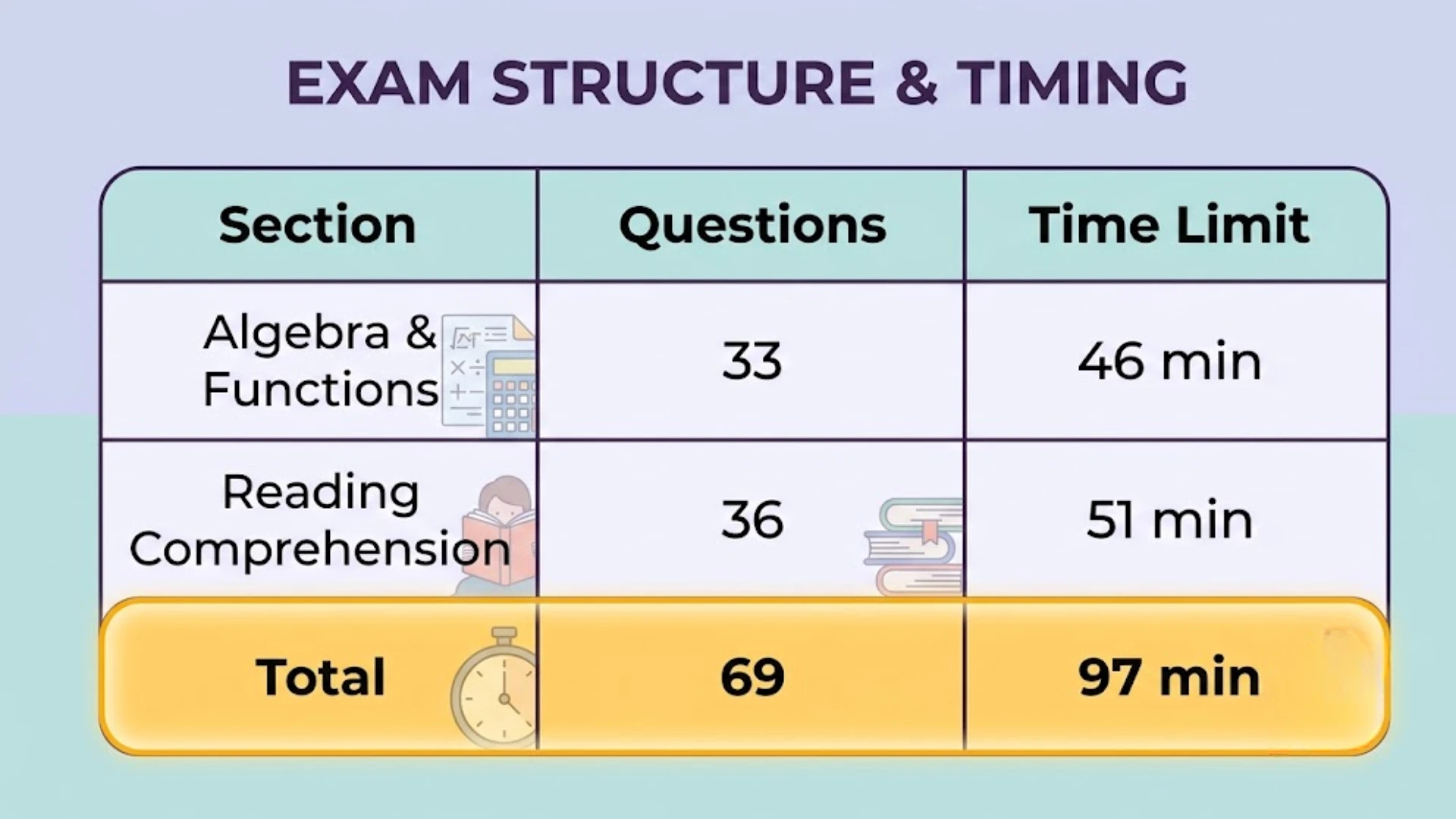
Each part of the test checks a different skill set. Knowing what to expect in each section helps you focus your prep time.
1. Math/Algebra
This section covers basic algebra, fractions, ratios, and equation solving. You will also see word problems that test how you apply formulas.
Expect questions on order of operations and simple functions, too.
For time management, do not linger on one hard question. Skip it, finish the easier ones, and circle back if time allows.
Pace yourself at under 1.5 minutes per question, since 33 questions in 46 minutes leaves little room to stall.
2. Reading Comprehension
This section tests how well you understand written passages and pull out key details.
You will answer questions on main ideas, inference, and vocabulary in context. It checks whether you can follow technical instructions accurately.
Since time is tight, skim the questions first before you read the passage. This tells you what to look for. Read actively, and do not reread lines more than once.
3. Mechanical Reasoning (Optional Extra Prep)
Some locals add a mechanical reasoning section to the standard test. Chicago Local 134 is one example that includes this extra portion.
This section covers gears, pulleys, and load distribution basics. You will see diagrams showing how simple machines move and interact.
Questions ask you to predict motion, direction, or force based on what the diagram shows. Brush up on basic physics concepts before test day.
How is the IBEW Test Scored?
The IBEW test is scored based on the number of questions answered correctly in each section.
Understanding the scoring system helps applicants evaluate their performance and prepare effectively for the qualifying score requirements.
- Your raw score counts correct answers across both sections, with no penalty for wrong guesses
- That raw score converts into a stanine, a scale from 1 to 9, with 5 as average
- Most locals require around a 4 to pass, but this varies, so check with your local JATC
- A higher stanine means a better rank on the applicant list
- Results usually arrive two to four weeks after test day
IBEW Practice Test Prep
Preparing for the IBEW aptitude test requires more than just reviewing formulas or memorizing answers.
A focused study plan can help you understand the test structure, improve accuracy, and build confidence in key areas such as math and reading comprehension.
Test day runs smoother when you prep the basics ahead of time. Here is what you need to know:
| Category | Details |
|---|---|
| Eligibility | At least 18 years old, high school diploma or GED, one year of algebra passed |
| What to Bring | Photo ID, test confirmation, proof of algebra coursework if requested |
| Where/How Administered | Computer-based, in-person only, at an approved JATC test center |
| Day-of Checklist | Arrive fifteen minutes early, bring your ID, silence your phone, and no calculator allowed |
Using practice tests regularly allows you to track your progress and become familiar with the types of questions you may encounter.
Double-check this list the night before so nothing catches you off guard.
Sample Practice Papers From Other Test Prep Sites
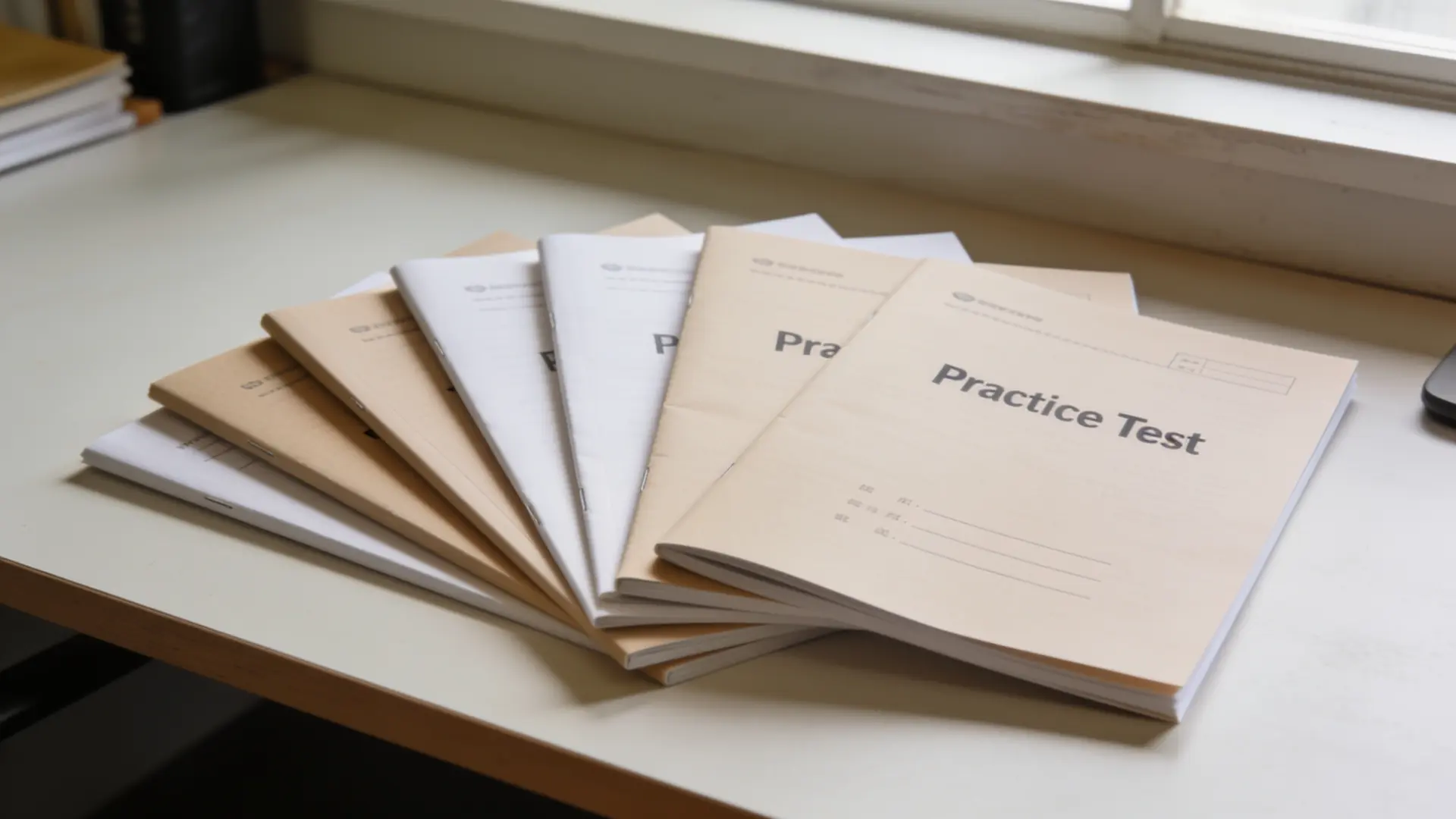
You can find a few practice styles across well-known test prep providers to round out your prep. Each one takes a slightly different approach to the same material.
1. Mometrix IBEW Practice Overview
Mometrix builds its practice around plain language refreshers on math and mechanical concepts.
Their pages break topics down in an FAQ-style format, so you get quick answers to common questions about test structure and scoring.
This works well if you want a slower, more explanatory approach before diving into timed practice.
You will also find flashcards and a paid course with full-length practice tests and video walkthroughs for deeper review.
2. JobTestPrep IBEW Practice Overview
JobTestPrep organizes its practice into timed drills split across algebra, mechanical, and verbal reasoning sections.
This format pushes you to work under the same time pressure you will face on test day. Each drill isolates a single skill area, so you can target weak spots directly rather than mixing everything together.
Their paid PrepPack adds diagnostic testing and full-length simulations for candidates who want a complete, structured study plan.
3. iPREP IBEW Practice Overview
iPREP pairs step-by-step explanations with full-length simulated tests that mirror the real exam format.
Each sample question comes with a walkthrough of the reasoning behind the correct answer, which helps you understand your mistakes rather than just marking them wrong.
This approach suits candidates who want to learn the logic behind algebra and mechanical questions. Their site also includes a printable test-day checklist and section breakdowns.
Note: All three providers offer free sample questions to start. Full practice sets, simulations, and detailed explanations are available through their paid study guides or courses.
Take Our Free IBEW Practice Test
Reading about the test only gets you so far. Working through real style questions shows you where you actually stand.
We built this original practice set to match the format, timing, and difficulty of the real IBEW aptitude test. It covers both the algebra and reading sections you will face on test day.
Check your answers against the key at the end. Weak spots there point you straight to what needs more study before your real test date.
Click here to download the Free IBEW practice test PDF.
How to Prepare For IBEW: A Balanced Comparison
Different prep methods fit different budgets and timelines. Here is how the main options compare:
| Method | Cost | Best For |
|---|---|---|
| Free Practice Questions | $0 | Getting familiar with the format |
| Study Guides | $30 to $55 | Structured topic review |
| Paid Courses | $79 to $100+ | Full simulations and support |
Start studying at least two weeks before test day. This gives enough time to review weak areas and build speed.
A short list of practical ways to raise a test score can help you decide where those two weeks are best spent, whether that means more algebra drills or more timed reading passages.
IBEW Test Retake Policy and Next Steps
Failing the IBEW aptitude test does not prevent you from applying for an apprenticeship again.
Most applicants get another opportunity by following the local union’s retake rules, improving their preparation, and addressing areas where they struggled during their first attempt.
- Waiting Period: Most IBEW locals require applicants to wait around six months before taking the aptitude test again after an unsuccessful attempt.
- Reapplication Process: Applicants usually need to complete the application process again through the same IBEW local before scheduling another test attempt.
- New Test Version: The retake exam generally includes different questions, so remembering previous answers will not guarantee a better score.
- Review Weak Areas: Use the waiting period to identify topics where you lost points, such as algebra, functions, reading comprehension, or problem-solving skills.
- Improved Ranking Opportunity: A higher score on your retake can improve your position on the applicant list and increase your chances of being selected for an apprenticeship.
- Second Attempt Success: Many successful electricians do not pass on their first attempt. A retake provides an opportunity to strengthen your skills and return better prepared.
Wrapping It Up
Walking into the IBEW aptitude test prepared changes everything. You now know the format, the timing, the scoring, and what it takes to apply.
That puts you ahead of most applicants who show up without a plan. Give yourself real practice time before test day.
Work through sample questions, review your weak spots, and get comfortable with the pacing.
Share your thoughts in the comments and let us know how you are preparing for the IBEW aptitude test or what study tips have helped you most.
Frequently Asked Questions (FAQs)
Is a Calculator Allowed on the IBEW Aptitude Test?
No, calculators are generally not allowed on the IBEW aptitude test. Applicants must solve math problems manually.
How Difficult is the IBEW Aptitude Test?
Most applicants find the algebra section the hardest part, since it covers equations and functions under a tight time limit. The reading section is more manageable but still requires speed.
What Score Do I Need to Pass?
Most locals require a stanine score of around 4 out of 9, though the exact passing mark can vary by local JATC.
Do I Need to Bring My Own Scratch Paper or Pencils?
No. Scratch paper and pencils are provided at the test center for calculations, and you won’t be allowed to bring your own since calculators and personal materials aren’t permitted in the testing room.