
Military careers start with one critical step: the PiCAT test. This pre-screening assessment can feel daunting, especially when you’re not sure what to expect or how to prepare.
Many aspiring service members worry they’ll miss their shot at their dream role because they didn’t study the right way.
With the right resources and preparation strategies, you can walk into that verification session feeling confident and ready.
This blog breaks down everything you need to know about the PiCAT test. You’ll learn what’s on it, how to study effectively, and what mistakes to avoid.
Let’s get you prepared to ace this exam and move one step closer to your military career goals.
What is the PiCAT Test?
The PiCAT test, which stands for Pre-screening Internet-delivered Computerized Adaptive Test, is an unproctored version of the AAFQT.
You take it at home on your own computer before heading to a Military Entrance Processing Station.
Here’s how it works. The test measures your abilities in areas like math, reading, and mechanical comprehension. It adapts as you go, meaning questions get harder or easier based on your answers.
You’ll have about two hours to complete it, though there’s no strict time limit.
Once you finish, your scores aren’t final yet. You’ll need to verify them at a MEPS location through a shorter 30-minute confirmation test. This verification step ensures you actually took the test yourself.
If your verification scores match up, your PiCAT results become official and determine which military jobs you qualify for.
PiCAT vs. ASVAB: Key Differences
Both tests measure the same skills, but they differ in how and where you take them.
Here’s a quick breakdown of what sets them apart.
| Aspect | PiCAT Test | ASVAB |
|---|---|---|
| Location | At home on your computer | At MEPS or a testing center |
| Supervision | Unproctored | Fully proctored |
| Time Limit | About 2 hours, flexible | Strictly timed sections |
| Verification | Requires a 30-minute confirmation test | No verification needed |
| Retakes | Must wait to retake ASVAB if scores don’t verify | Can retake after waiting period |
| Format | Computerized adaptive | Computerized or paper-based |
| Convenience | Take anytime within 30 days | Scheduled appointment required |
The main advantage? You can take the PiCAT when you’re ready and comfortable at home.
PiCAT Test Format and Sections
The PiCAT test covers nine different sections, each testing specific skills. Understanding what’s in each section helps you prepare more effectively and manage your time better.
1. General Science (GS)
This section tests your knowledge of life science, earth science, and physical science. You’ll answer questions about biology, chemistry, physics, and environmental topics. Think back to your high school science classes.
The questions cover concepts like cells, weather patterns, chemical reactions, and fundamental physics principles.
You’ll have 8 minutes to answer 16 questions.
2. Arithmetic Reasoning (AR)
Here’s where your word problem skills come in. You’ll solve math problems presented as real-world scenarios.
Questions might ask you to calculate costs, distances, or time. For example, you might figure out how much paint you need for a room or how long a trip will take at a given speed.
This section has 16 questions and gives you 39 minutes to complete them.
3. Word Knowledge (WK)
This section measures your vocabulary and understanding of word meanings. You’ll see words in sentences and need to pick the closest synonym.
Sometimes you’ll get a word and choose its meaning. Building your vocabulary before the test really pays off here.
You get 8 minutes for 16 questions, so you’ll need to move quickly.
4. Paragraph Comprehension (PC)
Reading comprehension is what this section is all about. You’ll read short passages and answer questions about what they mean. The questions test whether you understand the main ideas, can conclude, and identify specific details.
You might need to figure out the author’s purpose or what a passage implies.
There are 11 questions in 22 minutes.
5. Mathematics Knowledge (MK)
Pure math skills get tested here. You’ll work through algebra, geometry, and fundamental math problems. Questions cover topics like fractions, exponents, equations, angles, and area calculations.
No word problems in this one, just straightforward math.
You’ll answer 16 questions in 20 minutes.
6. Electronics Information (EI)
This section focuses on electrical systems, circuits, and electronic devices. You’ll answer questions about current, voltage, circuits, and basic electronic principles.
Even if you’re not an electronics expert, basic knowledge helps.
The test gives you 8 minutes for 16 questions.
7. Auto and Shop Information (AS)
Automotive systems and shop practices are covered here. Questions might ask about car engines, tools, building materials, or repair procedures.
You don’t need to be a mechanic, but familiarity with basic car parts and standard tools helps.
You get 7 minutes for 11 questions in the Auto section and 6 minutes for 11 questions in the Shop section.
8. Mechanical Comprehension (MC)
This section tests how well you understand basic mechanical and physical principles. You’ll see questions about gears, pulleys, levers, and how forces work. Many questions include diagrams.
You need to figure out which way something will move or which tool makes a job easier.
There are 16 questions in 20 minutes.
9. Assembling Objects (AO)
The final section tests your spatial ability. You’ll look at shapes and figure out how they fit together or how objects connect. Some questions show you puzzle pieces and ask which arrangement is correct.
Others show connection points on shapes. This one’s unique because it’s purely visual.
You have 16 questions in 16 minutes.
Preparation Resources
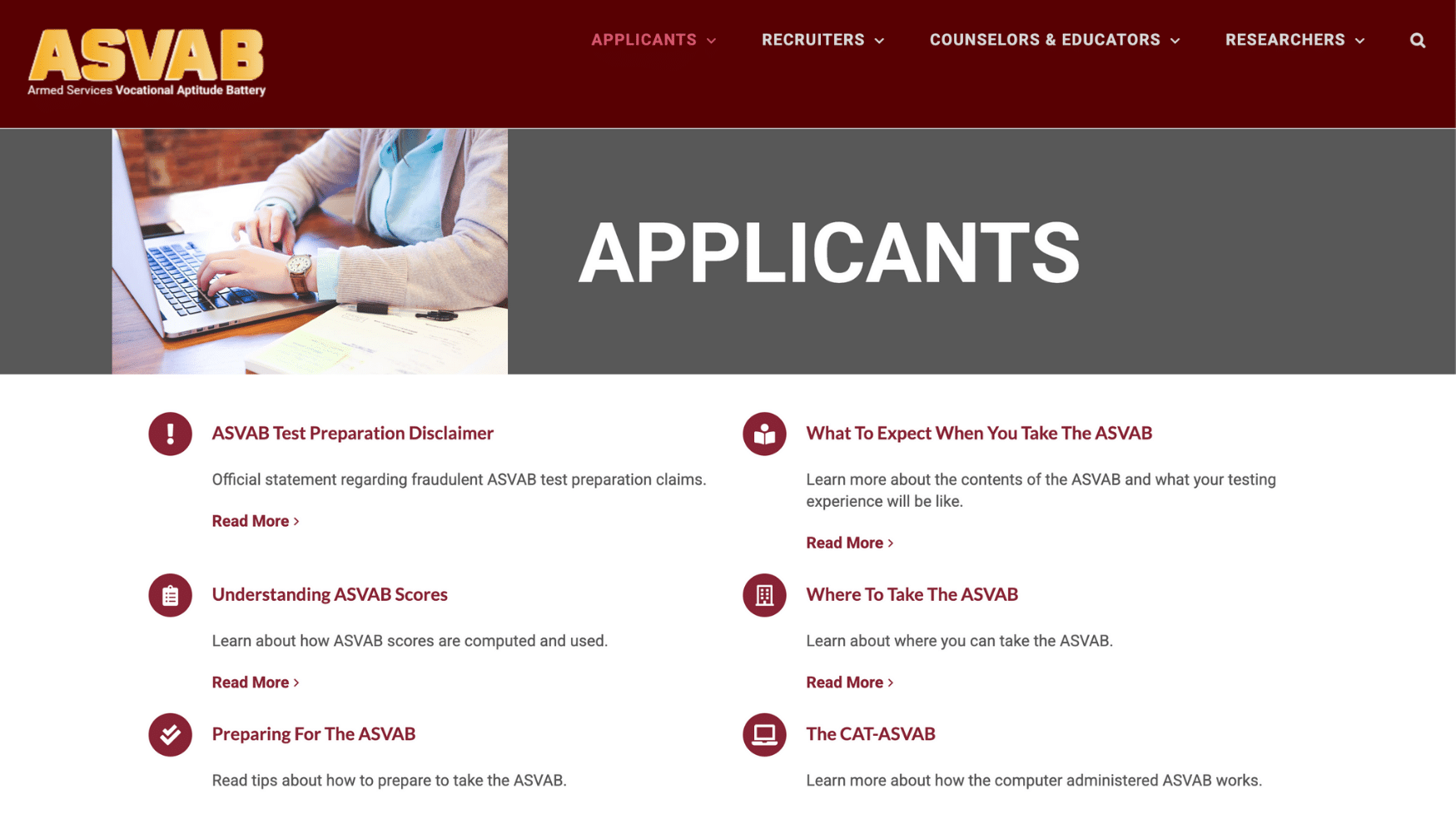
Preparing for the PiCAT test is essential, as it uses the duplicate content and scoring as the ASVAB. Start with reliable official sources to familiarize yourself with the test format and question types.
The U.S. Military’s official ASVAB website provides the most accurate free materials, including sample questions for all 10 subtests.
Official ASVAB Website: Access free sample questions covering General science, arithmetic reasoning, word knowledge, paragraph comprehension, mathematics knowledge, electronics information, auto and shop information, mechanical comprehension, and assembling objects.
Visit: https://www.officialasvab.com/sample-questions/
ASVAB Fact Sheet and Applicant Resources: Essential info on test structure and scoring at https://www.officialasvab.com/applicants/
These government-provided tools help build a strong foundation without cost.
Final Note
Preparing for the PiCAT test doesn’t have to be stressful. You now know what sections you’ll face, how the format works, and what makes it different from the ASVAB.
The key is to start your prep early and focus on your weaker areas.
Take practice tests. Review the content areas we covered. And most importantly, go into your verification session with confidence. Your military career is waiting on the other side of this exam.
Ready to take the next step? Start studying today and give yourself the best chance at qualifying for the role you want.